
Since 2009, Swim Across America has contributed more than $5.3 million for cancer research at Fred Hutchinson Cancer Center. Funds raised by the event and by the motivated swimmers who participate enable early-career investigators to pursue groundbreaking research that can improve care for patients in Seattle and beyond. Investigators who received funding in previous years continue to build on research made possible by Swim Across America to advance understanding of breast cancer, lymphoma, pancreatic cancer, and sarcoma. We are delighted to provide this year’s update on the projects you’ve supported below. Don’t forget to register for this year’s Swim Across America – Seattle!
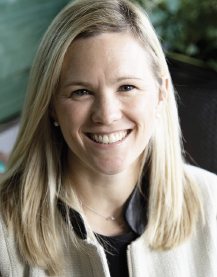
Meghan R. Flanagan, MD, MPH | Breast Cancer
Physician and affiliate investigator, Fred Hutch; Assistant professor of Surgery, UW Medicine
Project: Association of HSD3B1 (1245C) genotype with recurrence among post-menopausal women with estrogen receptor-positive, HER2- negative breast cancer
Background: Anti-estrogen endocrine therapy reduces the risk of recurrence and improves breast cancer mortality among individuals with hormone-receptor positive breast cancer. However, approximately one-quarter of patients are inherently resistant or develop resistance to endocrine therapy. Ultimately, this research may allow us to identify people with innate endocrine resistance and develop novel therapeutics and treatment strategies.
Progress statement 2022: Swim Across America’s initial support helped our team evaluate whether there is an association between a common single nucleotide variation in a gene called HSD3B1 (which is involved in hormone biosynthesis) and breast cancer outcomes. Using an extensive collection of clinical and pathologic data about patients and their tumors, we demonstrated that patients with two copies of the variant in the HSD3B1 gene had a five-fold increased risk of developing metastatic breast cancer, compared to people who did not have this variant.
In July 2022, we published findings from Swim Across America-supported research in the Annals of Surgical Oncology. Based on these results, our team received funding to study whether inheriting two copies of the variant HSD3B1 gene — which occurs in 10% to 15% of patients with estrogen receptor-positive, post-menopausal breast cancer — decreases the effectiveness of anti-estrogen medications, which are used universally in this population. Our results could indicate the need for alternative treatment strategies for these patients.
2023 update: 33 of 60 patients have completed the study, and frozen tissue from 25 patients has been analyzed for estrogen and androgen concentrations. Although only two patients had two copies of the variant HSD3B1 gene, and we do not have enough information to make conclusions about the variant versus wild-type gene, it is likely that our analysis will be the most comprehensive steroid profiling of normal and tumor breast tissue. We are also in the process of finalizing data for our primary study outcomes and anticipate this will be completed in the late spring.

Sita Kugel, PhD | Pancreatic Cancer
Assistant professor, Fred Hutch
Project: Exploring novel functions of HMGA2 in pancreatic cancer
Background: Pancreatic ductal adenocarcinoma (PDA) is an extremely lethal disease with an overall five-year survival rate of 12%. Recent work has led to the discovery that PDA can be subdivided into two principal subtypes based on transcriptional signatures: classical and basal. The basal subtype is more aggressive and leads to the worst overall survival. Our laboratory has been focused on understanding the mechanisms that drive each subtype with the aim of identifying therapeutic vulnerabilities that may be exploited in the clinic.
Progress statement 2022: Within an already challenging malignancy, certain transcriptional subtypes of pancreatic ductal adenocarcinoma are especially lethal. Funding from Swim Across America is helping us understand what defines each subtype, as well as their susceptibilities and mechanisms of resistance, to help to identify potential new treatment options for this devastating disease. Our team has recreated the classical and basal subtypes in the lab and managed to explore the differences between the two, including how they acquire resistance to first-line therapies. Our work will lay the groundwork for more targeted treatments for PDAs that can also account for their respective escape mechanisms, thereby improving outcomes.
2023 update: Some of our recent work showed that basal pancreatic tumors are sensitive to cyclin-dependent kinase (CDK) inhibitors. Our team is trialing these CDK inhibitors in patients who are also receiving standard-of-care treatment, while also looking at whether a different treatment combination affects one tumor subtype more than the other.
Simultaneously, we are using pancreatic tumor tissue taken from patients and grown in mice to test new treatment strategies in an environment similar to the human body.

Jonathan Sham, MD, MBEE | Pancreatic Cancer
Surgical oncologist and assistant professor, Fred Hutch and UW Medicine
Project: Novel drug-eluting biopolymer to reduce pancreatic fistula and improve outcomes after pancreatic surgery
Background: Pancreatectomy, or removal of the pancreas, is the mainstay of any potentially curative treatment regimen for pancreatic cancer. Despite an overall improvement in the safety of pancreatic surgery over the past several decades, the morbidity of pancreatectomy remains exceedingly high. The most significant complication after pancreatic surgery is postoperative pancreatic fistula (POPF), which occurs in up to 50% of cases. The use of a biopolymer, poly(N-isopropylacrylamide) (PNIPAM), is an innovative approach to prevent leakage of pancreatic juice from the cut surface of the gland, while drug-eluting microspheres aims to simultaneously reduce baseline pancreatic fluid secretion. This novel dual-action approach will be tested in a validated rat model of POPF with the goal of rapid clinical translation and patient benefit.
Progress statement 2022: Swim Across America is advancing our work to improve outcomes after pancreatic surgery. Your support is enabling a trailblazing collaboration between surgeons and bioengineers to develop novel ways to stop leaks after pancreas surgery and help patients live healthier and longer lives. We have also expanded our team and published our groundbreaking research, including our development of a preclinical model for studying POPF. We continue to move this work closer to helping patients with pancreatic cancer.
2023 update: We are continuing to optimize biopolymer performance and handling characteristics for use during surgery. We are also including a chemical approach that clams use to adhere to underwater rocks in order to maximize adhesion on wet surfaces during surgery.
Jordan Gauthier, MD, MsC | Lymphoma
Physician and assistant professor, Fred Hutch and UW Medicine
Project: Factors associated with failure of CD19 CAR T cells in diffuse large B-cell lymphoma
Background: We are investigating two factors — T-cell dysfunction during manufacturing and the suppressive tumor microenvironment — that may play a critical role in the failure of CD19-targeting chimeric antigen receptor (CAR) T-cell therapy for people with diffuse large B-cell lymphoma (DLBCL). We are also working to identify potential targets to improve outcomes of CAR T-cell therapy for patients with DLBCL.
Progress statement 2022: The Swim Across America grant allowed us to explore two parallel questions. First, to understand whether exhausted T cells are associated with treatment failure after CAR T-cell therapy for patients with DLBCL, we analyzed blood samples from 34 patients treated on a clinical trial. While we did not confirm an association between exhausted T cells and treatment failure, we found that a higher proportion of terminally differentiated T cells may have an adverse impact on the outcomes of CAR T-cell therapy. Second, to determine if an exhausted gene signature in T cells from lymphoma tumors is associated with treatment failure, we analyzed pre-treatment tumor biopsies from 17 patients receiving CAR T-cell therapy. In patients who had a complete response to CAR T-cell therapy, we found that T-cell-associated genes were overexpressed compared to patients not in complete response after treatment. Our results suggest that tumors more susceptible to T-cell infiltration might respond better to CAR T-cell therapy.
Funds from Swim Across America also supported the development of two cutting-edge approaches, CITE-seq and CODEX, that allow us to study proteins and DNA from single cells and take 3D photographs of biopsies before and after therapy. These tools will help us better understand why CAR T-cell therapy does not work in some patients. Identifying why treatment fails at a single-cell level will have a dramatic impact on how we design the next generation of CAR T-cell therapies.
2023 update: Using tools we developed with the support of Swim Across America, we are now able to specifically study how CAR T cells “talk” to other cells inside lymphoma tumors. We are also now using CITE-seq to analyze 20 tumor biopsy samples from patients undergoing CAR T-cell therapy in clinical trials. We are looking at associations between specific immune cell populations and outcomes, such as anti-cancer effects and toxicity.

John K. Lee, MD, PhD | Sarcoma
Previously physician and assistant professor, Fred Hutch and UW Medicine; currently at UCLA
Project: Development of STEAP1 chimeric antigen receptor T-cell therapy for Ewing sarcoma
Background: Approximately 200 adolescents and young adults in the U.S. are diagnosed each year with Ewing sarcoma, a cancer of the soft tissue and bone. When Ewing sarcoma spreads, patients face a very grim prognosis, as no available treatments eradicate the disease. If successful, our studies will help lay the groundwork for the development and clinical translation of a first-in-field CAR T-cell immunotherapy for Ewing sarcoma that targets the protein STEAP1.
Progress statement 2022: Swim Across America funding helped us evaluate whether a novel CAR T-cell therapy targeting the protein STEAP1 could be an effective strategy to treat patients with Ewing sarcoma. Our results indicate that human Ewing sarcoma tumor models commonly express STEAP1 and are susceptible to killing by STEAP1 CAR T cells. In related studies, we have also determined that STEAP1 CAR T-cell therapy appears safe in a novel mouse model that we engineered to express human STEAP1. We have seen highly promising activity in multiple preclinical models of Ewing sarcoma, and we licensed the technology to a company for clinical development.
2023 update: The Swim Across America grant enabled studies, now complete, confirming the anti-cancer activity of STEAP1 CAR T-cell therapy in preclinical models of Ewing sarcoma. A clinical trial in humans at Fred Hutch and Seattle Children’s Hospital is now being planned.
 Swim Across America