Lab Series #3: Rush University Cancer Center

Your donations allow SAA to provide funding to some of the world’s most renowned cancer institutions. This is the third in a series featuring the SAA LABS that our beneficiaries have named in honor of the efforts of Swim Across America.

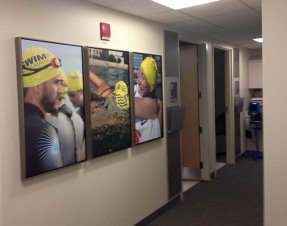
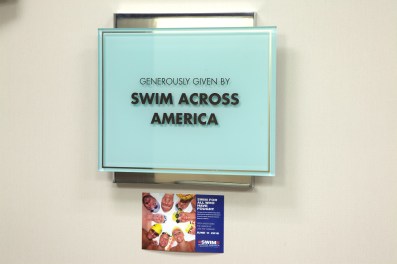
This month, we are profiling the Swim Across America Laboratory for Cancer Research at Rush University Medical Center. This lab, and a Patient Procedure Suite, were named for SAA in 2015 after more than $1 million was raised by SAA since 2011.

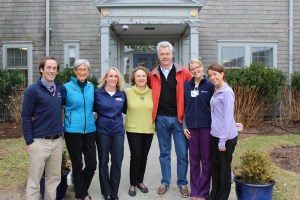
23895100355_5afacd364c_z

Each year, Rush University Medical Center runs an internal, peer-reviewed process to distribute the funds from SAA – Chicago. Rush researchers submitted more than 20 proposals for consideration for the proceeds from last year’s Chicago events, which included the open water swim at Ohio Street Beach and the 2nd Swim Across Lake Michigan. Four research projects will be funded from 2015 and the awards have been made to support projects focused on a variety of treatment disciplines that impact patients with breast, colon, liver, and lung cancers, among others.

Kevin Gray, Director of Development at Rush University Medical Center was kind enough to answer some of our questions.

Can you shed some light on the cancer research being done in the SAA lab??

The cancer research being done with SAA funds varies from breast, gastro, lung and other. Dr. Jeff Borgia’s lab, which was named the Swim Across America Laboratory for Cancer Research, focuses on two areas: 1) Identifying a genetic marker within specific proteins that determine a person’s likelihood that they have or could develop lung cancer. And 2) fine-tuning a blood test – finger prick – that could be used in all primary care offices, but specifically in underserved communities and areas with high incidence of lung disease.

What kind of grants have been acquired through the research?

There have been more than two dozen grants from various sources that continue to help all investigators during the timeframe of the SAA relationship. Most notable, two investigators, Drs. Carl Maki and Amanda Marzo, have leveraged SAA dollars to garner NIH funding. Dr. Marzo received $425,000 earlier this month and Dr. Maki received $375,000 last year.

What exciting plans does Rush have for 2016 and beyond?

The most exciting plans are technology and equipment investment. A computer-based initiative called bioinformatics and a biorepository will take Rush to the next level in terms of productivity and competitiveness. Bioinformatics is the ability, through extremely fast computers, to process an enormous amount of data in an extremely short time. Information that used to take weeks now can be processed in days or hours. It will be paired with the biorepository, which is housed in the SAA lab, which can process and store large amounts of tissue or blood samples for study. This enables the investigators to work faster and more efficiently, revealing new answers and results that potentially lead to a treatment or cure.

What does the lab mean to Rush?

It means a myriad of things:  1) It enables Rush to conduct meaningful research with an almost instant impact on patients. 2) It attracts the best and the brightest to Rush as the institution is tackling cutting-edge work. 3) It makes Rush a stronger academic institution as tomorrow’s doctors, nurses and other medical professionals get to work side-by-side with the best And 4) It puts Rush and those with SAA backing in a position to find the best solutions for new treatments and possibly a cure.

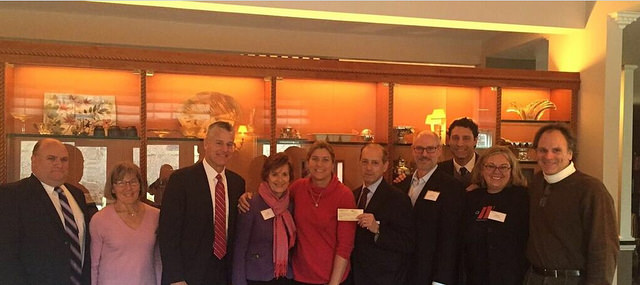
23812610051_73fc27437c_z
2015 Swim Across America Lab Dedication

Lab Series #2: Baylor Charles A. Sammons Cancer Center

Your donations allow SAA to provide funding to some of the world’s most renowned cancer institutions. This is the second in a series featuring the SAA LABS that our beneficiaries have named in honor of the efforts of Swim Across America.

1785-4X6This month, we are profiling the Swim Across America Innovative Clinical Trials Center (ICTC) at Baylor Charles A. Sammons Cancer Center at Dallas. The trials center was named for SAA in 2013 and features some treatments that can’t be found anywhere else in the country. Dr. Alan M. Miller, MD, PhD and Director of the Baylor Charles A. Sammons Cancer Center and Carlos Becerra, MD were kind enough to answer some of our questions. 

What does the ICTC mean to the doctors and patients that use it?

The Swim Across America Innovative Clinical Trials Center (ICTC) at Baylor University Medical Center is a clinical facility where patients come to receive treatments that are available at only a few specialized centers in the country or may only be available at the ICTC.

These trials provide options for patients whose cancer has resisted standard therapies.  Many fall into the category, Phase 1 trials. These require a specialized staff with experience in treating patients with new therapies.

What kind of cancer research is being done in the ICTC?

In the past few years, the physicians and staff of the Swim Across America ICTC have participated in some of the most exciting studies using precision medicine and immunotherapy. Precision medicine involves analyzing the genes of the cancer and applying drugs that specifically target abnormalities in the cancer cells that are not in the individuals’ normal tissue. Immunotherapy harnesses the body’s own immune system to help attack the cancer.1794

What plans are in store for 2016 and beyond?

An exciting trial starting in 2016 involves the use of a dendritic cell vaccine to treat pancreatic cancer.  Dendritic cells are cells of the immune system that identify abnormal cells like a bacteria or a cancer cell and then call in other components of the immune system to attack the invader. This dendritic cell vaccine was developed in the laboratory of the Baylor Institute for Immunology Research and is only available at the ICTC.

“Thanks to the funding from Swim Across America we have been able to explore new and very encouraging therapeutic targets for otherwise deadly diseases such as pancreatic cancer or refractory colon cancer and have been able to provide patients with novel therapies that would not otherwise be possible. We have taken discoveries from the lab of our scientists and tested the concept in the clinic thanks to the support of SAA, an example of translational work done within the walls of Baylor University Medical Center.” – Carlos Becerra, MD

For further information about the Swim Across America ICTC, please view the following video (the ICTC is featured at 3:38) or see more info on all the studies to the trials currently going on here.

SAA on the Scene

Members of the Swim Across America family are active in their communities. SAA on the Scene shares stories from the “dry side” of our events where the SAA mission to make waves to defeat cancer is honored and recognized. Feel free to send submissions for future posts here.

Alliance for Cancer Gene Therapy (ACGT) Discovery Celebration
Harvard Club (New York) – April 14 

Greenwich-Stamford co-chairs Michele Graham and Lorrie Lorenz, and SAA Director of Events Craig Beardsley were in attendance to learn how dollars granted to ACGT are defeating cancer.

Swim Across America AYA Lounge One-Year Anniversary Celebration
Moffitt Cancer Center (Tampa) – April 26

SAA – Tampa Event Director Rob Shapiro and committee members Alicia Reyes-Shapiro, Tony Scicchitano, Janice Scicchitano and Olivia Fridgen participated in the one-year anniversary of the Adolescent and Young Adult Lounge opening. We profiled AYA in our lab series profile.

13103256_10154145119397509_8520939913850164529_n

SAA – Long Island Sound Swim Kickoff Event
Larchmont Yacht Club – April 27

The 24th annual Long Island Sound Open Water Swim Kickoff event took place on April 27th. Beneficiary representatives from Memorial Sloan-Kettering, Columbia University Medical Center and Cancer Support Team attended the event. Dr. Jedd Wolchok, MD PhD (of MSK) and Dr. Andrew Kung, MD PhD (of CUMC) spoke at the event sharing breakthroughs being made to defeat cancer in their labs.

2016 Larchmont Kickoff

Craig Beardsley (SAA Director of Events), Jean Fufidio, Dr. Jedd Wolchok, MD PhD, Dr. Sadna Budhu PhD, Tony Sibio (SAA – LIS chair and event director)

2016 Larchmont Kickoff3

Robyn Gartrell MD, Dr. Andrew Kung, MD PhD, Lucille Winton, Katie Shields, Dr. Jedd Wolchok, MD PhD, Dr. Sadna Budhu PhD, Dr. James Garvin MD PhD, Tony Sibio (SAA – Larchmont chair and event director)

Check Presentation for SAA – San Francisco

IMG_3478
(L-R) Mike Bruner (Olympian), Dr. Robert Goldsby (UCSF beneficiary), Susan Helmrich (SAA-SF Co-Event Director), Dr. Julie Saba (UCSF Oakland beneficiary), Heather Petri (Olympian and Honorary Chair SF-SAA) and Anthony DuComb (SAA-SF Co-Event Director).

On March 14, members of the Swim Across America – San Francisco family took part in a special check presentation at the Children’s Hospital Oakland Research Institute.


San Francisco Co-Event Directors Susan Helmrich and Anthony DuComb represented Swim Across America along with Olympians Mike Bruner and Heather Petri as they presented a $450,000 check to UCSF Benioff Children’s Hospitals. Dr. Robert Goldsby  (UCSF) and Dr. Julie Saba (UCSF Oakland) both spoke at the event and thanked all the SAA swimmers, kayakers, volunteers, olympians and donors for their contributions to defeat pediatric cancer.

12841291_10153589139363737_168431810202894675_o
Event Flyer
IMG_3481
(L-R) DuComb, Helmrich, Dr. Saba, Dr. Goldsby

Lab Series #1: Moffitt Cancer Center

Your donations allow SAA to provide funding to some of the world’s most renowned cancer institutions. This is the first in a series featuring the SAA LABS that our beneficiaries have named in honor of the efforts of Swim Across America.

IMG_2526 copy
Swim Across America Adolescent & Young Adult Lounge

This month, we are profiling the Swim Across America Adolescent and Young Adult Lounge at the Moffitt Cancer Center in Tampa. The ribbon-cutting ceremony took place in April 2015 (featuring Tampa Bay Open Water Swim Event Director Rob Shapiro, former SAA CEO Janel Jorgensen-McArdle and current SAA CEO Rob Butcher). The SAA AYA Lounge is used by the approximately 100 young adult cancer patients at the hospital every day. Olivia Fridgen, AYA and LATTE Program Coordinator at Moffitt provided this insight.

How has the reception been to the SAA AYA Lounge by patients?
The reception from patients has been amazing. The corkboard wall on the lounge shows patient artwork, the white board has encouragement from patient to patient and the lounge journal has pages and pages of thoughts and inspirational words. It has been a respite for inpatients who need a change of scenery, as a place to spend time with their family and friends who come to visit and a great spot for the AYA (Adolescent and Young Adults) Program to host events and support groups.

Since the SAA AYA Lounge is different from  other research-based SAA Labs, what interesting facts can you pass along?
We are the 1st AYA Lounge in Florida, the 3rd in the country. We are also unique because our lounge provides physical space not only for our inpatients but our outpatients as well. Some of the traditional lounges are built in conjunction with inpatient units and therefore are not accessible to outpatients. Another unique mention is that our Moffitt AYA Patients actually designed the entire space – they picked out color schemes, fabrics, flooring and lighting so that we were confident our lounge was hitting the mark and what AYA patients would actually want in a space.

Do patients get treatment in the SAA AYA Lounge?
No, the lounge is a place to get away from the hustle bustle of the hospital life. The Lounge has the latest gaming systems, comfy couches, white boards, board games and art supplies. The inpatient floors of the hospital, where admitted patients would receive treatment, is steps away which provides convenience and access to the lounge.


How much did it cost to build the SAA AYA Lounge?
SAA has donated nearly $140,000 to the AYA program over the years and monies from the 2014 race were specifically designated to the creation of the SAA AYA Lounge.

Does the AYA Group anticipate this to be a trend in hospital systems moving forward?
Yes, organizations like Teen Cancer America are working with AYA Programs across the country to fund and offer physical spaces in hospitals for young cancer patients.

Why is it important for Moffitt and other hospitals to have a lounge for adolescent and young adults?
Adolescent and Young Adult patients feel like they are the only 20- or 30-year-old in the entire hospital. While we know that isn’t true, each patient is seen in their respective clinic (for example, if you have breast cancer you’re seen in the Breast Clinic, if you have Lung Cancer you’re seen in Thoracic, etc.), so they never get the chance to run into one another. The Lounge provides a space where Young Adult cancer patients can actually meet another young person with cancer. Because it’s in a communal space, it’s less awkward, more organic and can reduce the feelings of isolation many AYAs feel, which is important to their psychosocial state of mind and also can create lasting friendships. Many of our patients say that family and friends are extremely supportive, but no one quite “gets it” like another young cancer patient.