Kara Wolter was 26 when she was diagnosed with metastatic osteosarcoma. The bone cancer found in her left knee had spread to her lungs. Her treatment plan included six different chemotherapies and multiple surgeries, including six lung wedge recession surgeries and amputation of her left leg above the knee. She was given a high recurrence rate and a 15 to 20% chance to live another five years.
Six years later, Kara is now 33 and “thriving as a cancer survivor!” She has had no evidence of disease for three years.
How did Kara learn about Swim Across America?
“During a check up with my oncologist at Rogel University Cancer Center, I saw a flyer for the upcoming Swim Across America – Motor City Mile event. Proceeds from the event go towards cancer research right there at Rogel,” said Kara.
“I used to swim as a child, and now I coach for the same team I swam with, so it was an easy decision to sign up for SAA – Motor City Mile.”
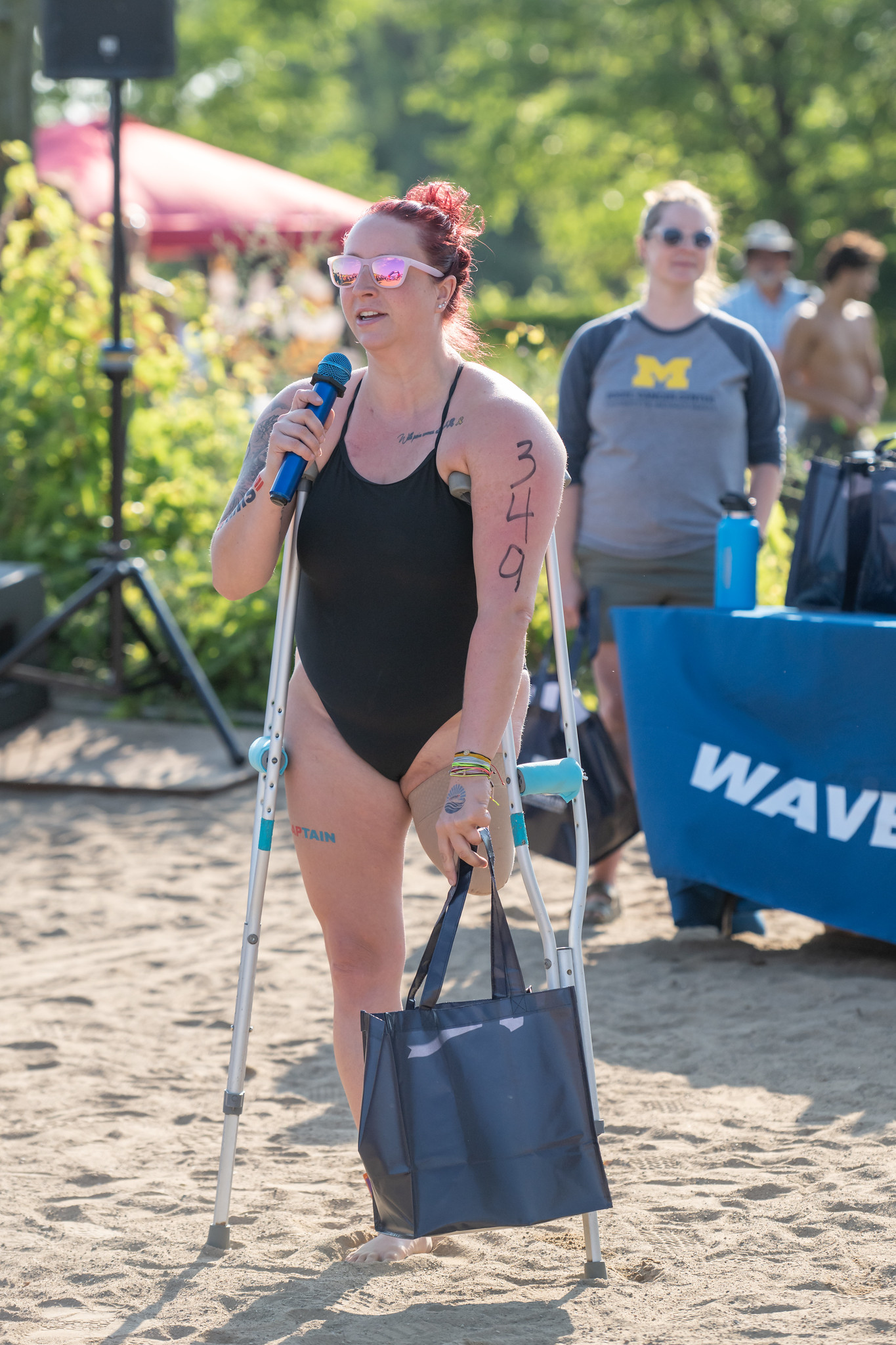
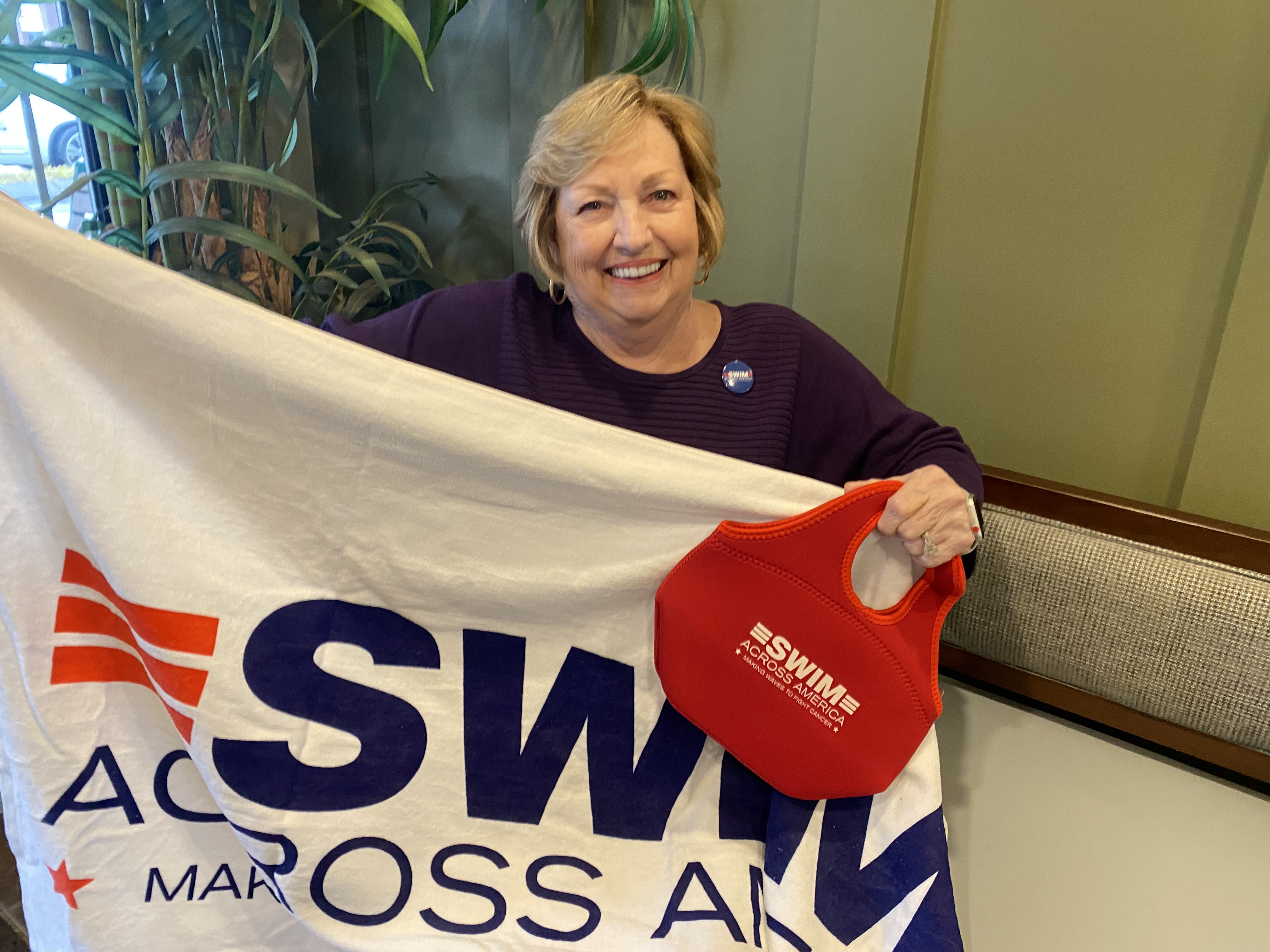
Kara Wolter spoke at the 2023 Swim Across America – Motor City Mile community swim.
Her connection to the Swim Across America mission and local beneficiary made it an easy decision, like many other Swim Across America participants.
This will be Kara’s fifth year swimming at SAA – Motor City Mile, and she hopes to hit yet another personal milestone.
“I am so close to raising more than $10,000! Five years, $10,000 raised… I know we are making an incredible impact in our community,” shared Kara.
Kara Wolter grew up swimming and is now a coach for the same team she swam with.
Since 2019, Swim Across America – Motor City Mile has raised over $500,000. In 2023, Dr. Kyoung Eun Lee, one of the grant recipients, received an $1.4M grant from NCI to study the role of low oxygen supply in pancreatic cancer
On July 12, Kara, her team, the Sassy Swimmers, and hundreds of swimmers, volunteers, and supporters hope to make an even greater impact in their community.
“Swim Across America is so important to me. I survived a terrible cancer that I probably should not have survived and I want to make a difference in the future,” said Kara.
Preliminary findings from the clinical trial are hopeful and show the promise of cell therapy for treating incurable conditions.
“The CAR-T platform has revolutionized how we think about treating patients with cancer, but solid tumors like glioblastoma have remained challenging to treat because not all cancer cells are exactly alike and cells within the tumor vary. Our approach combines two forms of therapy, allowing us to treat glioblastoma in a broader, potentially more effective way.” said Bryan Choi, MD, PhD, neurosurgeon and associate director of the Center for Brain Tumor Immunology and Immunotherapy, Cellular Immunotherapy Program, Mass General Cancer Center and Department of Neurosurgery.
MRI results from a glioblastoma clinical trial that received initial grant funding from Swim Across America – Boston. The scans show tumor size before infusion (day -7) and after infusion (day 5).
Days after a single treatment, the three patients experienced dramatic reductions in their tumors, with one patient achieving near-complete tumor regression.
MRI scans conducted before and after treatment showed initial regression in tumor size. In time, the researchers observed tumor progression in these patients, but given the strategy’s promising preliminary results, the team will pursue strategies to extend the durability of response.
Dr. Choi expressed gratitude for the Swim Across America – Boston grant that made this research possible. Dr. Choi’s lab also receives funding from Swim Across America – Nantucket.
“Swim Across America directly supports my laboratory, which is dedicated to developing novel experimental immune therapies for patients with brain cancer. SAA funded a critical step in the early stage of discovery, allowing us to take on high risk projects that otherwise might not be possible.” said Dr. Choi.
“Without this type of support, my lab would not be able to develop or advance new therapies toward clinical studies like the one published here.”
Swim Across America – Boston and Swim Across America – Nantucket leadership teams visited Dr. Choi at Mass General Cancer Center in March 2023, just one month before the clinical trial was launched. During the visit, SAA leaders were treated to an informative presentation and lab tour from Dr. Choi.
During the tour, Janel Jorgensen McArdle, Chief Operating Officer of Swim Across America, pointed out that Dr. Choi’s research falls in the “sweet spot” of the high risk, high reward research that Swim Across America is pursuing.
“This promising research aligns perfectly with the opportunities that Swim Across America seeks to support. We are excited that SAA funding could help accelerate (this research) to patient trials.”
In March 2023, leaders from Swim Across America – Boston and Swim Across America – Nantucket visited Dr. Choi’s research lab at Mass General Cancer Center. Pictured: Michele Fox, Patty Gienke, Bob Hackett, Liam Hackett, Steven Laduzinski, Jamie Mannion, Janel Jorgensen McArdle, Alex Meyer, Rick Osterberg, Shep Perkins, Jill Roethke, Mike Ryan, Jessica Stokes, Kitty Tetreault.
Swim Across America’s grant agreement with beneficiaries, such as Mass General Cancer Center, requires that 100% of an SAA grant must be spent on approved research and clinical trial programs. Since 1987, SAA has granted over $100M to innovative and otherwise unfunded ideas so that the time of oncologists is protected to make progress and develop new treatments.
Payton De La Cruz Swim Across America – Rhode Island 2 years supporting Swim Across America Age: 27
As a PhD student in cancer biology at Brown University, Providence resident Payton De La Cruz knows first-hand how important philanthropy is to cancer research.
When the opportunity arose to support the national nonprofit that funds her work at Women & Infants Hospital of Rhode Island’s Program in Women’s Oncology, she jumped — or dove — at the chance to “make waves” in the fight against cancer.
“I’ve swum recreationally my entire life, so I was excited to learn that Swim Across America funds the Woman and Infants Hospital labs I work in under Doctors Kate Grive and Nicole James,” said Payton. “SAA’s mission aligns with my values, and its support of our translational research in early-stage breast and gynecologic cancer has been vital.”
Payton sits on SAA-Rhode Island’s event planning committee. Earlier this year, she attended the SAA national leadership summit and subsequently joined the associate board, which supports the nonprofit’s mission by fostering student and community engagement through initiatives such as the new College Ambassador Program.
At this year’s Rhode Island Swim, Payton will volunteer on the beach before and after she dives in to swim a mile with the One Fin Tunas team captained by Dr. David Edmonson.
“Swim Across America’s annual grant literally supports everything I do, not just supplies and equipment,” noted Payton.
“Those funds enabled me to join the lab in 2021 as a full-time graduate student starting a new project on triple-negative breast cancer and immunotherapy. I’m grateful for this experience and proud to be part of the next generation of cancer researchers supported by Swim Across America.”
Payton earned a bachelor’s degree in molecular and cellular biology at University of Arizona and a master’s degree in environmental health at Boston University. Besides her academic studies and cancer research work, she is an avid rower and coordinates science outreach programs for students in under-represented communities.
If you are moved to support Payton De La Cruz, you can donate here.
Swim Across America has raised $100 million since its inception in 1987 to support cancer research and clinical trials across the U.S. Please contact Jeni Howard at jhoward@jhowardpr.com for media inquiries.
Julie Brabbs Swim Across America – Motor City Mile 5 years supporting Swim Across America Age: 56
Julie Brabbs has a few important connections to Swim Across America and its mission.
Julie is the chief administrative officer at the University of Michigan Rogel Cancer Center. She has a unique perspective on cancer as she supports the cancer center and its many missions daily.
In 2015, her job became much more meaningful when she was diagnosed with cancer. Being in the cancer field, Julie knew that innovative new treatments are the key to successfully treating the disease.
“Swim Across America’s grants to support clinical research and investigators are so, so important,” said Julie. “Cancer research funding is often hard to come by and the Swim Across America grants are necessary for making progress in breakthroughs like immunotherapy.”
Julie first attended the Swim Across America – Motor City Mile event in 2019, its inaugural year. She did so in honor of a friend who sadly had passed away from glioblastoma (brain cancer).
“At that time, I myself had cancer in 2015, but after standard treatment, I was in remission. Now, participating in the upcoming Swim Across America – Motor City Mile event has even more meaning as I am once again a cancer patient. My cancer came back in 2022 and I am currently taking Keytruda (an immunotherapy drug) as part of my treatment regimen, an option that wasn’t available in 2015 when I was first diagnosed.”
Julie thanks Swim Across America and its early-stage funding of Keytruda, which is now available to treat more than 30 different types of cancer, including Julie’s.
“Thanks to the hard work of Swim Across America, Keytruda was amazingly created in a Swim Across America lab. It’s amazing what swimming to raise money for cancer research can really do!”
This year, Julie is participating as a volunteer and SAA My Way participant, which means instead of swimming, she is doing other activities to raise funds to fight cancer. If you are moved to support Julie and Team Rogel, you can donate here.
Swim Across America has raised $100 million since its inception in 1987 to support cancer research and clinical trials across the U.S. Please contact Jeni Howard at jhoward@jhowardpr.com for media inquiries.
Marjorie Trifone Swim Across America – Fairfield County Hometown: Darien, Connecticut 10 years supporting Swim Across America Age: 60
Marjorie (Marj) Trifone is no stranger to leading a strong team. She’s the head coach of the Darien High School Blue Wave Swim Team in her hometown, Darien, Connecticut.
At the Swim Across America – Fairfield County event, she also leads the team, Blue Wave Swim and Dive, whose members are students and alumni of the same high school team. Since 2016, the Blue Wave Swim and Dive team has raised over $27,500.
This year, Marj celebrates 10 years of supporting Swim Across America.
“Swimming is what we do, so I feel it is a wonderful event to be involved with for swimmers,” said Marj. “It shows them the other side of swimming not just for competition but for helping others.”
In addition to her ties to swimming, Marj has a personal connection to Swim Across America’s mission.
“I swim because my mother was a cancer survivor. She had non-Hodgkin’s lymphoma and underwent an experimental bone-marrow transplant in 1988 at Dana Farber Cancer Institute in Boston and then went on to live 21 more years!”
Swim Across America – Boston has supported clinical research at Dana Farber Cancer Institute since its first swim in 1996.
Marj and her family went through a challenging time as her mother bravely battled cancer. This experience is what gives Marj the drive and purpose to swim with the Blue Wave Swim and Dive for Swim Across America – Fairfield County – for family and friends still who have battled or are still struggling with the disease.
Swim Across America has raised $100 million since its inception in 1987 to support cancer research and clinical trials across the U.S. Please contact Jeni Howard at jhoward@jhowardpr.com for media inquiries.
Gretchen Hull Swim Across America – Nantucket Hometown: Nantucket, MA 10 years supporting Swim Across America Age: 49
Gretchen Hull is a triple threat supporter of Swim Across America. She’s an oncology nurse and Director of Infusion Services at Nantucket Cottage Hospital, passionate about health and personal wellness, and a swimmer!
In Gretchen’s own words, “the mission of Swim Across America – Nantucket – to support cancer services and research – aligns perfectly with my professional and personal goals.”
Gretchen has worked at Nantucket Cottage Hospital since 2002 and has been involved with Swim Across America for over a decade. It wasn’t until 2014, when Keytruda, of which Swim Across America assisted funding research, first became available at NCH, that she truly felt the impact and miracle of groundbreaking immunotherapy research.
“When Keytruda became available in 2014 there were only two chemotherapy certified nurses at NCH. I was the first nurse at my facility to administer Keytruda for its first indication. I knew it was a pivotal time in cancer care.”
Gretchen watched how the introduction of immune therapy changed the course of patient’s lives and trajectory of cancer diagnosis from terminal to chronic and curative at times. Moreover, how immunotherapy redefined how we view cancer and how cancer treatments have expanded across multiple types of cancer and benefited millions of people.
“I have to emphasize to nurses beginning their practice after the dawn of immunotherapy exactly how groundbreaking it is. I use the term “miracle” when referring to some outcomes.”
This year, Gretchen will swim the 4-mile course at Swim Across America – Nantucket.
Swim Across America has raised $100 million since its inception in 1987 to support cancer research and clinical trials across the U.S. Please contact Jeni Howard at jhoward@jhowardpr.com for media inquiries.
Mass General Cancer Center Joins the Swim’s Other Beneficiaries Nantucket Cottage Hospital Oncology Program and Palliative and Supportive Care of Nantucket.
NANTUCKET, Mass., April 26, 2023 – Swim Across America Nantucket is pleased to announce that Mass General Cancer Center will join Nantucket Cottage Hospital’s Oncology Program and Palliative and Supportive Care of Nantucket as a beneficiary of the Swim Across America Nantucket Open Water Swim event. The Swim Across America Nantucket open water swim has been held each Summer since 2012 and makes waves in the fight against cancer. This year’s event will be Saturday, July 22, 2023.
In addition to continuing to support the two local beneficiaries, Mass General will provide a research component to the list of services supported by Swim Across America Nantucket’s annual fundraising event. Dr. Bryan Choi, MD, PhD, is an attending neurosurgeon in the Department of Neurosurgery and the Stephen E. and Catherine Pappas Center for Neuro-Oncology at Mass General. He specializes in surgical care for patients with benign and malignant brain tumors. During his neurosurgery residency at the Massachusetts General Hospital, he pursued a postdoctoral fellowship in the laboratory of Dr. Marcela Maus, focused on developing CAR T-cell therapies for cancer. He also leads a research laboratory with the goal of developing the next generation of cell therapies and clinical trials in neuro-oncology.
“We are very honored to have the opportunity to support Dr. Choi in his work in CAR T-cell therapies,” said Jim Pignato, co-event director of Swim Across America Nantucket. “Adding a funding arm with a research component has been something we’ve been exploring. Teaming up with Dr. Choi and Mass General Cancer Care is a natural fit.”
“Dr. Choi’s work is groundbreaking and holds the potential to shift the paradigm of treatment for an otherwise devastating disease,” said Keith Erickson, director of development at Mass General Hospital.
“Our vision is to continue to help serve the Nantucket patient, from diagnosis through treatment, while also offering this very important research component, that will help all patients, not only those on Nantucket”, said Jill Roethke, co-event director of Swim Across America Nantucket.
This announcement comes on the heels of a banner 10th year for Swim Across America Nantucket, where more than $600,000 was raised for on-island cancer services and patient care in 2022.
Swim Across America was founded in 1987 with its first open water event in Long Island Sound. Since that time, the nonprofit organization has raised more than $100 million to fight cancer. In its 36 years of “making waves to fight cancer,” more than 100,000 swimmers and 150 Olympians have swum the circumference of the earth three times, uniting a movement to fight cancer that has created a groundswell of support spanning all generations. Today, more than 24 communities hold open water swims and charity pool swims each year, from Nantucket to under the Golden Gate Bridge, which support innovative cancer research, detection and patient programs.
Swim Across America’s funding of clinical trials for patients helped contribute to four FDA approved life-saving immunotherapy cancer treatments: Yervoy, Opdivo, Tecentriq and Keytruda. More than 60 scientific grants are funded each year and there are now ten dedicated Swim Across America Labs at major institutions including: Children’s Healthcare of Atlanta, John Hopkins Medicine Baltimore, Rush University Medical Center Chicago, Baylor Scott & White Charles A. Sammons Cancer Center in Dallas, Memorial Sloan Kettering Cancer Center New York, Infusion Center at Nantucket Cottage Hospital, Adolescent and Young Adult (AYA) Lounge at the Moffitt Cancer Center in Tampa, UCSF Benioff Children’s Hospital Oakland and San Francisco, Vanderbilt-Ingram Cancer Center in Nashville, and the Seattle Cancer Care Alliance.
Since 2012, Swim Across America Nantucket has raised more than $4 million for its beneficiaries: Nantucket Cottage Hospital and Palliative and Supportive Care of Nantucket. Each year Swim Across America Nantucket is proud to host more than 400 swimmers and volunteers, spectators and supporters, as well as Olympians near and far at the charity swim. This year’s swim will take place on Saturday July 22, 2023, at Jetties Beach on the island of Nantucket.
Susan McPherson was no stranger to Swim Across America, but her contributions were always in honor of other family members and friends who had cancer diagnoses. After a shocking diagnosis in December 2020, the reason to support Swim Across America-Nashville now became much more personal for Susan.
“I went to the doctor because I was experiencing new-onset shortness of breath and found out I was anemic. After additional tests, the doctors told me they found a large tumor and multiple metastases in my abdomen and that I had stage four colon cancer.”
Susan’s particular genetic profile made her a candidate for immunotherapy. She began treatment at the Vanderbilt-Ingram Cancer Center, which is the beneficiary of the Swim Across America-Nashville Pool Swim.
“In fact, the type of immunotherapy I was given – Keytruda – was developed in the Swim Across America funded lab at the Johns Hopkins Cancer Center! What an incredibly serendipitous moment it was when I realized that the treatment that could help save my life was initially funded through Swim Across America fundraising events.”
Susan received treatment for two years and is now cancer-free. And her participation in this year’s Swim Across America – Nashville event is that much more poignant.
Susan’s daughter-in-law, Chris, is one of the event directors and coaches at the Ensworth Natatorium where the event is held. Her son, John, is a cardiologist at Vanderbilt University Medical Center. For the second year, Chris and John will swim with their team “Chris’ Cancer Crushers” in their endeavor to “make waves to fight cancer.”
Swim Across America has raised $100 million since its inception in 1987 to support cancer research and clinical trials across the U.S. Please contact Jeni Howard at jhoward@jhowardpr.com for media inquiries.
An immunotherapy clinical trial that Swim Across America provided grant funding has reached another milestone.
The Dr. Luis Diaz Lab at Memorial Sloan Kettering began receiving grants from Swim Across America in 2017. SAA grant funding allowed Dr. Diaz and his colleague, Dr. Andrea Cercek, to meet patients and conduct immunotherapy research. With SAA grant support, the lab opened a clinical trial and recruited 14 patients with advanced rectal cancer. The patients qualified through genetic testing and were treated with a single dose of immunotherapy. The patients didn’t require surgery, chemo, or radiation–which was remarkable as traditional treatments often have a negative emotional, physical, and financial effect on the quality of life for patients and their families.
Dr. Luis Diaz and Dr. Andrea Cercek
All 14 patients responded with no evidence of disease. This is believed to be the first time a clinical trial has shown a 100% response rate. Read the full story here.
Recently, the FDA Advisory Committee supported expanding the clinical trial to more patients based on the data from the trial.
The Diaz/Cercek lab has focused on rectal cancer where standard treatment options are surgery, chemotherapy, and radiation. While these treatments might save a patient, they have significant quality-of-life effects and often present the need for ongoing care.
This trial is genetically dependent and focused on advanced rectal cancer. Dr. Diaz and Dr. Cercek envision the immunotherapy being offered to patients with other cancer types who meet the genetic profile. Proceeds from the Long Island Sound and Nassau/Suffolk – Sound to Cove charity swims continue to help fund the ongoing research and clinical trial at Memorial Sloan Kettering.
Swim Across America has a proven track record of identifying and funding early-stage ideas of promise. Swim Across America grants have played a major role in clinically developing FDA-approved immunotherapy treatments ipilimumab (YERVOY), nivolumab (OPDIVO), pembrolizumab (KEYTRUDA), and atezolizumab (TECENTRIQ).
With the support of Swim Across America grant funding, researchers at Rush University Medical Center are gaining momentum in their quest to discover the early detection tools and treatment options of the future in the fight against cancer. RUSH’s experts intimately understand the physical, emotional and financial burdens of cancer on patients’ lives, and they refuse to let the disease rest as the second leading cause of death in the U.S. Since 2012, Swim Across America–Chicago has awarded More than $2M that has funded these early stage research projects.
Dr. Carl Maki
Grant Recipient: Carl Maki, PhD Professor in the Department of Anatomy & Cell Biology at Rush Medical College
Project: Targeting proteins to improve drug responses for patients with treatment-resistant breast and lung cancers
Project Details: By studying cancer at the molecular level, Maki and his team have made significant strides in identifying promising new options for treatment-resistant breast and lung cancers.
In 2015 Maki received an SAA grant to study a family of enzymes known as prolyl peptidases (which regulate blood pressure and appetite) as a possible mechanism to help prevent or alleviate resistance to the drug tamoxifen, one of the most widely used therapies for the 80% of women with breast cancer whose tumors are considered estrogen receptor-positive. Maki and his team found that an enzyme inhibitor for prolyl peptidases, used in conjunction with tamoxifen, effectively killed breast cancer cells in rodents. Using these promising findings, Maki applied for and received a prestigious R01 research award for continued study from the National Institutes of Health and a grant from the Department of Defense to extend this research into triple-negative breast cancer.
In 2020 Maki was awarded another SAA grant to study proteins called histone demethylases in non-small cell lung cancer. Among the deadliest of all cancers, this accounts for about 4 in 5 lung cancer cases. Maki and his colleagues are studying how these proteins may allow lung cancer cells to resist the drugs currently used to treat the disease. By blocking these proteins, the team has been able to kill lung cancer cells in laboratory studies and lung tumors in mice. They identified a novel mechanism for how these inhibitors improve treatment outcomes and recently published their results.
“What starts out as an idea might result in something great,” Maki said. “SAA gives less established researchers a chance and helps all researchers fund pilot projects that ultimately can lead to bigger things.”
Dr. Animesh Barua
Grant Recipient: Animesh Barua, PhD Associate Professor in the Department of Anatomy & Cell Biology at Rush Medical College Director of the Proteomics Core and MicroRNA and Gene Expression Core
Project: Seeking an improved early detection test for ovarian cancer
Project Details: Throughout his career, Barua has relentlessly pursued the development of an effective early detection test for ovarian cancer. With an SAA grant received in 2020, he and his team are drawing upon extensive experience with immunoassays and ultrasound imaging of ovarian tumors to take the next steps forward in this important area of research. In this study, Barua’s lab is developing a fresh approach to early detection testing involving the fimbriae (fingerlike protein branches that guide an egg during ovulation) of the fallopian tubes. Emerging information shows that high-grade serous carcinoma — the most malignant and most common type of ovarian cancer — originates from the fimbriae. The aims of Barua’s study include identifying specific protein markers associated with cancer development in the fimbriae and determining the efficacy of these markers in predicting cancer growth.
Dr. Amanda Marzo
Grant Recipient: Amanda Marzo, PhD Assistant Professor in the Department of Internal Medicine, Division of Hematology, Oncology and Cell Therapy at Rush Medical College
Project: Bolstering the body’s natural immune response for greater success in the battle against breast cancer
Project Details: Tumor-infiltrating CD8 T-cells are essential for tumor immunity. However, many of these cells become exhausted and are unable to protect against tumor growth. Key molecules known as checkpoint inhibitors, such as programmed death-ligand 1 (PD-L1) expressed on tumor cells and programmed cell death protein 1 (PD-1) expressed on CD8 T-cells, have been shown to be a hallmark of CD8 T-cell exhaustion. For most tumors, blocking PD-1/PD-L1 signaling does not result in tumor rejection. A main cause for the ineffectiveness of checkpoint blockade immunotherapy lies in the dysfunctional state of CD8 T-cells once they enter the tumor. CD8 T-cells are specialized in killing tumor cells but face multiple suppressive signals that dampen their ability to effectively respond. Using an SAA grant received in 2019,Marzo and her colleagues seek to improve scientists’ understanding of how other immune-modulating treatments can improve CD8 T-cell responsiveness to checkpoint inhibitors. Specifically, the researchers aim to determine if metformin, an anti-diabetic drug, could enhance tumor-infiltrating CD8 T-cell responsiveness to PD-1 blockade therapy by altering breast cancer metabolism. The team also seeks to establish if bolstering the number of infiltrating CD8 T-cells into the tumor using interleukin-15 complexes (known to cause proliferation of cells and increase their killing ability) in combination with PD-1 blockade therapy could induce regression of established breast tumors and lead to long-term tumor immunity. Marzo and her team plan to publish the results of their study and are using preliminary data generated from this research to apply for a federal R21 grant.
Dr. Alan Blank
Grant Recipients: Alan T. Blank, MD, MS Assistant Professor in the Department of Orthopedic Surgery, Section of Orthopedic Oncology at Rush Medical College
Jitesh Pratap, PhD Associate Professor in the Department of Anatomy & Cell Biology at Rush Medical College
Dr. Jitesh Pratap
Project: Pursuing therapeutic approaches to prevent breast cancers from
metastasizing to the bones
Project Details: In this study funded by a 2019 SAA grant, Blank and Pratap seek to fulfill a need for the development of a therapy that can prevent primary breast cancers from metastasizing to the bones and surviving there. The researchers hypothesize, based on results of previous studies, that a subgroup of patients with breast cancer that has metastasized to the bone has high levels of autophagy (a process of recycling of cellular components), Runx2 proteins and acetylated α-tubulin — worsening their chances of survival. To investigate this, the researchers are working to determine the clinicopathologic association with the autophagy pathway in tumor samples from patients with cancer that has metastasized to the bone. They are also creating patient-derived xenograft models of bone metastasis. Blank and Pratap hope the results of this study will propel the development of better combinatorial therapeutic approaches to treat bone metastasis.
Dr. Faraz Bishehsari
Grant Recipient: Faraz Bishehsari, MD, PhD Associate Professor of Medicine & the Graduate College in the Department of Internal Medicine, Division of Digestive Diseases and Nutrition, Section of Gastroenterology at Rush Medical College Associate Director for Molecular & Translational Research for the Rush Center for Integrated Microbiome & Chronobiology Research
Project: Pursuing precision medicine to improve outcomes for pancreatic cancer patients
Project Details: Patients with pancreatic ductal adenocarcinoma — the most common form of pancreatic cancer — face poor survival rates, with only 6%-8% of patients surviving five years after diagnosis. This cancer does not respond well to targeted therapies. Bishehsari and his colleagues received an SAA grant in 2019 to establish a platform towards precision medicine in order to tailor therapies based on patients’ individual tumor characteristics. The researchers have developed primary cancer cells from a small tissue sample obtained during diagnostic pancreatic biopsies from pancreatic ductal adenocarcinomas. Molecular profiling of these patient-derived tumor organoids explained the variation in response to a variety of conventional and investigational therapies. They are optimizing this platform to help eventually establish individualized treatments for pancreatic cancer patients.
Dr. Jeff Borgia
Grant Recipient: Jeffrey A. Borgia, PhD Associate Professor in the Department of Anatomy & Cell Biology at Rush Medical College Director of the Rush University Cancer Center Biorepository and Rush Biomarker Development Core
Project: Identifying biomarkers for the improved evaluation and treatment of stage I non-small cell lung cancer
Project Details: Lung cancer is the leading cause of cancer-related mortality in the United States, but evidence is surfacing that widespread lung cancer screening programs may improve patient outcomes when the disease is detected early. Borgia and his team received an SAA grant in 2020 to develop a new diagnostic method to improve physicians’ ability to predict the recurrence of stage I non-small cell lung cancer, or NSCLC. This would help physicians identify patients who would benefit from adjuvant treatment options or closer surveillance. The aims of this study include identifying biomarkers for disease recurrence in stage I NSCLC patients and evaluating these biomarkers for their value in predicting recurrence.
Swim Across America has supported cancer research at Rush University Medical Center since 2012 through more than $2 million in grant funding. Together, Swim Across America and RUSH are relentlessly fighting cancer, working to save lives.












 Swim Across America