Why Masters’ Swimming?

As the air gets chilly and the pumpkin spice lattes get back on the market, we can tell that fall is in full swing and summer is officially over. Swimmers everywhere are getting reacquainted with the chlorine-tastic smell of indoor pools.

With so many different types of swimmers that have joined us in the fight against cancer, we know that training can bring you to the pool constantly. Post-college, a Masters’ team can be a great way to get you pumped about your training and renew the excitement of jumping into water during the chillier months.

Here are SAA’s top 5 reasons to get involved with a masters’ team:

  1. Training Buddies Make You A Better Swimmer- Some swimmers like to swim a practice by themselves. But isn’t everything better with a friend or two? Training buddies push you to be better, support you on your off-days and provide the camaraderie that is lost when training like a lone wolf.
  2. Competition Isn’t Required If You Just Want to Stay in Shape- Did you know that roughly 75% of masters’ swimmers do not compete in USMS meets? The great thing about Masters’ Swimming is that athletes can make it as competitive as they want it to be. Some will participate in meets, others have never been to one, and still others do a few to see what type of shape they’re in. It’s all what you make of it, and most Masters’ programs support swimmers’ involvement in many different capacities.
  3. All Abilities and Skill Levels Are Welcomed- No one gets cut, and there’s no pressure to reach a certain ability level. The spectrum of swimmers is wide in Masters’ programs, but everyone still comes to the pool to work out together!
  4. Masters’ Swimming Keeps You In the Pool- well into your golden years! The age groups at a Masters’ meet will give you a hint, but it’s very common for swimmers to stick with their sport (and sometimes, to pick up their sport) late in life! The low-impact, full body workout is great for all ages- and on a Masters team, it’s easy to stay in shape and keep community with others who share your love of the water.
  5. Your SAA Team Could Be Built Right In- Many tribute teams that participate at Swim Across America events have been formed from Masters’ teams. If you’re looking for friends to join your squad in the fight against cancer, you’re guaranteed to make them at a Masters’ practice!

Welcome October!

Image

The Detection Plan

Our fight for the cure is for all types of cancer, but October is National Breast Cancer Awareness month, so the SAA team has prepped some quick facts and figures on this disease, and a plan for early detection.

Did you know…

Breast cancer is the most common cancer among women, and the second leading cause of death among them. One in eight will be diagnosed with it in their lifetime.

Here’s the good news, though: mortality rates have been declining in women since 1990, due in combination to awareness, earlier and better detection and increased treatment options. And when detected early (in the localized stage,) the 5-year survival rate for women is 98%. Progress is being made, and while you may not be able to prevent it, being able to detect breast cancer early could make a world of difference.

Detection plans are very important, and consist of self-exams, clinical exams and regular mammograms for women over the age of 40.

The Self-Exam

Recommended once per month, self-exams are responsible for about 40% of detection rates. Most people who are diagnosed with breast cancer only notice one or two of the symptoms at first, which include any new lumps, changes in skin color or texture, any discharge or any unexplained changes in size or shape of the breast.

The Clinical Exam

A medical professional that is trained to notice abnormalities should conduct a clinical exam at an annual checkup. The doctor would do a visual and manual check of both breasts, and assess anything suspicious if found.

Regular Mammograms

Mammograms are x-rays of the breasttissue. For women over the age of 40, the risk of breast cancer increases, and mammograms should be performed every 1 or 2 years. Often, the mammogram can detect a lump before it can be felt, which can be key to detecting abnormal cells at the earliest possible time.

Knowing the facts about breast cancer and the steps to early detection is important for both men and women. Awareness is the best defense, but we know it’s not enough. Educate yourself and contact a doctor if you suspect anything, and get involved with Swim Across America as we work towards a cure!

Top Questions For… Top San Francisco Fundraiser Steve Barbour

steve barbour steve barbour 2

This weekend, the SAA family will take to the waters in the San Francisco Bay for our final swim. The annual swim is set to raise over $450,000 to benefit the UCSF Benioff Children’s Hospital and Children’s Hospital Oakland Research Institute!

Steve Barbour joined the SAA – SF family in 2011, and took no time to get his feet wet (pun intended). He has been one of the top fundraisers for the swim in each of his three years participating, and those who know him can attest to the warmth he exudes, even if the Bay is chilly! We caught up with him to chat about his tribute team, the secret to successful fundraising and the taking a dip under the Golden Gate.

  1. Tell us a little about who or why you’ve gotten involved with SAA.

I started swimming 3 years ago to get back in shape and help manage stress. I happen to swim at the same facility as Susan Helmrich, who is a co-chair of the SF swim, and she invited me to join her team. Seemed like a good idea at the time.

  1. Are you a natural swimmer? Why choose a distance swim instead of a run or bike?

I’m not a natural swimmer although my younger brother Dave was competitive and a Laguna Beach lifeguard for many years. At first I thought I could train my way up to be competitive with him although he is 10 years my junior… big mistake! But now we can distance swim together, although he has to hold back and swim at maybe 65%. He did the event last year and it was great. Then we swam Alcatraz the next morning!

  1. Tell us about your team and the people swimming with you.

I swim on Team Susan Survives. It’s a fairly large group, as Susan knows everyone. You can’t help but be inspired by how she has managed her challenges (3 time survivor).

  1. You’re a top fundraiser for the San Francisco swim! What’s your secret?

I’ve been very fortunate in my career. I’ve worked at a large company for many years (Nestlé), and my wife and I have moved with the Company a number of times so we have a fairly large number of friends, both in and outside the company, that are happy to help out. The real secret is starting early, say early June, and following up occasionally, as often times the first or second email is just lost as people are so busy. It does take time… but it is obviously worth it! I also think I have an easier time because this is the only event that I ask for support from my family, friends and contacts.

  1. Would you rather: swim 3 miles on a sunny day or 1 mile with a shark tailing you?

I’ll take the 3 miles every time!!!

  1. How have you been touched by cancer?

We lost my Uncle Les way too early from brain cancer… he was only 55. And a friend and co-worker for over 25 years lost his son, David Stroud, to cancer. That was very tragic.

  1. What do you remember from your first SAA swim that keeps you coming back?

That was the year David Stroud passed away… just before the event…the kid was unbelievably tough, and I still get emotional when I think about it.

  1. What makes the SAA – San Francisco swim so unique?

With all due respect to Chicago, New York, and the other locations, you can’t beat swimming from under the Golden Gate into Crissy Field! The views and the location cannot be beat. It is iconic!!!

  1. What makes Swim Across America special?

I have really enjoyed all the people I have come into contact with in the SAA organization as well as the local event leaders. It is also important that SAA does a good job managing their cost structure so that the bulk of the funds raised go to the intended purpose.  And obviously, I enjoy swimming in the Bay.

  1. What is your favorite time of day to swim? Why?

I like to swim early… I used to hit the water at 6:30 AM, but now that I am retired, I start an hour later, and spend more time in the whirlpool! It’s a great way to start the day!

@SAASwimmerProblems

kennedy

It’s happened to all of us… our cap rips, our goggles break, we can’t seem to escape the smell of chlorine… It’s what we call “swimmer problems.” We’ve taken it a step further and thought about some fun “SAA swimmer problems” and here’s what we came up with!

-forgot my bodyglide #chaffing

-no warmdown in the open water #SAAsolutions

-crushin’ on your angel swimmer #mouthtomouthplease

-wetsuit only took 2 minutes to put on #winning

-fainted when Phelps looked my way #baltimoreSAAproblems

-up before the sun rises on event day #thoughtiwasdonewiththis #coffeeplease

-i hate flip turns anyways #openwaterproblems

-dj is playing my jam #its10am #bostonharborpartyboat

-watched jaws last night #worstideaever

-first open water swim, last time i’ll forget my goggles #rookiestatus

#nowallznoproblemz
-raccoon eyes in my pic with an Olympian #lookinfine
-swam by a sea turtle #canigetaride? #SAAtampabay
-2 mile swim means i can eat this whole pizza, right? #notsorry
Comment and leave your own versions of #saaswimmerproblems

Back to School: Lessons for Swim Across America

You can almost hear the cheers echoing from parents across the country- it’s back to school time! It’s the season for molding minds, but the beginning of the school year marks the end of SAA’s event season, and students aren’t the only ones headed back to the classroom.

After a summer of swims, we like to look back and evaluate ourselves. We’re always looking to improve! Here are the top three lessons we’ve learned from 2013’s events, and what they’re teaching us as we move forward.

1- We Can Take Our Events to the Next Level

We want to give people more to do at our swims without distracting from the main event. Our participants deserve the chance to celebrate their hard work and enjoy a well-run event! We’ve got plans for goodie bags from our sponsors, activities outside the water, and happenings to include the whole family all in the works for next season.

2- Selling Yourself Pays Off

When a participant registers for a swim, we give them a personal page on SAA’s website.  That page is used to track your fundraising and to advertise yourself to potential donors, and it can be made unique to you and your tribute team. This year, we noticed a huge correlation between the money participants raised and whether they edited their personal page or not. A little blurb on yourself serves to distinguish you and also to attract and excite potential donors, so why not do it?

3- Swag Makes Us Shine

In our effort to make a bigger impact, we’ve realized that we need to pay attention to growing our brand. With greater recognition of SAA comes higher participation rates, and ultimately bigger fundraising for our beneficiaries. We revamped our logo this year, streamlined the brand, and kicked it up a couple notches on our swag. Our t-shirts are softer, banners and arches are flashier, and we’ve got SUITS now!! Feelin’ great and lookin’ good is helping us grow, encouraging love for SAA and recruiting more team members in our fight for a cure.

We may not be stuck in those uncomfortable desk-chair combos from 10th grade, but we’re always working to learn from our experiences at SAA.

Got a suggestion to help us learn more? Leave us a comment!

Twin Swims

Image

For the past couple years, Swim Across America has hosted two late summer swims on the same day- at opposite ends of the country! The Rhode Island and Seattle open water events are twin swims, and like any set, they’ve got a lot in common but also have distinct personalities. Since we’re not ones for sibling rivalry, we decided to spotlight both swims to connect our SAA family across the continent!

Rhode Island: East Coast

Over on the Atlantic side, the smallest state in the union hosts one heck of a swim. Rhode Island’s SAA swim is marked by a mix of intense energy and intimacy, and is a blast to participate in.

Walk onto the beach as the sun rises, and our DJ will be playing “Party Rock Anthem.” The Narragansett venue attracts the most college swimmers at an SAA event in the country, so most of our top fundraisers in the Ocean State are still students. (As of this posting, Providence College has been holding steady as the top team fundraiser with over $14,000!)

Not to be outdone by the youthful exuberance of the college kids, local Rhode Islanders have been incredibly dedicated to SAA. The family is small- watch for how many locals chat up RI-born-and-bred Olympian Clara Walker- and everyone knows someone who’s been treated at beneficiary Women and Infants, making this swim a very personal one.

With both a half-mile and full mile distance, swimmers can choose their challenge at Roger Wheeler State Beach. Rhode Islanders commonly describe themselves as small but strong, but there’s nothing little about the life and heart emerging from the Narragansett waters as SAA swimmers run up on the beach!

Seattle: West Coast

Out West, Seattle starts the summer sendoff in style with their swim off Mercer Island in Lake Washington. Always prepared to innovate, Seattle is one of the first cities in the SAA family to host a BREAKOWT clinic, which is run in conjunction with the Michael Phelps Swim School and preps swimmers for open water events.

The Mercer Island swim has got something for everyone with a 50-meter kids’ splash, ½ mile and 2 mile swim. The entire family has almost no excuse to stay out of the water, and it seems that they won’t! SAA Seattle is hosting 37 (yes, 37!) tribute teams this year, so Lake Washington will be teeming with powerhouse teams!

The most unique aspect of Seattle’s event is that it’s the only one in the nation that has a corporate matching system. Through the McAdams Wright Ragen Matching Program, a bonus will be donated in the name of the top ten teams if they raise a combined $120,000. It’s a generous and original program that proves that SAA Seattle leads the way in shaping unique events.

Benefitting the Seattle Cancer Care Alliance, this West Coast swim’s goal is to raise three times as much as its twin swim, but that hardly takes away from the family-reunion feel of the event. Pancakes on the beach attract the likes of Olympians Ariana Kukors, Jeff Float, Dana Kirk, and Rick Colella, to name a few. That familial spirit hangs on the beach with the “why I swim” flags in Seattle, and considering the innovation that has come to define SAA Seattle, it makes for a vibrant event full of surprises and above all, life.

Two oceans. Two events. One cause. Like any set of twins, our swims in Seattle and Rhode Island are connected in spirit, and serve to connect all who’ve been touched by cancer. We’ll see you on the beach- you choose the coast!


Newbie’s Guide to Open Water Swimming

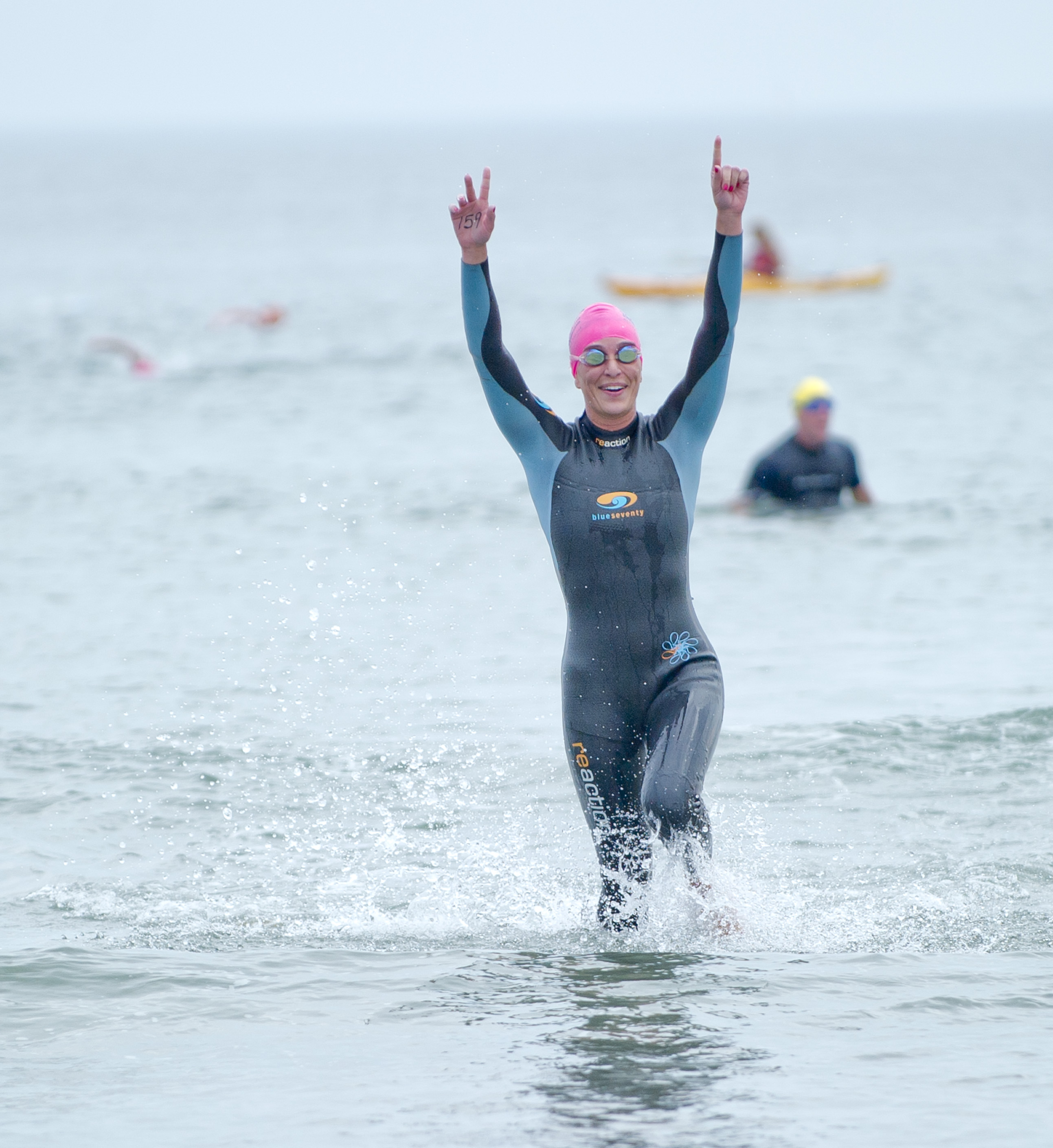
Pink cap arms up

Open water swimming is a bit different than a dip in the pool. Mother Nature doesn’t always keep her bathtubs at a balmy 80 degrees, and when the only walls are walls of waves, an open water swim can seem intimidating. But we at Swim Across America know from experience that there’s nothing like the soft sound of rolling waves, the energy of becoming one with the water, and the accomplishment of crossing that finish line on the beach.

United by our commitment to the fight against cancer, we take pride in all who contribute to the cause. For those that swim with us, or are considering getting their feet wet, we’ve compiled some basic tips for taking the plunge!

Getting Ready

Believe it or not, most open water swimmers do a lot of training in pools. When prepping for an event, make sure you can swim at least the distance of the course comfortably. You can also practice a couple things that will help you once you get out onto the open seas:

  • Practice breathing to both sides. Bi-lateral breathing not only balances your body in the water, it can help you keep the sun from bothering your eyes, sight the shore without lifting your head, and avoid splashes from fellow swimmers.
  • Learn a few high-elbow drills. Waves in the open water can impede your recovery, so working on a stroke with a high elbow can help you to better extend your pull and catch the water.
  • Practice sighting. Since visibility can be low, you’ll need to sight where you’re swimming and establish a rhythm of lifting your eyes to see. Try the Gator Drill:
    • Close your eyes while your face is in the water, and lift your eyes slightly like an alligator to sight where you are in the pool while you practice. Get used to a rhythm of sighting (every 5 strokes, or more if you feel you can stay straight.) Be careful once you get close to the wall!!
      http://www.youtube.com/watch?v=hvhnB0O97k0

Before race day, it’s helpful to have practiced even a little in the open water. If you can, swim part (or all!) of the course- it’s a great way to get comfortable.

The Main Event

Now is the time to trust your training and kick some open water butt! The most important thing to remember before your first open water event is to keep your composure. Panic can be a worse enemy than a riptide. Relax and remember not to fight the water, and your swim will be a piece of cake!

In case you’re so nervous you’re practically wetting your wetsuit, here are a few last-minute tips.

  • Nervous about your goggles coming off? Put them on before your cap, so they’re snugly underneath it. They won’t budge.
  • Nervous about getting run over by the pack? Position yourself on the outskirts of the swimmers before the start, and avoid the chaos from the beginning.
  • Starting to get nervous during the swim? Don’t forget- if you need to roll over and do some backstroke, mix in some breaststroke, or even just float for a while, that’s perfectly fine. Do what you need to re-focus and relax, then get moving again!
  • Get in a good warm-up. Whether it’s in or out of the water, a good warm-up will get you psyched for an event and physically ready as well.

Think you can handle more? Here are a couple other tips for the more confident open water newbie:

  • If you can’t see a buoy or a landmark you’re using to spot, follow the pack. Usually they’ll be going in the right direction. Check periodically to re-situate yourself and find your landmark.
  • Periodically breathe to the side that the shore is on in order to spot yourself and lift your head less.
  • Packs of swimmers can form and can get strung out, or split up, throughout the course. Make a plan! Figure out if it’s beneficial for you to get into a pack, and if so, where it’s best for you to position yourself within it, and what to do if you get strung out.

From becoming one with the water to the palpable camaraderie to that feeling of accomplishment as you run underneath the finish-line arch, open water swims are an exciting challenge and satisfying experience. Train smart (I can almost hear the Rocky theme song now…) and remember to have fun on event day!

We’ll see you and the rest of the Swim Across America family on the beach.