Swim Across America Grant Funding of Memorial Sloan-Kettering Cancer Center Clinical Trial Shows that Immunotherapy Alone Could Replace Surgery, Enabling Patients to Retain Their Organs and Enhance Their Quality of Life 

The Promising Study Found that 80% of Patients with Mismatch Repair-Deficient (MMRd) Solid Tumors Treated with Immunotherapy Avoided Surgery 

The New England Journal of Medicine published a paper on April 27, 2025, that presents exciting new results from a clinical trial led by Memorial Sloan Kettering Cancer Center (MSK) gastrointestinal oncologists Andrea Cercek, MD, and Luis Diaz Jr., MD, that demonstrates how immunotherapy alone can help patients with MMRd cancers avoid surgery and preserve their quality of life. The results, presented simultaneously at the 2025 American Association of Cancer Research (AACR) Annual Meeting, showed that 80% of patients with several types of cancer treated with immunotherapy did not require surgery, radiation, or chemotherapy after six months of treatment with immunotherapy alone. Swim Across America awarded grants for the early-stage research and continues to award grants for the ongoing clinical trial.

Andrea Cercek, M.D., gastrointestinal oncologist and co-director of the Center for Young Onset Colorectal and Gastrointestinal Cancer at Memorial Sloan Kettering Cancer Center

Mismatch repair deficiency (MMRd) in cancer refers to a situation where tumor cells have defective mismatch repair (MMR) proteins, essential for correcting DNA errors during cell replication. This deficiency leads to the accumulation of mutations, including microsatellite instability (MSI), making tumors more prone to be recognized by the immune system. MMRd status is a significant factor in cancer treatment, particularly for immunotherapy, as it can predict response to immune checkpoint inhibitors. 

The standard of care for many cancers that have this specific MMRd genetic mutation has been surgery, radiation, and chemotherapy. Still, the patients who responded positively to this clinical trial did not require surgery to remove an organ and did not experience chemotherapy or radiation, which improved their quality of life. This trial is the first time that immunotherapy has been shown to replace surgery for a variety of solid tumors. 

“This study shows that immunotherapy can replace surgery, radiation and chemotherapy for mismatch repair-deficient solid tumors, which could help patients preserve their organs and avoid the harsh side effects of chemo and radiation,” said Andrea Cercek, M.D., gastrointestinal oncologist and co-director of the Center for Young Onset Colorectal and Gastrointestinal Cancer at Memorial Sloan Kettering Cancer Center. “Preserving a patient’s quality of life, while also successfully achieving positive results in eliminating their cancer, is the best possible outcome. They can return to their daily routines and maintain their independence.”
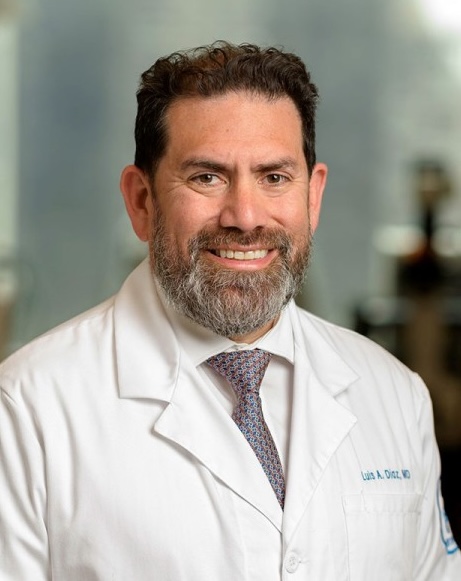
Luis Diaz, M.D., gastrointestinal oncologist and Head of the Division of Solid Tumor Oncology at Memorial Sloan Kettering Cancer Center

This phase 2 trial is an extension of a groundbreaking study, also funded in part by Swim Across America, in which all rectal cancer patients treated with the immunotherapy dostarlimab experienced a complete clinical response, meaning their tumors disappeared. This was the first time ever that a clinical trial had a 100% positive response rate.

The updated trial included 103 patients with stage 1-3 cancer; 49 with rectal cancer; and 54 with non-rectal cancers, including gastroesophageal, hepatobiliary, colon, genitourinary, and gynecologic. Drs. Cercek and Diaz noted that the 80% response rate in this expanded clinical trial is very exciting for these types of cancer.

“Grants provided by Swim Across America were critical to our initial study and advancing this trial to phase 2,” said Luis Diaz, M.D., gastrointestinal oncologist and Head of the Division of Solid Tumor Oncology at Memorial Sloan Kettering Cancer Center.

Founded in 1987, Swim Across America has raised more than $100 million to fight cancer. In its 38 years of making waves, thousands of volunteers and Olympians have swum the circumference of the earth three times uniting a movement to fight cancer that has created a groundswell of support spanning all generations. Today, more than 24 communities across the U.S. hold charity swims each year, which support innovative cancer research, detection, and patient programs. 

Drs. Andrea Cercek and Luis Diaz spoke at the 2024 Swim Across America – Long Island Sound open water swim

Swim Across America’s funding of clinical trials on a national level has helped contribute to four FDA-approved life-saving immunotherapy cancer treatments: Yervoy, Opdivo, Tecentriq, and Keytruda. Swim Across America awards grant to more than 60 projects each year and there are ten named Swim Across America Labs at major institutions.

In addition to Swim Across America grants, this trial received funding from the National Institutes of Health, National Cancer Institute, Haystack Oncology, and Stand Up To Cancer. MSK also acknowledges support from GSK, whose PD-1 blockade Jemperli (dostarlimab), represents a promising advancement in the treatment of patients.

For more information and to inquire about eligibility for this clinical trial, talk to your oncologist or call MSK at 646-888-4189. You may also reach to info@swimacrossamerica.org and we will help guide you. 
Swim Across America Grants  $900,000 Toward First-of-Its-Kind Gene Editing Innovation

Revolutionary CRISPR Gene Editing and Other Cell and Gene Therapy Editing Takes Center Stage in Finding Ways to Effectively Treat Cancer

Swim Across America, the nonprofit funding innovative clinical trials and patient-centered programs for cancer, is proud to announce the award of two $450,000 grants to two of its beneficiaries, Alliance for Cancer Gene Therapy (ACGT) and Dana-Farber Cancer Institute, to support the work of novel gene and base editing techniques used in advanced cancer research, including targeted therapies, immunotherapies and cellular therapies. The two-year grants will specifically support the work of scientific investigators Joseph Fraietta, PhD, at the University of Pennsylvania through ACGT, and Pietro Genovese, PhD, at Dana-Farber Cancer Institute, for their work in groundbreaking cell and gene therapy cancer research. This financial support paves the way for more effective therapies across many cancer types including solid tumors, offering potential new hope for patients with hard to treat cancer types or limited treatment options.

“Gene editing, including CRISPR, are some of the most promising frontiers in cancer research allowing for advances in targeted therapies, immunotherapies, CAR-T cell therapy and early/minimal residual disease detection, diagnostics and cancer vaccines,” said Rob Butcher, CEO of Swim Across America. “These grants to Dr. Fraietta through ACGT, and Dr. Genovese at Dana-Farber, will help accelerate the advancement of potential gene-edited cancer treatments that could transform how we treat patients and their quality of life. Just as our previous funding has helped develop immunotherapy treatments that are saving lives today, we believe these pointed investments will help accelerate the next generation of cancer breakthroughs.”

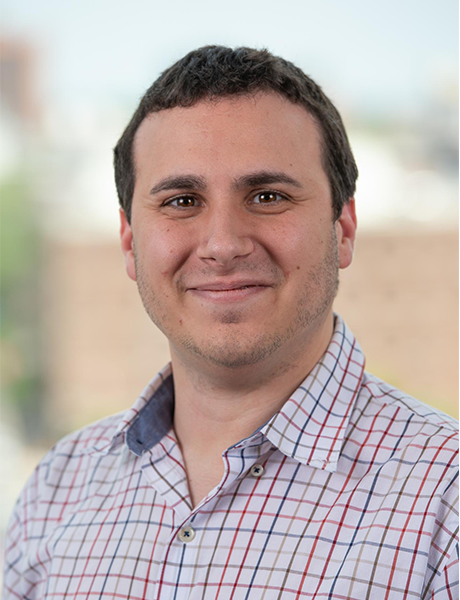
Joseph Fraietta, PhD

Joseph Fraietta, PhD, through Swim Across America–Fairfield County beneficiary Alliance for Cancer Gene Therapy, is developing an innovative “off-the-shelf” cell therapy for aggressive cancers. His research uses a precise gene-editing tool called a “base editor” to create more effective CAR T cells that can target cancers with KRAS mutations, found in 20-25% of all cancers including lung, colon and pancreatic cancer. His team is also developing “micropharmacies” – immune cells engineered to release powerful cancer-fighting signals directly at tumor sites while minimizing side effects.

Pietro Genovese, PhD

Pietro Genovese, PhD, at Dana-Farber, is taking a revolutionary approach to treating acute myeloid leukemia (AML). Rather than targeting cancer cells directly, his team is creating “stealth” healthy blood cells engineered to survive cancer treatments while allowing the selective elimination of cancer cells. This innovative strategy could provide less toxic treatment options for AML and other blood cancers where traditional therapies often harm healthy cells along with cancerous ones.

“With the current funding landscape and resources potentially constrained, nonprofit organizations play a vital role in ensuring innovative cancer research moves forward,” said Evan Vosburgh, MD, Research and Grants committee chair for Swim Across America. “These targeted grants support precisely the kind of high-risk, high-reward research that could revolutionize cancer treatment, but might otherwise go unfunded. By supporting early-stage research in cell and gene therapy, we’re helping bridge critical funding gaps and accelerating the development of potentially life-saving treatments.”

Swim Across America has raised more than $100 million for cancer research since its founding in 1987 and has a strong track record of funding transformative research, including clinical trials that led to FDA-approved immunotherapy medicines Keytruda, Opdivo, Yervoy and Tecentriq. The organization was also a grant funder of Memorial Sloan Kettering’s landmark clinical trial that achieved a 100% success rate treating advanced rectal cancer patients with dostarlimab.

About Swim Across America Swim Across America hosts open water and pool swims in numerous communities nationwide, from Nantucket to under San Francisco’s Golden Gate Bridge. More than 150 Olympians support the organization, including Michael Phelps, Kate Douglass, Missy Franklin and Ryan Lochte. The organization supports more than 60 cancer research projects annually and has ten named Swim Across America Labs at major institutions nationwide. To learn more visit swimacrossamerica.org or follow on social media @SwimAcrossAmerica on Facebook and @SAASwim on Instagram.