Swim Across America is proud to announce a partnership with the American Swimming Coaches Association (ASCA) to sponsor a scholarship for a deserving coach to attend the 2025 ASCA World Clinic in Reno, Nevada, September 2-5.
The Swim Across America Scholarship provides full registration for the ASCA World Clinic and covers accommodation at the Peppermill Reno hotel and up to $500 for travel.
The ASCA World Clinic, now in its 58th year, is the largest and most comprehensive annual gathering in the sport of swimming. The event features 50 speakers covering a wide range of topics, an expansive exhibition hall, coaching demonstration at an Endless Pool, and numerous socials and networking opportunities.
This initiative is part of SAA’s commitment to supporting ASCA advancing the sport of swimming and the professional growth of dedicated coaches across the nation.
Applicants must be ASCA members who have never attended a World Clinic. Interested candidates are encouraged to complete the online application by February 28, 2025. The scholarship recipient will be notified by March 31, 2025.
“We deeply appreciate Swim Across America for their generosity and dedication to supporting the coaching community,” said ASCA CEO Jennifer LaMont. “This scholarship underscores their acknowledgment of the critical role coaches play in developing athletes and teams. We can’t wait to welcome the scholarship recipient to Reno this September.”
For more information about the ASCA World Clinic and the Swim Across America scholarship, and to apply, go to www.ascaworldclinic.com.
About Swim Across America Swim Across America is a nonprofit organization dedicated to raising funds for cancer research through swimming-related events. Since its inception in 1987, Swim Across America has raised over $100M to fund groundbreaking cancer research and clinical trials. Learn more at www.swimacrossamerica.org.
About ASCA The American Swimming Coaches Association (ASCA) is the professional association for swim coaches dedicated to inspiring, supporting, and advocating for coaches in the US and worldwide. Through education, certification, and professional development, ASCA empowers coaches to lead swimmers toward excellence while advancing the sport of swimming. Learn more at www.swimmingcoach.org.
Swim Across America (SAA) is pleased to announce the winners of the 2024 SAA College Cup. More than 45 collegiate, club, and alumni teams and over 1,400 participants all united to make waves in the fight against cancer through swimming and friendly competition.
Swim Across America awarded the top fundraising team, the top collegiate fundraiser, and a bonus team chosen at random.
Congrats to the top fundraising team, Team Tar Heel! The top team is led by co-captains, Georgia Nel and Sue Walsh, and raised more than $96,000. Funds raised by Team Tar Heel supported the Swim Across America – Carolina community.
Team Tar Heel from the SAA-Carolina community is the winner of the Swim Across America College Cup. Congrats!
For Olympian and University of North Carolina at Chapel Hill alum, Sue Walsh, Swim Across America’s mission is deeply personal.
“My involvement became even more personal when I heard the words myself, ‘You have metastatic colon cancer.’ As someone who spent most of her life committed to the sport of swimming, it made perfect sense to partner with SAA in the fight against cancer, including my own.”
Congrats to the top collegiate fundraiser, Alyssa Corb, who raised over $24,000! Alyssa is a student at the University of Tennessee, Swim Across America – Nashville co-event director, and long-time supporter of Swim Across America – Baltimore. Over the years, Alyssa and her family have raised more than $200,000.
Alyssa Corb and her mother, Jennifer, at the 2024 SAA-Nashville community swim.
“My main inspiration for swimming is my brother Michael, who passed away from mixed lineage leukemia when he was nine months old,” shared Alyssa.
“I was 2 when he was born and 3 when he was diagnosed and died. I don’t remember every second but I do remember loving every minute with him, and his face lighting up whenever I walked into his room. To me, Swim Across America is not just about raising money to find a cure, it’s to honor and remember those who fought their battle and prevent other parents, siblings, and families from going through the loss of a loved one.”
SAA also recognized a collegiate team chosen through a random drawing: Providence College Swimming and Diving team from Providence Rhode Island. The team of more than 100 swimmers raised more than $64,000 and were awarded a Vasa Trainer Pro. Funds raised by the team from Providence College Swimming and Diving supported Swim Across America – Rhode Island.
The Swim Across America College Cup was announced in 2023 and invited college teams, athletes, and alumni to join the organization’s mission of funding cancer research, clinical trials, and patient care programs through community charity swims. Teams participated by registering for one of Swim Across America’s open water charity swims, joining or starting a pool swim, or participating virtually through the SAA My Way program. Participants affiliated with a U.S-based college or university were eligible to compete in the College Cup. Teams consisted of current college students, alumni, or a mix of both, and could be small as one person.
The Swim Across America College Cup was supported through partnerships with CSCAA, Vasa, and GoSwim.
About Swim Across America
Swim Across America, Inc. (SAA) is dedicated to raising money and awareness for cancer research, prevention, and treatment through swimming-related events. With the help of hundreds of volunteers nationwide and past and current Olympians, Swim Across America is helping find a cure for cancer through athleticism, community outreach and direct service. To learn more visit swimacrossamerica.org or follow on Facebook @SwimAcrossAmerica or on Instagram @SAASwim.
About CSCAA
Founded in 1922, the CSCAA is the nation’s first professional coaching association for intercollegiate athletics. The CSCAA boasts more than 2,000 member coaches and assistant coaches, recognizes All-American swimmers and divers, NCAA record-breakers and Scholar All-America athletes and teams, as well as outstanding coaches and contributors, and helps oversee the welfare of collegiate swimming and diving. Learn more about CSCAA at cscaa.org.
About Vasa
Vasa empowers swimmers, surfers, and triathletes to become stronger, better, faster in sports, fitness, and injury rehab. Vasa offers specific equipment such as swim ergometers, trainers, sport benches and other accessories to provide athletes with safe, effective training methods. Founded by Rob Sleamaker, an acclaimed exercise physiologist and author, who has worked with Olympians, biathletes, and triathletes as well as some of the world’s most respected swim coaches to reinvent their training practices. Learn more about Vasa at vasatrainer.com.
About GoSwim
GoSwim creates content that helps people of all ages and backgrounds to swim better and reach their full potential in the sport. GoSwim’s videos are acclaimed and unsurpassed for clarity of filming and clarity of content and commentary. GoSwim was founded in 2002 by Olympian Glenn Mills and business colleague Barbara Hummel. Learn more at goswim.tv.
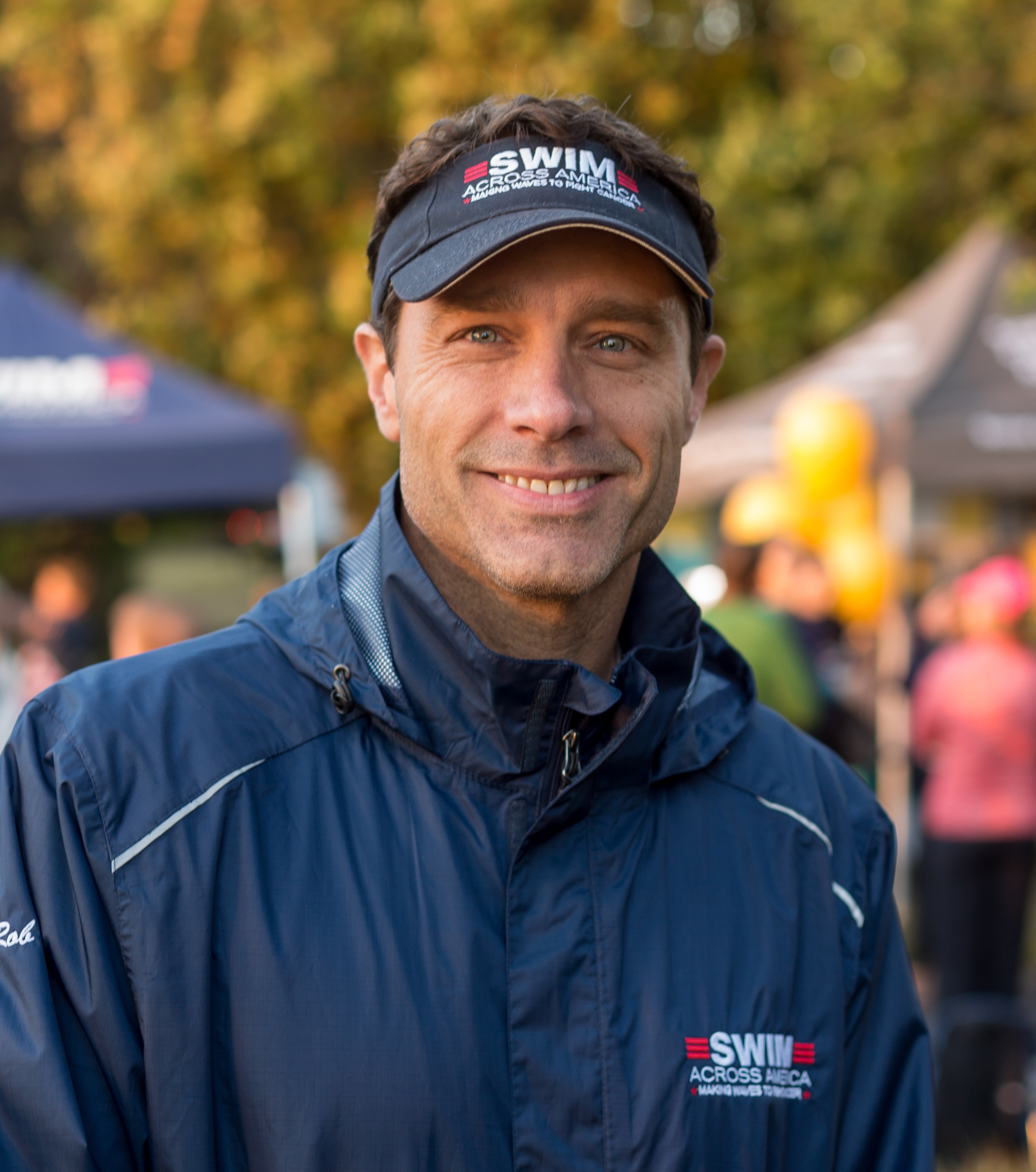
Congratulations to Swim Across America President and CEO, Rob Butcher, for receiving the prestigious Richard Steadman Award from the College Swimming Coaches Association of America (CSCAA).
This recognition honors his exceptional leadership, dedication, and contributions to the swimming community and the fight against cancer with Swim Across America.
As the President and CEO of Swim Across America since 2016, Butcher has guided the organization through tremendous growth and success. Under his leadership, Swim Across America has continued to expand its reach, with events across the country raising millions of dollars annually to support cancer research and treatment. His passion for SAA’s mission is deeply personal: both his grandmother and stepmother were cancer survivors, and his mother, whom he calls his hero, lost her battle with appendix cancer in 2007.
Before joining SAA, Butcher served as Executive Director for U.S. Masters Swimming (USMS) for seven years. During his tenure, he transformed USMS into a professionally managed organization, developing the creation of the Masters Coach Certification and Adult Learn-to-Swim programs. Under his leadership, membership grew by more than 50%, and revenue tripled to $3.6 million.
A Georgia Southern University graduate and competitor in the 2000 U.S. Olympic Trials, Butcher has demonstrated a lifelong commitment to the sport of swimming.
His leadership at SAA has been instrumental in expanding its impact, with the organization raising over $100 million for cancer research since its inception in 1987.
“Rob Butcher exemplifies the very spirit of the Steadman Award—leadership, integrity, and an unwavering commitment to serving others,” said Samantha Barany, Executive Director of the CSCAA. “Through the water, he fights cancer every day, and we are all better off for his dedication to making a difference. Rob has profoundly impacted the swimming community and every community where Swim Across America has a presence. His passion for people and his ability to spread happiness wherever he goes are truly inspiring.”
Rob Butcher resides in Charlotte, North Carolina, with his wife Allison and their twin boys. He remains an active advocate for cancer research and a unifying force within the swimming community. His receipt of the Richard Steadman Award highlights not only his professional achievements but also his heartfelt commitment to making a lasting impact in the fight against cancer. For more information about Swim Across America and its mission, visit swimacrossamerica.org.
In 1994, Swim Across America – Chicago debuted as a 6-mile relay swim in beautiful Lake Michigan and raised $15,000. Since then, the annual community event has grown to raise more than $5 million for their local beneficiaries.
On Saturday, August 3, hundreds of swimmers, volunteers, and supporters will gather at beautiful Lake Michigan to celebrate 30 years of Making Waves to Fight Cancer! Proceeds from the event support cancer research at Rush Medical Center.
For some swimmers, like 14-year-old Alondra Beening, it will be their first time diving into the lake on a meaningful and inspiring day. For others, like Mary McCullagh and Mary Holloway, the day represents a three decade long commitment to the Swim Across America mission.
“I swam at our first swim in 1994 and I’ve had the privilege of watching the community’s support grow over the years,” shared Mary McCullagh.
Mary credits a community of “doers and givers” for the success and longevity of Swim Across America – Chicago. Her family first became involved not because they had a personal connection to the cause, but because they grew up with a servant leadership mindset.
Mary McCullagh, center, at the inaugural Swim Across America – Chicago event in 1994.
“I have 10 brothers and sisters and we were taught to recognize a need and do something to help. Whether it is time, talent, or effort, we can all do something good in this world,” said Mary M.
“Even when I didn’t live in Chicago, my band of siblings helped to keep our support going. This event has been successful for 30 years thanks to this community of leaders who all want to do good.”
Mary Halloway’s involvement began 29 years ago as a passerby supporting her brother, Russ. Russ was an endurance swimmer who swam at SAA-Chicago and became the resident “event day chef” preparing food and snacks for the swimmers on the morning of the event.
Mary Halloway joins Swim Across America – Chicago for the 12th year this year. She was introduced to the organization by her brother, Russ Haffner.
“I started riding my bike down the lakefront to see him swim, and I would scream ‘Go, Russ!’ every time his arm was raised as he swam,” Mary H. said. “I don’t know how, but somehow he heard me every time, and he’d give me a wave on each stroke.”
Unfortunately, Russ passed away a few months after a lymphoma diagnosis in 2011. The SAA-Chicago leadership team knew they wanted his memory to live on so they created a special award to recognize outstanding community members, named the Russ Haffner Award.
Mary’s connection to SAA-Chicago became more personal when she was diagnosed with ovarian cancer in 2010. She was treated at Rush with chemotherapy and a hysterectomy, and was given the all-clear in early 2011. Though she wasn’t a natural swimmer, Mary was determined to swim at SAA-Chicago and honor her brother’s memory. This year will be her 12th year participating in the event.
The 30th annual event will also recognize rookie participants – those who are swimming for the first time!
Alondra Beening has watched her dad, Mark Beening, swim at SAA-Chicago for the last 10 years and this year, at 14 years old, she will join him as a 1-mile swimmer. Alondra has been swimming her whole life and on a swim team since she was eight years old. She’s excited to join her dad and honor their loved ones through the community swim.
“She’s always wanted to swim with me since she was younger, and we are so happy to finally have this opportunity – and it is my 10th year swimming so it’s really special” shared Mark. “Unfortunately, we have had friends and family members who have been diagnosed with cancer, some of which we have lost. We want to dedicate this swim to them.”
Swim Across America – Chicago is led by co-event directors, Alyse Mauro Mason and Katie Marchetti. Both have watched not only the community support grow, but also the waves of impact the event has had on the local beneficiaries.
“Our event has supported Rush since 2012 and we’re proud to have donated more than $2 million to the cancer center here in Chicago,” said Alyse.
Co-event director, Alyse Mauro Mason, right, presented the 2023 Russ Haffner Award to Cathi McNamara at the 2023 SAA-Chicago event.
“Swim Across America – Chicago grants early-stage research and helps doctors begin and continue research that may be on the brink of a breakthrough,” Alyse continued. “We often hear that our doctors have received additional grants or NIH funding thanks to the findings and outcomes they have gathered from a project we have funded.”
SAA-Chicago hosted their fourth annual golf outing in June 2024 at Cog Hill Golf and Country Club. The event also raises funds for Rush Medical Center and will celebrate its fifth year on June 16, 2025.
In fact, in 2022, the NIH honored Rush physician scientist Dr. Faraz Bishehsari with the Director’s Transformative Research Award, which includes funding for his innovative pancreatic cancer research. The award, one of the NIH’s most prestigious and exclusive, is given to “exceptionally creative” scientists proposing high-risk, high-impact research. Dr. Bishehsari’s research was also supported by our Swim Across America – Chicago charity swim.
Though the swim course has changed – and the number of participants has grown exponentially – one thing remains: Swim Across America – Chicago is a community dedicated to Making Waves to Fight Cancer year after year.
Register to swim or volunteer at the August 3 Swim Across America – Chicago open water swim, or donate at swimacrossamerica.org/chicago.
Read more stories about Swim Across America – Chicago here.
Media coverage celebrating Swim Across America – San Francisco participant and marathon swimmer, Maya Merhige. Learn about Maya and her record-breaking marathon swims at swimacrossamerica.org/maya. For media inquiries, email Jeni Howard.
SwimSwam: “17-Year-Old Open Water Swimmer Maya Merhige Conquers New Zealand’s Cook Strait”
Swimming World: “Maya Merhige, 17, Adds Crossing of New Zealand’s Cook Strait”
World Open Water Swimming Association: “17-Year-Old Marathon Swimmer Maya Merhige Conquers New Zealand’s Cook Strait, Continuing Her Mission to Make Waves to Fight Cancer”
The Sports Column: “Making Waves to Fight Cancer, 17-Year-Old Maya Merhige Conquers New Zealand’s Cook Strait”
KPIX-TV (CBS, 5): “Berkeley high school student completes daunting open water swim in New Zealand”
SAAswim.com: “17-Year-Old Marathon Swimmer Maya Merhige Conquers New Zealand’s Cook Strait, Continuing Her Mission to Make Waves to Fight Cancer”
English Channel Swim and Triple Crown – July 2024
NBC News Now: Teen swims English Channel to help fight cancer
People Magazine: “16-Year-Old Successfully Swims the English Channel — Up Next? Her Senior Year of High School”
New York Times: At 17, She’s Already Conquered Some of the World’s Big Swims
The Sports Column: “16-Year-Old Maya Merhige Swims English Channel, Raises +$100,000 to Fight Cancer”
SwimSwam: “16-YEAR-OLD MAYA MERHIGE SUCCESSFULLY SWIMS THE ENGLISH CHANNEL”
Berkeleyside (updated): “Berkeley teen braves sharks and hyperthermia in world record swims. What keeps her going?”
Yahoo! Sport: “16-Year-Old Successfully Swims the English Channel — Up Next? Her Senior Year of High School”
Swimming World: “Maya Merhige Swims English Channel at Age 16 to Complete Open Water Triple Crown”
Outdoor Swimmer: “16-year-old Maya Merhige to swim English Channel”
SwimSwam: “16-Year-Old Marathon Swimmer Maya Merhige to Tackle English Channel”
The Sports Column: “Maya Merhige: ‘I Swim for Each and Every Person Who Has Ever Been Touched by Cancer’”
Berkeley, California, Resident Is Now One of the Youngest in History to Complete the Triple Crown of Open Water Swimming and Makes Waves to Fund Cancer Research through Swim Across America
Maya Merhige has done it again! The 16-year-old marathon swimmer has just successfully conquered the English Channel (20.5 miles or 33 km), making her one of the youngest swimmers in history to achieve the Triple Crown of Open Water Swimming, which includes the English Channel, Catalina Channel and Manhattan 20 Bridges swims. Maya swam the English Channel in just 11 hours and 39 minutes on July 13, 2024. She undertook the iconic English Channel swim and her other marathon swims to make waves to fight cancer and raise funds for the nonprofit Swim Across America, which funds innovative cancer treatments and clinical trials.
Maya Merhige, a 16-year-old marathon swimmer from San Francisco, successfully completed the English Channel swim earning her the prestigious Triple Crown of Open Water Swimming.
Maya earned her stripes toward the Triple Crown and broke swimming records in the past by completing the Catalina Channel and Manhattan 20 Bridges swims. In September 2021, at 14 years old, Maya broke the record as the youngest woman in history to successfully swim the 20-mile Catalina Channel, finishing in 10 hours and 48 minutes. In 2023, at 15 years old, Maya was one of the youngest swimmers to successfully complete the 28.5-mile 20 Bridges swim around Manhattan Island, which took her 8 hours and 43 minutes.
“We are beyond proud of Maya and her determination and grit to swim these swims,” said Maya’s mom Liz Tung. “We never imagined Maya, who was just nine years old when she swam her first Swim Across America – San Francisco open water swim, would find such a passion for open water swimming and take her swimming so far. Earning the Triple Crown of Open Water Swimming at just 16 years old is just incredible! We are thrilled for her!”
Maya also holds the world record as the youngest woman to swim the 21-mile length, 12-mile width, and 10.8-mile Vikingsholm courses of Lake Tahoe, earning her the Tahoe Triple Crown. She also became the youngest swimmer in the world to successfully swim the grueling 26-mile Kaiwi Molokai Channel, between the Hawaiian Islands of Molokai and Oahu, which she completed in 27 hrs and 33 mins. She also holds a record for the longest duration and joined the ranks of the “24-Hour Club” with the 108th longest non-stop open water swim in history.
Maya Merhige after completing the Catalina Channel swim in September 2021.
“I’m so grateful and excited to have successfully swum the English Channel and completed the Triple Crown of Open Water Swimming,” said Maya. “Swimming the English Channel this year was a big goal of mine for many reasons. This year marks my ninth year participating with Swim Across America. With the generous support of family, friends and others, I have been able to raise an incredible $100,000 to fight cancer, which has gone directly to the Swim Across America San Francisco beneficiary UCSF Benioff Children’s Hospitals. This past year, I’ve also endured some health battles of my own, and my personal experience has made me even more inspired and passionate about supporting cancer research and treatments at UCSF Benioff Children’s Hospitals. I’m also going to be a senior in high school this fall and next year will look very different for me as I will leave home to start college. So this was the year to swim the English Channel!”
Maya before her record-breaking and grueling 26-mile Kaiwi Molokai Channel swim in January 2023.
Maya’s own medical challenges began in March 2023, when after suffering a ski crash, a benign tumor on her pancreas was discovered. Suffering from chronic pain, surgeries and hospitalizations since, she has a newfound empathy for pediatric cancer patients who endure endless procedures and appointments. Despite these challenges, Maya remains undeterred.
“Due to the pain I was experiencing earlier this year, I didn’t get to train as much as I would have liked leading up to the English Channel swim,” noted Maya. “These past six weeks, after being in the hospital for 10 nights in May, I really had to kick my training into gear. There were points while I was swimming the Channel where I wanted to give up. I swam through schools of jellyfish and had a lot of stomach pain, but I kept thinking that this doesn’t compare to what kids with cancer face. That helped me find the strength to keep going.”
Continues Maya, “The English Channel was cold and the current was really strong. Whenever I stopped swimming to feed, I could feel myself getting pulled backwards. I knew I had to keep swimming hard, no matter how exhausted I was, in order to get past the tidal current and land on the French shore at Cap Gris Nez. But I made it!” After reaching shore and climbing the rocks to dry land, Maya had one of her favorite meals – Chow Mein – waiting for her back on the boat.
“I’m extremely grateful for my family and friends who have supported me in this endeavor. My dad Chris Merhige and friend Kelly Gentry, who is also an accomplished English Channel swimmer, were on the boat (the Sea Leopard) as my crew during the swim, along with the boat captain Stuart Gleeson, co-pilot Sean Marsh, and observer Jon Miell. My mom Liz Tung, sister Lucy, and extended family were back in England cheering me on. A big thank you to all of my friends and supporters who followed my journey and sent words of encouragement that were relayed to me while swimming. I’m exhausted, but very, very happy!”
Maya’s swimming journey began at just nine years old with the Swim Across America – San Francisco open water swim when she joined Team Susan Survives!, for her dear family friend and three-time cancer survivor Susan Helmrich. The San Francisco swim raises funds for pediatric cancer research, supporting the work of Dr. Julie Saba and Dr. Robert Goldsby at UCSF Benioff Children’s Hospital, which has been a leader in pediatric cancer research and treatment for decades, significantly increasing cure rates and improving the future for thousands of patients worldwide. UCSF’s advances in treating leukemia and other cancers have contributed to the overall five-year survival rate for childhood cancer rising to nearly 85% today, up from 10% in the 1970s. Despite this progress, childhood cancer is still a challenge and can have lasting effects on patients and their families. UCSF continues to study these long-term consequences.
Maya Merhige and SAA-San Francisco co-event director, Jackie NeJaime at the 2023 community swim.
The partnership between Swim Across America and UCSF Benioff Children’s Hospital is essential for advancing cancer research and care.
Maya is also serving her second year as president of the Swim Across America – San Francisco Junior Advisory Board and her goal has been to raise $35,000 this year with the English Channel swim and the San Francisco swim, which will bring the total she has been able to raise to more than $125,000 for Swim Across America to support cancer research for UCSF Benioff Children’s Hospitals.
“I’d especially like to thank Dr. Julie Saba, director of the Swim Across America Research Lab at UCSF Benioff Children’s Hospital Oakland, for her continued support throughout my own health challenges. For that, I am forever grateful and inspired to raise even more for Swim Across America and UCSF through my swimming,” noted Maya.
Maya also plans to participate in the Swim Across America – San Francisco open water swim on October 5, 2024, swimming with her team Chasing Channels, made up of other Swim Across America – San Francisco Junior Advisory Board members and Bay Area youth. One tradition Maya has is to write the names of friends and family members battling cancer on her swim cap. “I am honored to carry the names of friends and family members affected by cancer on my cap,” she added. “I’m going to keep swimming to raise awareness and funds for fighting cancer until we have a cure.”
To learn more about Maya swimming the English Channel and to make a donation to Swim Across America, visit swimacrossamerica.org/maya.
Swim Across America is a national organization and offers open water and pool swims in 24 communities, from Boston Harbor to under the Golden Gate Bridge. Founded in 1987, Swim Across America has raised more than $100 million in the fight against cancer. Funds raised by Swim Across America and its grants have helped support the research and clinical trials for FDA approved immunotherapy medicines, including Keytruda, Opdivo, Yervoy and Tecentriq. Swim Across America is also a grant funder of the successful clinical trial at Memorial Sloan Kettering that was published inThe New England Journal of Medicine and showed a 100 percent success rate in treating patients in a phase 2 clinical trial for advanced rectal cancer with dostarlimab. Swim Across America grants support more than 60 projects each year and there are ten named Swim Across America Labs at major institutions including: Children’s Healthcare of Atlanta, John Hopkins Medicine Baltimore, Rush in Chicago, Baylor Scott & White Charles A. Sammons Cancer Center in Dallas, Memorial Sloan Kettering Cancer Center New York, Infusion Center at Nantucket Cottage Hospital, UCSF Benioff Children’s Hospital Oakland and San Francisco, Fred Hutch Cancer Center, The Swim Across America Pediatric Research Lab at Columbia University Medical Center New York, and at Meyer Cancer Center at Weill Cornell Medicine.
More than 150 Olympians support Swim Across America, including Kate Douglass, Michael Phelps, Craig Beardsley, Elizabeth Beisel, Missy Franklin, Ryan Held, Gretchen Walsh, Donna de Varona, Rowdy Gaines, Janel Jorgensen McArdle, Bobby Hackett, Ryan Lochte, Glenn Mills, Cristina Teuscher and many more.
Swim Across America, Inc. (SAA) raises money and awareness for cancer research, prevention and treatment through swimming-related events. With the help of volunteers, and Olympians, Swim Across America is an innovator and leader in giving hope to those fighting cancer. To learn more visit swimacrossamerica.org, Facebook @SwimAcrossAmerica, and Instagram and Twitter @SAASwim.
Dan Levy, of Chappaqua, NY, has participated in Swim Across America – Long Island Sound community swims since 2008, when his sister, Karen Marcum, passed away after a long battle with colon cancer. Swim Across America events gave Dan an opportunity to honor his sister’s memory while raising funds for cancer research.
“I have swam my whole life and I was a coach at the Chappaqua Swim and Tennis Club for 25 years, so supporting Swim Across America is the best way to honor my sister while doing something I love,” said Dan.
Swim Across America – Long Island Sound is Swim Across America’s largest and longest-running open water swim raising more than $25 million since 1992.
On July 27, the community will hold its 32nd annual event at the Larchmont Yacht Club and welcome more than 700 swimmers and volunteers. The community swim benefits Memorial Sloan Kettering Cancer Center, Columbia University Medical Center, Cancer Support Team, and Weill Cornell Medicine.
In addition to the annual open water swim, SAA-Long Island Sound hosts many pool swims in the Westchester, NY area. And this year, Dan will swim in all eight of them!
Dan Levy with his sister, Karen Marcum, who passed after a long battle with colon cancer.
“I’m really excited because 2024 is my 8th year participating in all SAA-Long Island Sound pool swims, and thanks to the addition of the same-day pool swim at the Larchmont Shore Club, there are eight swims!” shared Dan.
Dan’s tour of pool swims started in 2016 and he has upheld the tradition ever since. In addition to the pool swims, he swam in the SAA-Long Island Sound open water swim in 2021.
Dan Levy in 2018 after completing all of the Swim Across America – Long Island Sound pool swims.
“In 2016, my Westchester Masters teammate, Carrie Dillon, and I completed the mile swim at all of the SAA-Long Island Sound pool events,” said Dan.
“I feel so proud, honored, and fortunate to use my lifelong love of swimming to help raise funds for research and treatment to support and make a difference in the lives of those battling cancer now or in the future.”
This year, Dan is swimming as captain of Team KiDS, an acronym created in memory of loved ones and community members who have fought cancer. The team has more than 20 members participating in various pool swims.
In total, Dan and his teams have raised close to $500,000 for Swim Across America – Long Island Sound.
Dan started Team Karen after his sister passed in 2008. Shortly after, the team name was changed to Team Karen and David to honor David Simon, a member of the swimming community.
“A year before my sister passed away, David Simon lost his battle with cancer,” shared Dan.
“David was the father of two members on our summer swim team, the husband of the then-Board President, and our team’s unofficial photographer.”
The team name evolved again in 2019 to honor a young swimmer, Scarlett Chwatko. Dan’s swim team also found a unique way to ensure Scarlett’s memory lives on.
“In 2019, one of our youngest team members, 8-year-old Scarlett Chwatko, lost her fight against brain cancer. Scarlett was an inspiration to all who knew her,” said Dan.
“Her courage and perseverance were the impetus for the creation of the swim team’s Brave Bunny Award. This award is given to the swim team member who exhibits those same qualities each season.”
After she passed, Scarlett’s brother, Max, created Team BB (Brave Bunny) and the two teams have come together to form Team KiDS.
Dan Levy with Max and Scarlett Chwatko.
“The acronym is for the first names of these three remarkable individuals. Placed together, it is also for the amazing kids and their friends and families who come together every year to show how their love for swimming can make a difference in the ongoing fight against all forms of cancer,” explained Dan.
In addition to Karen, Dave, and Scarlett, Dan also swims for Masters teammates, Jason Troiano and John Needham, and his brother, Alan.
“Alan developed renal cancer and had surgery in Fall 2023. The tumor was malignant, but fortunately, the cancer had not yet metastasized and he remains cancer free to this day. I’m thankful to all the doctors and researchers who work tirelessly towards a cure to this awful disease.”
If you are moved to support Dan Levy and Team KiDS, click here.
For the third year in a row, swimmer Bryan Stroinski, is participating in the Swim Across America – Nashville community charity swim with his team “Bryan’s Battlin’ Blue Waves.” Bryan and his teammates are swimming in honor of one of Bryan’s best friends Zac Cain, who sadly lost his battle with colorectal cancer at just 19 years of age.
“When I first heard about Swim Across America, I knew that it combined two of my main interests – swimming and cancer research,” said Bryan.
“I feel like everyone is impacted by cancer in some way, and that is true for me as well. Ten years ago I lost one of my best friends, Zac Cain, to colorectal cancer. Zac was diagnosed during his senior year of high school in 2012, during our swim season together. I had swam with Zac for many years previously and we developed a great friendship.”
Bryan Stroinski and his friend, Zac Cain, who battled colorectal cancer while in high school.
“Zac was always someone that anyone could go to for anything. He was a great training partner, teammate, and overall amazing friend. Zac was a phenomenal swimmer who had planned on swimming Division 1 with sights set on the Olympics. Zac was still competing at his highest level right up until his diagnosis, so losing someone so young to cancer was hard – and it was a complete shock to all of us who knew him.”
Bryan is swimming in this year’s SAA-Nashville charity swim to honor 10 years since Zac’s passing.
Bryan shared that Zac had been in and out of remission from his diagnosis in 2012 until his passing in March 2014. During this time, Zac had also been a participant in a couple clinical trials for cancer research drugs.
“Because of Zac’s illness and participation in clinical trials, I feel a strong personal connection to Swim Across America’s mission,” said Bryan.
“Funding for clinical trials is so important in cancer research and having that be the main goal for Swim Across America makes me want to support the organization in any way I can. Swim Across America’s mission to unite communities and support those affected by cancer resonates deeply with me and my family, as we believe in the power of collective action to drive positive change in the fight against this disease.”
Bryan and his team at the 2023 Swim Across America – Nashville community charity swim.
“My participation this year is important because it is the 10 year anniversary of Zac’s passing, as well as the one year anniversary of my Mom’s death. While I did not lose my Mom to cancer, she always knew how important Swim Across America and Zac were to me. I always feel my Mom’s continued support in anything I do, so my motivation to support Swim Across America this year is higher than ever, and I am excited to see what the Nashville Community can do for Vanderbilt Ingram Cancer Center.”
To support Bryan and his team, Bryan’s Battlin’ Blue Waves, click here.
Swimmers, Boaters, Volunteers Make Waves in the Fight Against Cancer
ISLAMORADA, Fla., February 22, 2024 — Swim Across America – Florida Keys is #makingwaves to #fightcancer! Celebrating its 3rd year, this year’s swim will be held Saturday, April 20, 2024, at Founders Park in Islamorada, Florida. There are several swim distances available: half-mile, one-and-a-half mile and two-mile, plus a fun Kids’ Splash! Boaters, kayakers, paddle boarders, and land volunteers participate in this inspirational event. To register as a swimmer or a volunteer, or to donate, visit swimacrossamerica.org/floridakeys.
Why does Swim Across America – Florida Keys swim to raise money in the fight against cancer? Cancer sadly touches everyone — whether it is a loved one or a friend, everyone knows someone who has been impacted by cancer.
Swimmers, volunteers and spectators at the 2023 Swim Across America – Florida Keys charity swim.
In 2024, For the first time ever, the United States is expected to surpass more than 2 million new cases of cancer and 611,720 cancer deaths. These staggering statistics offer compelling proof of the need to continue devising new approaches to treatment. In fact, there are more than 18 million Americans with a history of invasive cancer who are alive today, who were diagnosed many years ago or now have no current evidence of the disease, thanks to new treatments. Whether it is through swimming, volunteering, donating or cheering on loved ones and friends, Swim Across America – Florida Keys welcomes anyone and everyone who wants to be a part of the fight against cancer.
Funds raised by Swim Across America – Florida Keys go directly to support cancer research and patient care programs at Miami Cancer Institute. To date, Swim Across America – Florida Keys has donated more than $110,000 to Miami Cancer Institute.
Glenn and Susan Latham, co-event directors for Swim Across America – Florida Keys
“The Swim Across America – Florida Keys open water swim is such an inspiring event,” said Glenn Latham, event director of the Swim Across America – Florida Keys open water swim.
“The gathering of so many families and so many individuals who are honoring those who are special to them is incredible — whether they are currently battling it out, or survivors or have lost someone. To hear the stories and to learn about those whom cancer has touched and to experience that love is just palpable. The feeling of wanting to make a change and to do something for those who have experienced cancer is huge.”
Glenn Latham knows the impact of raising funds for cancer research first-hand. He is a cancer survivor himself after being diagnosed with prostate cancer at age 53 in 2008. Receiving a cancer diagnosis in his early 50’s wasn’t actually a surprise to Glenn – cancer has impacted his family with both of his parents and two out of his three siblings all battling cancer. Glenn’s father also battled prostate cancer and his mother passed away at the young age of 48 from breast cancer – a disease that also impacted two of his sisters, one who succumbed to the disease, and the other is a survivor, like Glenn. Today, Glenn at age 69, after five years of cancer treatment, is celebrating being 12 years cancer-free! In addition to running the Keys event, he is also a swimmer and has swam in the event each year.
“Fortunately, due to lots of prayer, family support and modern technology I am in remission,” said Glenn Latham. “As a cancer survivor, I subsequently was involved in several cancer causes prior to moving to The Keys. My love of swimming led to the chance meeting with a local swimmer and Swim Across America board member who shared the mission of Swim Across America. My wife and I were immediately interested, and together we decided to organize a Swim Across America open water swim in the Florida Keys. I believe we need to expand cancer research, and the funding that Swim Across America and our swim generates is of huge value. It is particularly gratifying meeting and working with key members of the local medical research institution, Swim Across America staff, swim Olympians and local community supporters. Please come out and join us on April 20th! It’s fun for all ages!”
Swim Across America is a national organization and offers open water and pool swims in 24 communities, from Boston Harbor to under the Golden Gate Bridge. Founded in 1987, Swim Across America has raised more than $100 million in the fight against cancer.
Swim Across America’s funding of the research and clinical trials for patients helped contribute to four FDA approved life-saving immunotherapy cancer treatments: Yervoy, Opdivo, Tecentriq and Keytruda. Swim Across America is also a grant funder of the successful clinical trial at Memorial Sloan Kettering that was published inThe New England Journal of Medicine and showed a 100 percent success rate in treating patients in a phase 2 clinical trial for advanced rectal cancer with dostarlimab, an immunotherapy treatment produced by GlaxoSmithKline. Swim Across America awards grant to more than 60 projects each year and there are ten named Swim Across America Labs at major institutions including: Children’s Healthcare of Atlanta, John Hopkins Medicine Baltimore, Rush University Medical Center Chicago, Baylor Scott & White Charles A. Sammons Cancer Center in Dallas, Memorial Sloan Kettering Cancer Center New York, Infusion Center at Nantucket Cottage Hospital, UCSF Benioff Children’s Hospital Oakland and San Francisco, Fred Hutch Cancer Center, The Swim Across America Pediatric Research Lab at Columbia University Medical Center New York, and at Meyer Cancer Center at Weill Cornell Medicine.
More than 150 Olympians support Swim Across America, including Michael Phelps, Craig Beardsley (who was inducted into the International Swimmer’s Hall of Fame in 2022), Donna De Varona, Rowdy Gaines, Janel Jorgensen McArdle, Bobby Hackett, Ryan Lochte, Glenn Mills, Cristina Teuscher and many more.
To learn more about Swim Across America – Florida Keys or to register to swim, volunteer or donate, visit swimacrossamerica.org/floridakeys.
Swim Across America, Inc. (SAA) is dedicated to raising money and awareness for cancer research, prevention and treatment through swimming-related events. With the help of hundreds of volunteers nationwide and past and current Olympians, Swim Across America is helping find a cure for cancer through athleticism, community outreach and direct service. To learn more visit swimacrossamerica.org, swimacrossamerica.org/floridakeys or follow on Facebook or Instagram @saafloridakeys or email glenn@swimacrossamerica.org.
Since 2009, Swim Across America has contributed more than $5.3 million for cancer research at Fred Hutchinson Cancer Center. Funds raised by the event and by the motivated swimmers who participate enable early-career investigators to pursue groundbreaking research that can improve care for patients in Seattle and beyond. Investigators who received funding in previous years continue to build on research made possible by Swim Across America to advance understanding of breast cancer, lymphoma, pancreatic cancer, and sarcoma. We are delighted to provide this year’s update on the projects you’ve supported below. Don’t forget to register for this year’s Swim Across America – Seattle!
Dr. Meghan Flanagan
Meghan R. Flanagan, MD, MPH | Breast Cancer
Physician and affiliate investigator, Fred Hutch; Assistant professor of Surgery, UW Medicine
Project: Association of HSD3B1 (1245C) genotype with recurrence among post-menopausal women with estrogen receptor-positive, HER2- negative breast cancer
Background: Anti-estrogen endocrine therapy reduces the risk of recurrence and improves breast cancer mortality among individuals with hormone-receptor positive breast cancer. However, approximately one-quarter of patients are inherently resistant or develop resistance to endocrine therapy. Ultimately, this research may allow us to identify people with innate endocrine resistance and develop novel therapeutics and treatment strategies.
Progress statement 2022: Swim Across America’s initial support helped our team evaluate whether there is an association between a common single nucleotide variation in a gene called HSD3B1 (which is involved in hormone biosynthesis) and breast cancer outcomes. Using an extensive collection of clinical and pathologic data about patients and their tumors, we demonstrated that patients with two copies of the variant in the HSD3B1 gene had a five-fold increased risk of developing metastatic breast cancer, compared to people who did not have this variant.
In July 2022, we published findings from Swim Across America-supported research in the Annals of Surgical Oncology. Based on these results, our team received funding to study whether inheriting two copies of the variant HSD3B1 gene — which occurs in 10% to 15% of patients with estrogen receptor-positive, post-menopausal breast cancer — decreases the effectiveness of anti-estrogen medications, which are used universally in this population. Our results could indicate the need for alternative treatment strategies for these patients.
2023 update: 33 of 60 patients have completed the study, and frozen tissue from 25 patients has been analyzed for estrogen and androgen concentrations. Although only two patients had two copies of the variant HSD3B1 gene, and we do not have enough information to make conclusions about the variant versus wild-type gene, it is likely that our analysis will be the most comprehensive steroid profiling of normal and tumor breast tissue. We are also in the process of finalizing data for our primary study outcomes and anticipate this will be completed in the late spring.
Dr. Sita Kugel
Sita Kugel, PhD | Pancreatic Cancer
Assistant professor, Fred Hutch
Project: Exploring novel functions of HMGA2 in pancreatic cancer
Background: Pancreatic ductal adenocarcinoma (PDA) is an extremely lethal disease with an overall five-year survival rate of 12%. Recent work has led to the discovery that PDA can be subdivided into two principal subtypes based on transcriptional signatures: classical and basal. The basal subtype is more aggressive and leads to the worst overall survival. Our laboratory has been focused on understanding the mechanisms that drive each subtype with the aim of identifying therapeutic vulnerabilities that may be exploited in the clinic.
Progress statement 2022: Within an already challenging malignancy, certain transcriptional subtypes of pancreatic ductal adenocarcinoma are especially lethal. Funding from Swim Across America is helping us understand what defines each subtype, as well as their susceptibilities and mechanisms of resistance, to help to identify potential new treatment options for this devastating disease. Our team has recreated the classical and basal subtypes in the lab and managed to explore the differences between the two, including how they acquire resistance to first-line therapies. Our work will lay the groundwork for more targeted treatments for PDAs that can also account for their respective escape mechanisms, thereby improving outcomes.
2023 update: Some of our recent work showed that basal pancreatic tumors are sensitive to cyclin-dependent kinase (CDK) inhibitors. Our team is trialing these CDK inhibitors in patients who are also receiving standard-of-care treatment, while also looking at whether a different treatment combination affects one tumor subtype more than the other.
Simultaneously, we are using pancreatic tumor tissue taken from patients and grown in mice to test new treatment strategies in an environment similar to the human body.
Dr. Jonathan Sham
Jonathan Sham, MD, MBEE | Pancreatic Cancer
Surgical oncologist and assistant professor, Fred Hutch and UW Medicine
Project: Novel drug-eluting biopolymer to reduce pancreatic fistula and improve outcomes after pancreatic surgery
Background: Pancreatectomy, or removal of the pancreas, is the mainstay of any potentially curative treatment regimen for pancreatic cancer. Despite an overall improvement in the safety of pancreatic surgery over the past several decades, the morbidity of pancreatectomy remains exceedingly high. The most significant complication after pancreatic surgery is postoperative pancreatic fistula (POPF), which occurs in up to 50% of cases. The use of a biopolymer, poly(N-isopropylacrylamide) (PNIPAM), is an innovative approach to prevent leakage of pancreatic juice from the cut surface of the gland, while drug-eluting microspheres aims to simultaneously reduce baseline pancreatic fluid secretion. This novel dual-action approach will be tested in a validated rat model of POPF with the goal of rapid clinical translation and patient benefit.
Progress statement 2022: Swim Across America is advancing our work to improve outcomes after pancreatic surgery. Your support is enabling a trailblazing collaboration between surgeons and bioengineers to develop novel ways to stop leaks after pancreas surgery and help patients live healthier and longer lives. We have also expanded our team and published our groundbreaking research, including our development of a preclinical model for studying POPF. We continue to move this work closer to helping patients with pancreatic cancer.
2023 update: We are continuing to optimize biopolymer performance and handling characteristics for use during surgery. We are also including a chemical approach that clams use to adhere to underwater rocks in order to maximize adhesion on wet surfaces during surgery.
Dr. Jordan Gauthier
Jordan Gauthier, MD, MsC | Lymphoma
Physician and assistant professor, Fred Hutch and UW Medicine
Project: Factors associated with failure of CD19 CAR T cells in diffuse large B-cell lymphoma
Background: We are investigating two factors — T-cell dysfunction during manufacturing and the suppressive tumor microenvironment — that may play a critical role in the failure of CD19-targeting chimeric antigen receptor (CAR) T-cell therapy for people with diffuse large B-cell lymphoma (DLBCL). We are also working to identify potential targets to improve outcomes of CAR T-cell therapy for patients with DLBCL.
Progress statement 2022: The Swim Across America grant allowed us to explore two parallel questions. First, to understand whether exhausted T cells are associated with treatment failure after CAR T-cell therapy for patients with DLBCL, we analyzed blood samples from 34 patients treated on a clinical trial. While we did not confirm an association between exhausted T cells and treatment failure, we found that a higher proportion of terminally differentiated T cells may have an adverse impact on the outcomes of CAR T-cell therapy. Second, to determine if an exhausted gene signature in T cells from lymphoma tumors is associated with treatment failure, we analyzed pre-treatment tumor biopsies from 17 patients receiving CAR T-cell therapy. In patients who had a complete response to CAR T-cell therapy, we found that T-cell-associated genes were overexpressed compared to patients not in complete response after treatment. Our results suggest that tumors more susceptible to T-cell infiltration might respond better to CAR T-cell therapy.
Funds from Swim Across America also supported the development of two cutting-edge approaches, CITE-seq and CODEX, that allow us to study proteins and DNA from single cells and take 3D photographs of biopsies before and after therapy. These tools will help us better understand why CAR T-cell therapy does not work in some patients. Identifying why treatment fails at a single-cell level will have a dramatic impact on how we design the next generation of CAR T-cell therapies.
2023 update: Using tools we developed with the support of Swim Across America, we are now able to specifically study how CAR T cells “talk” to other cells inside lymphoma tumors. We are also now using CITE-seq to analyze 20 tumor biopsy samples from patients undergoing CAR T-cell therapy in clinical trials. We are looking at associations between specific immune cell populations and outcomes, such as anti-cancer effects and toxicity.
Dr. John Lee
John K. Lee, MD, PhD | Sarcoma
Previously physician and assistant professor, Fred Hutch and UW Medicine; currently at UCLA
Project: Development of STEAP1 chimeric antigen receptor T-cell therapy for Ewing sarcoma
Background: Approximately 200 adolescents and young adults in the U.S. are diagnosed each year with Ewing sarcoma, a cancer of the soft tissue and bone. When Ewing sarcoma spreads, patients face a very grim prognosis, as no available treatments eradicate the disease. If successful, our studies will help lay the groundwork for the development and clinical translation of a first-in-field CAR T-cell immunotherapy for Ewing sarcoma that targets the protein STEAP1.
Progress statement 2022: Swim Across America funding helped us evaluate whether a novel CAR T-cell therapy targeting the protein STEAP1 could be an effective strategy to treat patients with Ewing sarcoma. Our results indicate that human Ewing sarcoma tumor models commonly express STEAP1 and are susceptible to killing by STEAP1 CAR T cells. In related studies, we have also determined that STEAP1 CAR T-cell therapy appears safe in a novel mouse model that we engineered to express human STEAP1. We have seen highly promising activity in multiple preclinical models of Ewing sarcoma, and we licensed the technology to a company for clinical development.
2023 update: The Swim Across America grant enabled studies, now complete, confirming the anti-cancer activity of STEAP1 CAR T-cell therapy in preclinical models of Ewing sarcoma. A clinical trial in humans at Fred Hutch and Seattle Children’s Hospital is now being planned.