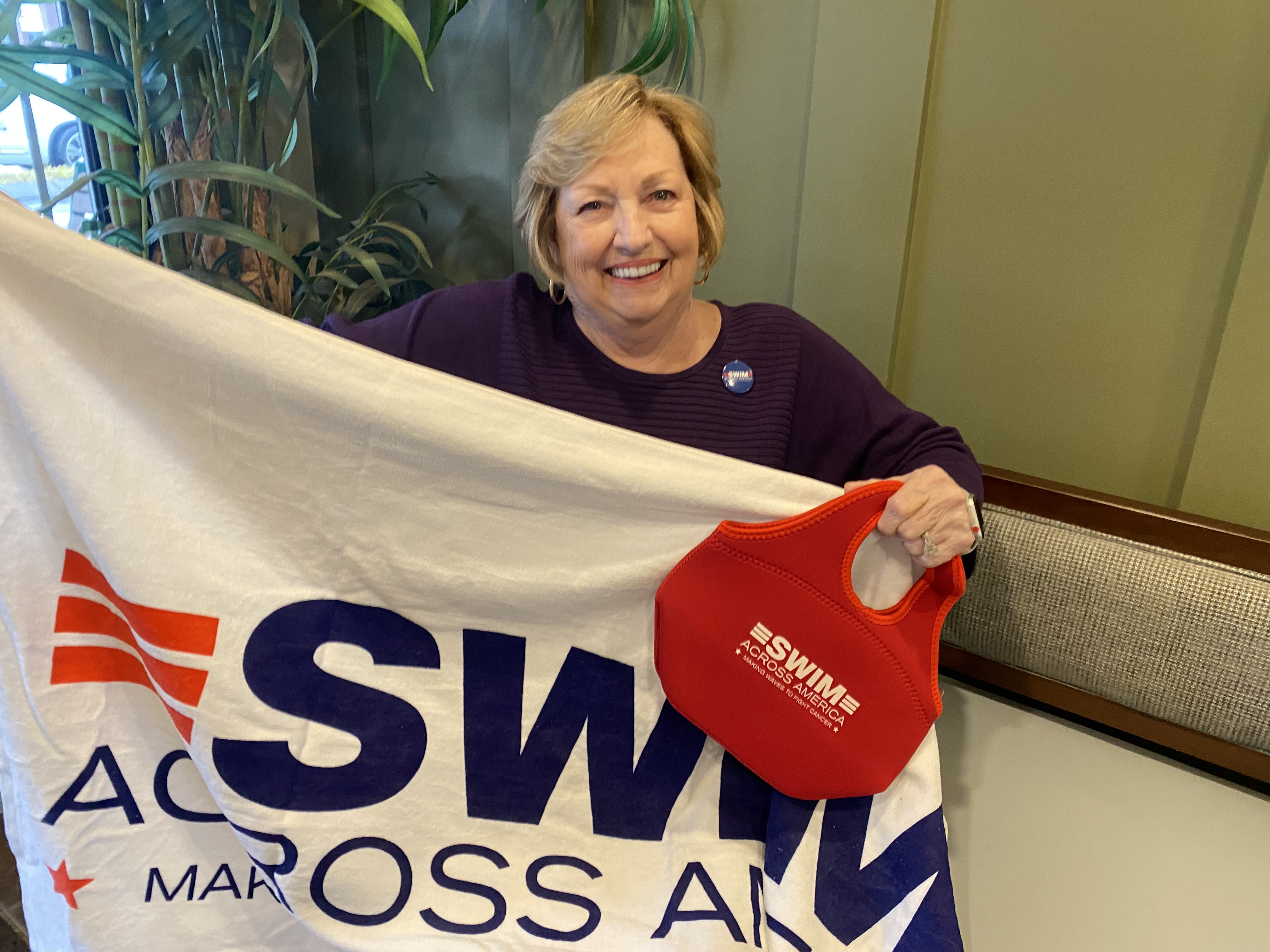
Susan McPherson was no stranger to Swim Across America, but her contributions were always in honor of other family members and friends who had cancer diagnoses. After a shocking diagnosis in December 2020, the reason to support Swim Across America-Nashville now became much more personal for Susan.
“I went to the doctor because I was experiencing new-onset shortness of breath and found out I was anemic. After additional tests, the doctors told me they found a large tumor and multiple metastases in my abdomen and that I had stage four colon cancer.”
Susan’s particular genetic profile made her a candidate for immunotherapy. She began treatment at the Vanderbilt-Ingram Cancer Center, which is the beneficiary of the Swim Across America-Nashville Pool Swim.
“In fact, the type of immunotherapy I was given – Keytruda – was developed in the Swim Across America funded lab at the Johns Hopkins Cancer Center! What an incredibly serendipitous moment it was when I realized that the treatment that could help save my life was initially funded through Swim Across America fundraising events.”
Susan received treatment for two years and is now cancer-free. And her participation in this year’s Swim Across America – Nashville event is that much more poignant.
Susan’s daughter-in-law, Chris, is one of the event directors and coaches at the Ensworth Natatorium where the event is held. Her son, John, is a cardiologist at Vanderbilt University Medical Center. For the second year, Chris and John will swim with their team “Chris’ Cancer Crushers” in their endeavor to “make waves to fight cancer.”
Swim Across America has raised $100 million since its inception in 1987 to support cancer research and clinical trials across the U.S. Please contact Jeni Howard at jhoward@jhowardpr.com for media inquiries.
Owen Johnson is just 13 years old, and he already recognizes the impact funds raised at a Swim Across America charity swim have on patients and families.
“My dad, Brad Johnson, was diagnosed with stage four head and neck cancer before I was born. He survived because of new medicines discovered by cancer researchers, like the ones funded by Swim Across America.”
In 2020, the then-11-year-old swimmer had the idea to give his dad an unforgettable Christmas present. Instead of exchanging gifts, Owen set up a GoFundMe in honor of his dad’s fight against cancer. Owen raised over $2,000 and since then, has raised another $4,000 through his participation in the Swim Across America – Charleston-Kiawah events.
“I know Swim Across America gives money directly to researchers. My dad was the Event Director for Swim Across America – Charleston-Kiawah for a few years, and Swim Across America gives grants to cancer researchers at Hollings Cancer Center in Charleston where we live.”
This year, Owen and Brad will swim together at the Swim Across America – Charleston-Kiawah event on June 10. They are also celebrating a remarkable milestone. Brad has been cancer-free for 20 years.
“To celebrate 20 years and all the things my dad has accomplished since beating cancer – Ironman events, marathons, Triathlon World Championships, having a family – we are teaming up to raise $20,000 for the 2023 Swim Across America – Charleston-Kiawah event.”
“I hope that by raising money for Swim Across America, donations will help researchers get the funding they need to help more people like my dad.”
Swim Across America has raised $100 million since its inception in 1987 to support cancer research and clinical trials across the U.S. Please contact Jeni Howard at jhoward@jhowardpr.com for media inquiries.
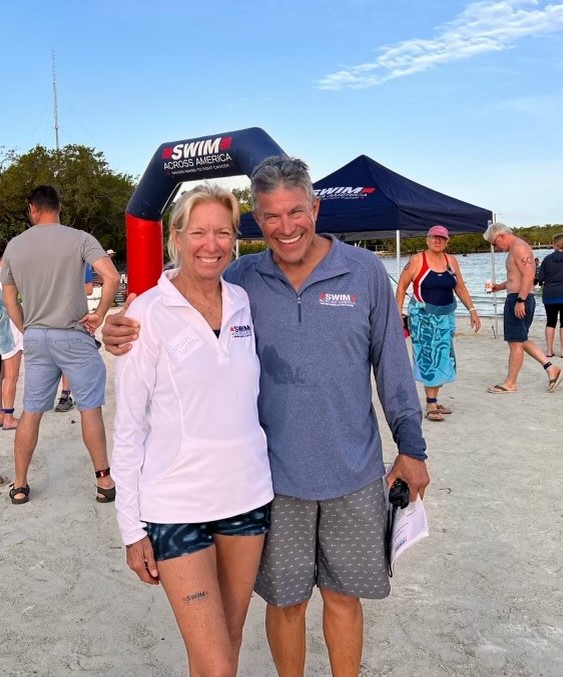
“Both my parents, two of my three siblings, and I have all battled cancer. Fortunately, due to lots of prayer, family support and modern technology, I am in remission and celebrating 11 years cancer-free.”
And thanks to a chance meeting with a Swim Across America Board Member, Glenn and his wife, Susan, are now dedicated to bringing hope to families fighting cancer.
As a cancer survivor, Glenn was involved with different charities prior to moving to the Keys. Glenn’s love of swimming led to that chance encounter with a Board Member who shared the story of Swim Across America and our mission to fund innovative cancer research.
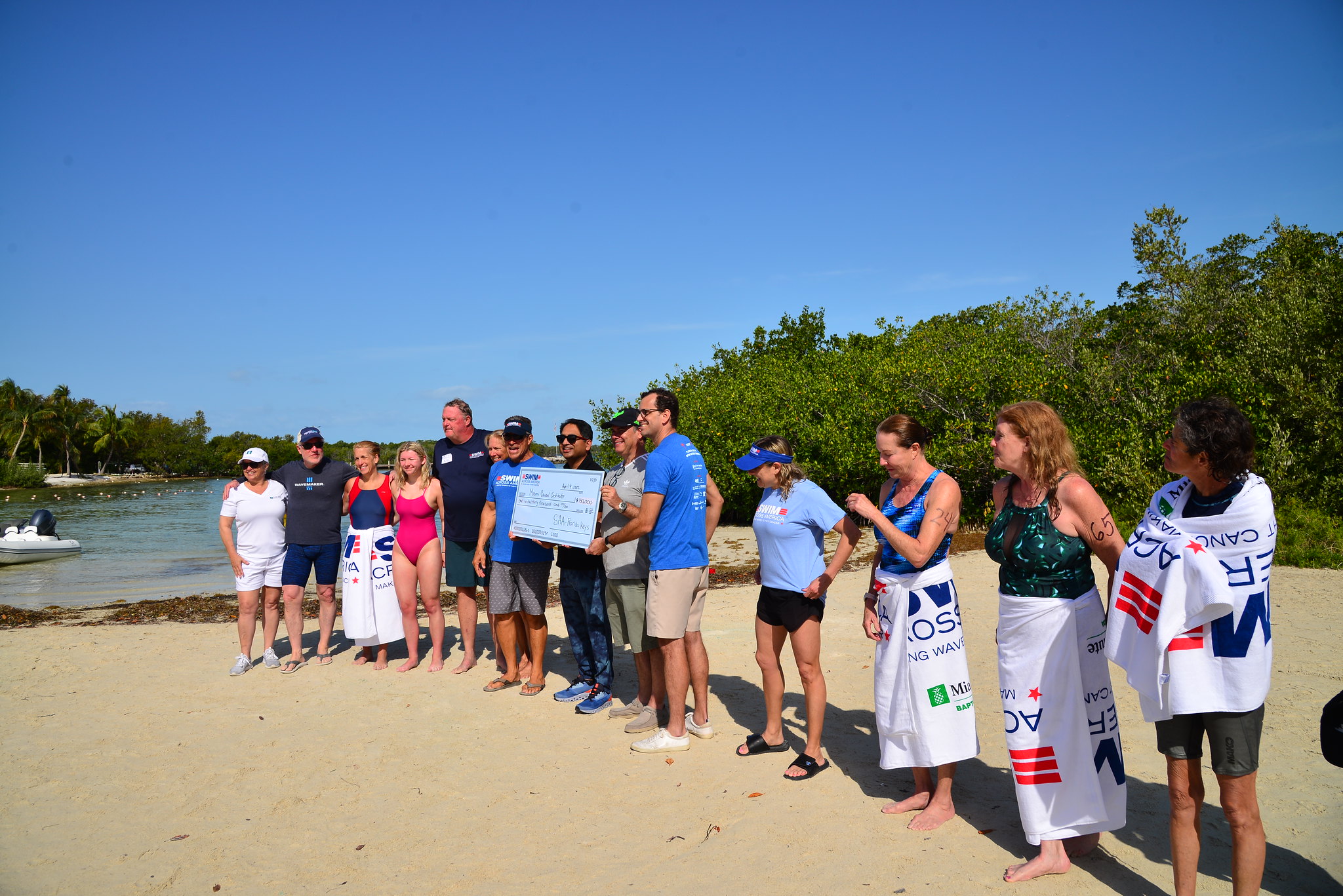
“My wife and I were immediately interested, and together we decided to organize the first SAA event in the Florida Keys. Our inaugural event in 2022 was a huge success, and the community involvement was amazing.”
The two Islamorada residents are Co-Event Directors for the second annual Swim Across America – Florida Keys event on April 15 benefitting Miami Cancer Institute.
“Being involved with Swim Across America has been a wonderful experience. I hope to continue to help with our own event and attend other swims. I believe we need to expand cancer research, and the funding that Swim Across America generates is of huge value.”
“It is particularly gratifying meeting and working with key members of the local medical research institution, Swim Across America staff, Olympians and local community supporters.”
Swim Across America has raised $100 million since its inception in 1987 to support cancer research and clinical trials across the U.S. Please contact Jeni Howard at jhoward@jhowardpr.com for media inquiries.
With grant support from Swim Across America–Charlotte, researchers at Levine Cancer Institute and Levine Children’s Hospital aim to make progress with the following projects. Since 2017, Swim Across America–Charlotte has awarded more than $750,000 to fund research and education programs at LCI.
Dr. Greg Knight
Grant Recipient: Greg Knight, M.D.
Project: How Distress and Psychologic Well-Being Affect Outcomes for Patients with Hematologic Malignancies
As the science of cancer treatment in the United States continues to accelerate and treatment becomes more personalized (and expensive), barriers to the implementation of optimal cancer care have been increasingly recognized as major determinants of outcomes. Evidence is emerging that psychosocial stress is impacting care. Such data have led to almost all major professional oncologic organizations, including ASCO, NCCN, and American College of Surgeons’ Commission on Cancer, recommending screening for stress as part of routine care. With funding from Swim Across America, Dr. Knight is leading a first of its kind study, exploring the impact of stress in hematologic malignancies, and examine how to alleviate these stressors to improve the outcomes for these patients.
Dr. Srinivasa Sanikommu
Grant Recipients: Srinivasa Sanikommu, M.D.; Lawrence Druhan, Ph.D.
Project: Effects of Vitamin C in Patients with Leukemia and Myelodysplasia
Vitamin C has long been postulated to have beneficial/and preventative effects in many diseases, but whether and/or how vitamin helps patients with blood cancers is unknown. We have seen in the laboratory that when vitamin C is added to some chemotherapy agents, there is inhibition of cancer cell growth. Thus, if vitamin C is deficient in some patients, it is possible that responses to therapy could be improved by addition of vitamin C. With funding from Swim Across America, Drs. Sanikommu and Druhan are studying how the addition of Vitamin C could improve the outcomes for patients with leukemia and blood cancers, and potentially even prevent the development of these diseases.
Dr. Brittany Ragon
Grant Recipient: Brittany Ragon, M.D
Project: Personalized Medicine for the Treatment of Leukemia
In leukemia care, the choice and dosing of therapy can be an empiric exercise; there are increasing data showing that best therapies and best dosing can be predicted using genetics. A new drug called venetoclax (ven) is now part of the standard treatment for upfront treatment in many patients with acute myeloid leukemia (AML). Despite improvements in outcomes for AML patients with venetoclax, the real-world usage of ven is complex, and toxicities leading to dose modifications are common. Using funding from Swim Across America, Dr. Ragon is leading an innovative study to explore candidate gene changes as predictors of response to ventoclax-containing regimens to develop a personalized approach to patient care.
Grant Recipient: Yifan Pang, M.D.
Project: Immune System Functional Monitoring to Improve Hematopoietic Stem Cell Transplant
Dr. Yifan Pang
Hematopoietic stem cell transplant (HSCT) can be the cure for many blood diseases. Including adults and children, more than 8,000 HSCTs are performed in the U.S. annually and more than 50,000 world-wide. The success of HSCT is dependent on the reconstitution of the immune system from transplanted cells, which is responsible for controlling infections, preventing transplant rejection, and prevention of disease recurrence. Current methods to monitor immune reconstitution are not good at measuring the global health of the immune system. Therefore, it is critical to identify a reliable marker to comprehensively measure post-HSCT immune reconstitution to prevent complications and improve outcomes. With funding from Swim Across America, Dr. Yifan Pang will lead a project aimed at the development of a novel method to measure immune reconstitution after HSCT using cutting-edge next generation sequences methods.
Dr. Mike Grunwald. Dr. Mike fundraises and swims. Every year.
Dr. Larry Druhan and his family. Dr. Larry fundraises and swims. Every year.
On September 25th, 2021, three-time Olympian Elizabeth Beisel completed the 10.4-mile ocean swim from mainland Rhode Island to Block Island. Elizabeth partnered with Swim Across America for “Block Cancer” to honor her father, Ted Beisel, who passed in 2021 after a battle with pancreatic cancer. Elizabeth became the first woman to successfully complete the swim raising over $160,000.
THE GRANTS
In addition to the $160,000 Elizabeth raised, Swim Across America raised an additional $500,000, with appreciation to the Lustgarten Foundation, to create a $660,000 grant bucket. The $660,000 is being applied to three grants to fight pancreatic cancer in honor of Ted Beisel:
a) A $60,000 grant to Dr. Peter Yu (NYU) pancreatic research metabolism study was awarded in 2022 b) A $300,000 grant to Dr. Ajay Goel (City of Hope) to conduct research for pancreatic detection was awarded in 2023 c) A $300,000 grant for pancreatic research will be announced in April of 2024
Photo: Elizabeth presents the award to Dr. Yu at Swim Across America—Rhode Island
With the support of Swim Across America grant funding, researchers at Rush University Medical Center are gaining momentum in their quest to discover the early detection tools and treatment options of the future in the fight against cancer. RUSH’s experts intimately understand the physical, emotional and financial burdens of cancer on patients’ lives, and they refuse to let the disease rest as the second leading cause of death in the U.S. Since 2012, Swim Across America–Chicago has awarded More than $2M that has funded these early stage research projects.
Dr. Carl Maki
Grant Recipient: Carl Maki, PhD Professor in the Department of Anatomy & Cell Biology at Rush Medical College
Project: Targeting proteins to improve drug responses for patients with treatment-resistant breast and lung cancers
Project Details: By studying cancer at the molecular level, Maki and his team have made significant strides in identifying promising new options for treatment-resistant breast and lung cancers.
In 2015 Maki received an SAA grant to study a family of enzymes known as prolyl peptidases (which regulate blood pressure and appetite) as a possible mechanism to help prevent or alleviate resistance to the drug tamoxifen, one of the most widely used therapies for the 80% of women with breast cancer whose tumors are considered estrogen receptor-positive. Maki and his team found that an enzyme inhibitor for prolyl peptidases, used in conjunction with tamoxifen, effectively killed breast cancer cells in rodents. Using these promising findings, Maki applied for and received a prestigious R01 research award for continued study from the National Institutes of Health and a grant from the Department of Defense to extend this research into triple-negative breast cancer.
In 2020 Maki was awarded another SAA grant to study proteins called histone demethylases in non-small cell lung cancer. Among the deadliest of all cancers, this accounts for about 4 in 5 lung cancer cases. Maki and his colleagues are studying how these proteins may allow lung cancer cells to resist the drugs currently used to treat the disease. By blocking these proteins, the team has been able to kill lung cancer cells in laboratory studies and lung tumors in mice. They identified a novel mechanism for how these inhibitors improve treatment outcomes and recently published their results.
“What starts out as an idea might result in something great,” Maki said. “SAA gives less established researchers a chance and helps all researchers fund pilot projects that ultimately can lead to bigger things.”
Dr. Animesh Barua
Grant Recipient: Animesh Barua, PhD Associate Professor in the Department of Anatomy & Cell Biology at Rush Medical College Director of the Proteomics Core and MicroRNA and Gene Expression Core
Project: Seeking an improved early detection test for ovarian cancer
Project Details: Throughout his career, Barua has relentlessly pursued the development of an effective early detection test for ovarian cancer. With an SAA grant received in 2020, he and his team are drawing upon extensive experience with immunoassays and ultrasound imaging of ovarian tumors to take the next steps forward in this important area of research. In this study, Barua’s lab is developing a fresh approach to early detection testing involving the fimbriae (fingerlike protein branches that guide an egg during ovulation) of the fallopian tubes. Emerging information shows that high-grade serous carcinoma — the most malignant and most common type of ovarian cancer — originates from the fimbriae. The aims of Barua’s study include identifying specific protein markers associated with cancer development in the fimbriae and determining the efficacy of these markers in predicting cancer growth.
Dr. Amanda Marzo
Grant Recipient: Amanda Marzo, PhD Assistant Professor in the Department of Internal Medicine, Division of Hematology, Oncology and Cell Therapy at Rush Medical College
Project: Bolstering the body’s natural immune response for greater success in the battle against breast cancer
Project Details: Tumor-infiltrating CD8 T-cells are essential for tumor immunity. However, many of these cells become exhausted and are unable to protect against tumor growth. Key molecules known as checkpoint inhibitors, such as programmed death-ligand 1 (PD-L1) expressed on tumor cells and programmed cell death protein 1 (PD-1) expressed on CD8 T-cells, have been shown to be a hallmark of CD8 T-cell exhaustion. For most tumors, blocking PD-1/PD-L1 signaling does not result in tumor rejection. A main cause for the ineffectiveness of checkpoint blockade immunotherapy lies in the dysfunctional state of CD8 T-cells once they enter the tumor. CD8 T-cells are specialized in killing tumor cells but face multiple suppressive signals that dampen their ability to effectively respond. Using an SAA grant received in 2019,Marzo and her colleagues seek to improve scientists’ understanding of how other immune-modulating treatments can improve CD8 T-cell responsiveness to checkpoint inhibitors. Specifically, the researchers aim to determine if metformin, an anti-diabetic drug, could enhance tumor-infiltrating CD8 T-cell responsiveness to PD-1 blockade therapy by altering breast cancer metabolism. The team also seeks to establish if bolstering the number of infiltrating CD8 T-cells into the tumor using interleukin-15 complexes (known to cause proliferation of cells and increase their killing ability) in combination with PD-1 blockade therapy could induce regression of established breast tumors and lead to long-term tumor immunity. Marzo and her team plan to publish the results of their study and are using preliminary data generated from this research to apply for a federal R21 grant.
Dr. Alan Blank
Grant Recipients: Alan T. Blank, MD, MS Assistant Professor in the Department of Orthopedic Surgery, Section of Orthopedic Oncology at Rush Medical College
Jitesh Pratap, PhD Associate Professor in the Department of Anatomy & Cell Biology at Rush Medical College
Dr. Jitesh Pratap
Project: Pursuing therapeutic approaches to prevent breast cancers from
metastasizing to the bones
Project Details: In this study funded by a 2019 SAA grant, Blank and Pratap seek to fulfill a need for the development of a therapy that can prevent primary breast cancers from metastasizing to the bones and surviving there. The researchers hypothesize, based on results of previous studies, that a subgroup of patients with breast cancer that has metastasized to the bone has high levels of autophagy (a process of recycling of cellular components), Runx2 proteins and acetylated α-tubulin — worsening their chances of survival. To investigate this, the researchers are working to determine the clinicopathologic association with the autophagy pathway in tumor samples from patients with cancer that has metastasized to the bone. They are also creating patient-derived xenograft models of bone metastasis. Blank and Pratap hope the results of this study will propel the development of better combinatorial therapeutic approaches to treat bone metastasis.
Dr. Faraz Bishehsari
Grant Recipient: Faraz Bishehsari, MD, PhD Associate Professor of Medicine & the Graduate College in the Department of Internal Medicine, Division of Digestive Diseases and Nutrition, Section of Gastroenterology at Rush Medical College Associate Director for Molecular & Translational Research for the Rush Center for Integrated Microbiome & Chronobiology Research
Project: Pursuing precision medicine to improve outcomes for pancreatic cancer patients
Project Details: Patients with pancreatic ductal adenocarcinoma — the most common form of pancreatic cancer — face poor survival rates, with only 6%-8% of patients surviving five years after diagnosis. This cancer does not respond well to targeted therapies. Bishehsari and his colleagues received an SAA grant in 2019 to establish a platform towards precision medicine in order to tailor therapies based on patients’ individual tumor characteristics. The researchers have developed primary cancer cells from a small tissue sample obtained during diagnostic pancreatic biopsies from pancreatic ductal adenocarcinomas. Molecular profiling of these patient-derived tumor organoids explained the variation in response to a variety of conventional and investigational therapies. They are optimizing this platform to help eventually establish individualized treatments for pancreatic cancer patients.
Dr. Jeff Borgia
Grant Recipient: Jeffrey A. Borgia, PhD Associate Professor in the Department of Anatomy & Cell Biology at Rush Medical College Director of the Rush University Cancer Center Biorepository and Rush Biomarker Development Core
Project: Identifying biomarkers for the improved evaluation and treatment of stage I non-small cell lung cancer
Project Details: Lung cancer is the leading cause of cancer-related mortality in the United States, but evidence is surfacing that widespread lung cancer screening programs may improve patient outcomes when the disease is detected early. Borgia and his team received an SAA grant in 2020 to develop a new diagnostic method to improve physicians’ ability to predict the recurrence of stage I non-small cell lung cancer, or NSCLC. This would help physicians identify patients who would benefit from adjuvant treatment options or closer surveillance. The aims of this study include identifying biomarkers for disease recurrence in stage I NSCLC patients and evaluating these biomarkers for their value in predicting recurrence.
Swim Across America has supported cancer research at Rush University Medical Center since 2012 through more than $2 million in grant funding. Together, Swim Across America and RUSH are relentlessly fighting cancer, working to save lives.
June 9, 2022—The New England Journal of Medicine published a paper on June 5 that 12 patients completed a phase 2 clinical trial for advanced rectal cancer and showed a 100% clinical complete response to dostarlimab, an immunotherapy treatment produced by GlaxoSmithKline. The clinical trial was conducted at Memorial Sloan Kettering with early-stage grant funding from Swim Across America.
Reviews of the clinical trial and quotes in the New York Times from cancer experts are hopeful:
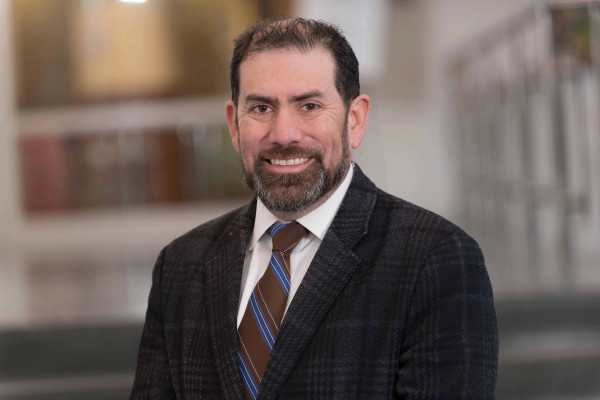
“I believe this (a 100% response) is the first time this has happened in the history of cancer,” commented Dr. Luis Diaz, an author of the New England Journal of Medicine paper.
Dr. Luis Diaz, Memorial Sloan Kettering
“There were a lot of happy tears,” said Dr. Andrea Cercek, an oncologist at Memorial Sloan Kettering Cancer Center and a co-author of the paper.
Depending on patient size and other factors, the cost to run a clinical trial can run into millions of dollars. Early-stage sponsors such as Swim Across America are necessary to fund the costs. Swim Across America’s grant for the MSK clinical trial helped fund the science and speed of sharing of information. Other funding partners of the MSK clinical trial are the Simon and Eve Colin Foundation, GlaxoSmithKline, Stand Up to Cancer, and the National Cancer Institute. Swim Across America is delighted with the results and continues to provide grant support.
Swim Across America.
Swim Across America’s grant agreement with beneficiaries such as Memorial Sloan Kettering requires that 100% of an SAA grant must be spent on approved research and clinical trial programs. In 35-years, SAA has granted nearly $100M to innovative and otherwise unfunded ideas so that the time of oncologists such as Dr. Cercek and Dr. Diaz is protected to make progress and develop new treatments.
Swim Across America has a proven track record of identifying and funding early-stage ideas of promise. Swim Across America grants have played a major role in clinically developing FDA-approved immunotherapy treatments ipilimumab (YERVOY), nivolumab (OPDIVO), pembrolizumab (KEYTRUDA), and atezolizumab (TECENTRIQ).
You can volunteer or swim by visiting swimacrossamerica.org/communities
Picture a sunny and warm mid-August morning in Colorado. Retired Olympians such as Missy Franklin and George DiCarlo are smiling with water enthusiasts of all ages and abilities. They enter the water of Chatfield Reservoir in Littleton to “Make Waves to Fight Cancer” with the Swim Across America-Denver charity swim. There’s a sense of community as supporters and family cheer for them. Not because they’ll be racing for first place, rather because they’re all there to raise money that will provide grants for pediatric cancer at Children’s Hospital Colorado.
Created in 2018, Swim Across America-Denver has granted $545,917 to research projects at the Center for Cancer and Blood Disorders at Children’s Colorado. Uniquely, all the proceeds from Swim Across America-Denver stay in our community to fund research projects at Children’s Colorado where philanthropic grants from Swim Across America are necessary to make progress in giving hope to kids and their families who are fighting cancer. Here are the projects that are being funded by SAA:
The acute myeloid leukemia (AML) and myelodysplastic syndrome (MDS) research project, led by Drs. Amanda Winters, Taizo Nakano, and Craig Forester, aimed at bringing new therapies into phase II of clinical trials for pediatric MDS and AML to better define how to diagnose, classify and treat MDS patients.
The tumor research project, led by Dr. Adam Green, which will characterize the immune response to new brain tumors to better establish which types are amenable to cancer immunotherapy and provide a new prognostic marker for these diseases.
The sepsis biomarker project, led by Dr. Leonora Slatnick, will lead to novel ways of diagnosing and managing infectious complications in immunosuppressed patients.
The CAR-T Cell project, led by Dr. Lindsey Murphy and collaborating with Dr. Winters and members of the BMT-Cellular Therapeutics team, aims to use novel laboratory methods for detecting CAR-T cells in patients receiving those therapies to better understand how patients respond to these therapies and improve cure rates.
“With [Swim Across America grants] we’re building the largest national database on pediatric myelodysplastic syndrome (MDS) to collect data on all of the past and future children with this life-threatening disorder. SAA’s contribution will help encourage research collaboration at over 50 children’s hospitals to enter data that will help develop a national standards-of-practice to treat pediatric MDS,” said Taizo Nakano, MD.
Grants from SAA will also be used to fund site initiation of a nationwide clinical trial for pediatric MDS at Children’s Colorado and will also be critical for Dr. Forester and Dr. Winters as they investigate the biological activity of the drug combination being tested.
“This will allow us to understand why the drugs work for pediatric MDS and perhaps enable us to predict at diagnosis which children with MDS are more or less likely to benefit from these drugs,” said Amanda Winters, MD.
“We welcome and invite our Colorado community to join us,” said Nicole Vanderpoel and Jessica Vitcenda, community leaders for SAA—Denver. “You can swim, volunteer or do a virtual activity with all the proceeds staying in Denver to benefit Children’s Colorado.”
Carolyn Jaenisch, Caitlin Chestler, Gregory Chestler & Steve Chestler Swim Across America – Nassau/Suffolk 1 year with Swim Across America Steve 65; Raised over $100,000 with Team Carolyn
“We are looking forward to joining a community dedicated to fighting cancer, the disease that took Carolyn Jaenisch from us, while simultaneously doing something she loved : swimming.”
Carolyn Jaenisch’s diagnosis of Terminal Adenocarcinoma in July 2021 came as a shock to the entire family. She was an avid swimmer who swam with Long Island masters and Excel Swim Club for the past 21 years on Long Island. When she was diagnosed with Stage 4 Lung Cancer and had her first back operation she was told she would be swimming again in 2 months. Carolyn was all about family and swimming.
So when her family went looking for a charity event, they saw the SAA-Sound to Cove swim at Pryibil Beach on July 31, 2022, and got in touch with Swim Across America CEO Rob Butcher and local event chair Kevin Shine to learn more and make a plan to participate. Carolyn was so excited to get involved with Swim Across America.
Carolyn sadly passed away in November of 2021, just 4 months after her diagnosis, and before she could witness her family swimming in her honor. Carolyn’s passing left behind her husband, Steven Chestler, 24-year old son Gregory and 19-year old daughter Caitlin; and they are the founders of Team Carolyn for Swim Across America.
This July will be Team Carolyn’s first year participating in a Swim Across America event. “We are looking forward to joining a community dedicated to fighting cancer, the disease that took Carolyn Jaenisch from us, while simultaneously doing something she loved : swimming” says Steve Chestler. Steve, Caitlin, Gregory and other members of Team Carolyn have rallied together to raise an amazing $100,000 (and counting) to support cancer research and clinical trials.
“We know she would be honored that she has been supported and loved so much.”
Swim Across America is celebrating 35 years of impact in 2022. SAA has raised $100 million since its inception in 1987 to support cancer research and clinical trials across the U.S. Please contact Jeni Howard at jhoward@jhowardpr.com for media inquiries.
Make Waves to Fight Cancer while satisfying your required minimum distribution.
What is a QCD?
A qualified charitable distribution (QCD) is a distribution of funds from your IRA (excluding an ongoing SEP or SIMPLE IRA) directly to a qualified charitable organization, such as Swim Across America. Since the gift goes directly to the qualified charity without passing through your hands, the dollar amount of the donation may be excluded from your taxable income up to a maximum of $100,000 annually, with some exceptions. Please consult your tax advisor for information regarding your specific exceptions.
If you are 70.5 years or older, you can make tax-free gifts to Swim Across America of up to $100,000 from your IRA. Your donation will count toward your minimum required distribution.
How do I make a QCD to Swim Across America?
Contact your IRA custodian and request a direct transfer to:
Swim Across America, Inc. 8508 Park Road #389 Charlotte, NC 28210 Tax ID number: 22-3248256
Do not withdraw the funds and make a contribution yourself, or you will have to report the withdrawal as taxable income. If you are requesting the transfer at the end of the tax year, allow enough time for the transfer to complete by December 31.
Please note: we are not in a position to give formal tax advice, and we strongly advise you to have these gifts reviewed by your own qualified financial or tax advisors.












 Swim Across America