Doug Bosley has completed some of the most challenging marathon swims in the world, including the cross-continental Hellespont Dardanelles swim, the Maui Channel swim, the Boston Harbor Swim and the St. Croix Reef swim. He has also participated in nearly 30 Swim Across America swims, including Boston and San Francisco.
While those swims were intense, Doug is now facing one of his toughest battles yet: beating acral lentiginous melanoma, a rare form of skin cancer that has sadly spread and metastasized. Despite his diagnosis, Doug’s sense of humor remains intact. He colors his story with anecdotes, punchlines and heartfelt emotion.
“In March 2024, I discovered a very tiny dot on my heel; it was no bigger than an eraser head. So I got it checked out and was diagnosed with a rare form of skin cancer. Not exactly what you want to hear,” Doug shared lightheartedly.
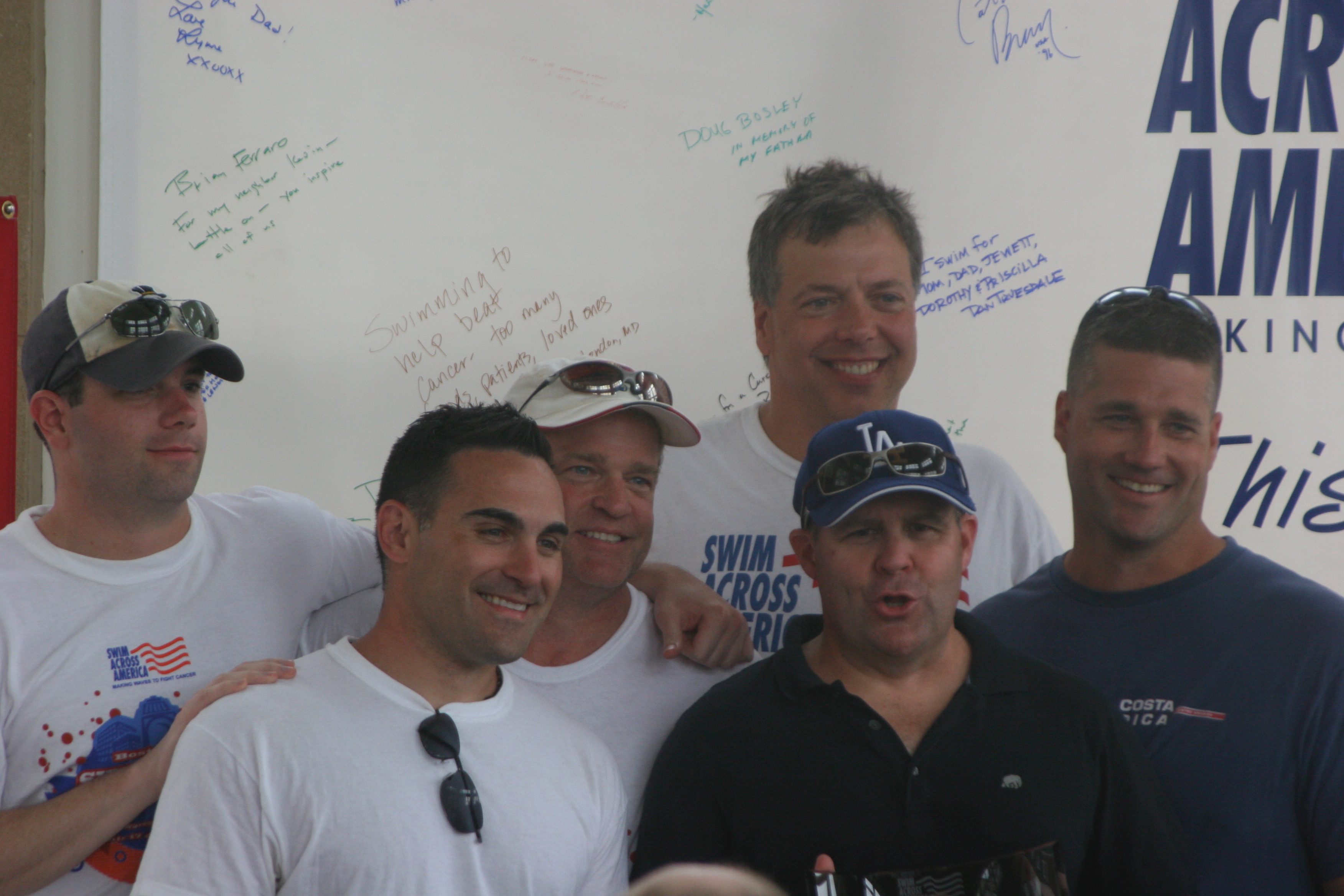
Doug Bosley (back row, center) and Team Festivus at the 2023 Swim Across America – Boston open water swim.
Doug began treatment at Mass General Cancer Center, one of the beneficiaries of the Swim Across America – Boston community swim. The swim also supports Dana-Farber Cancer Institute. Unfortunately, the cancer has quickly progressed and has spread to his liver and brain.
After initial treatments were unsuccessful, Doug was put on BRAF therapy, a combination of medicines that can shrink or slow the growth of metastatic melanoma in those whose tumors have a BRAF mutation. The treatment helped with his liver and lymph nodes but not his brain due to the blood-brain barrier.
He is currently being treated with two immunotherapy medicines – Yervoy and Opdivo – both which received early-stage grant funding from Swim Across America and are FDA approved for treating several different types of cancer.
“I’m doing ok, but the effects of my treatments are taking a toll,” said Doug. “My skin is incredibly sensitive, my feet are swollen to the point where it’s difficult to walk around, my head is foggy, and I have no saliva. But I’m sitting here, employed and engaged to be married – so that’s a good thing.”
Yes, Doug is engaged! After Doug was diagnosed, he proposed to his longtime girlfriend, Laura Lipcsei. The couple splits their time between their house in Somerville, Massachusetts, and the lake cabin they built together in Ontario, Canada.
“I said to Laura, ‘Now is the time to get married because I don’t know where I’ll be in a year,” joked Doug.
In addition to being thankful for Laura, Doug expresses his appreciation for his Swim Across America family, who have supported him through this journey.
Doug, back row center, participated in the 2009 Swim Across America – Boston Harbor swim.
“My Swim Across America family in Boston means everything to me. We started doing the swims as something fun to do together. Somewhere along the way, it became something more emotional. We’d swim, have fun, have a good cry, then come back the next year. Thirty years later and we’re still here,” shared Doug.
One member of Doug’s SAA-Boston swim group has helped him tremendously. Rick Osterberg, who himself is a cancer survivor and also received an immunotherapy pioneered with funding provided by Swim Across America, is Doug’s “cancer coach” and they swim together on Team Festivus.
“So between my wedding, turning 62 and the August 9 SAA-Boston swim, I’ve got a lot to look forward to this summer! I really want to be up there sharing my story with everyone who has supported me this past year.” said Doug.
If you’re inspired to support Doug and Team Festivus, give here.
The Promising Study Found that 80% of Patients with Mismatch Repair-Deficient (MMRd) Solid Tumors Treated with Immunotherapy Avoided Surgery
The New England Journal of Medicinepublished a paper on April 27, 2025, that presents exciting new results from a clinical trial led by Memorial Sloan Kettering Cancer Center (MSK) gastrointestinal oncologists Andrea Cercek, MD, and Luis Diaz Jr., MD, that demonstrates how immunotherapy alone can help patients with MMRd cancers avoid surgery and preserve their quality of life. The results, presented simultaneously at the 2025 American Association of Cancer Research (AACR) Annual Meeting, showed that 80% of patients with several types of cancer treated with immunotherapy did not require surgery, radiation, or chemotherapy after six months of treatment with immunotherapy alone. Swim Across America awarded grants for the early-stage research and continues to award grants for the ongoing clinical trial.
Andrea Cercek, M.D., gastrointestinal oncologist and co-director of the Center for Young Onset Colorectal and Gastrointestinal Cancer at Memorial Sloan Kettering Cancer Center
Mismatch repair deficiency (MMRd) in cancer refers to a situation where tumor cells have defective mismatch repair (MMR) proteins, essential for correcting DNA errors during cell replication. This deficiency leads to the accumulation of mutations, including microsatellite instability (MSI), making tumors more prone to be recognized by the immune system. MMRd status is a significant factor in cancer treatment, particularly for immunotherapy, as it can predict response to immune checkpoint inhibitors.
The standard of care for many cancers that have this specific MMRd genetic mutation has been surgery, radiation, and chemotherapy. Still, the patients who responded positively to this clinical trial did not require surgery to remove an organ and did not experience chemotherapy or radiation, which improved their quality of life. This trial is the first time that immunotherapy has been shown to replace surgery for a variety of solid tumors.
“This study shows that immunotherapy can replace surgery, radiation and chemotherapy for mismatch repair-deficient solid tumors, which could help patients preserve their organs and avoid the harsh side effects of chemo and radiation,” said Andrea Cercek, M.D., gastrointestinal oncologist and co-director of the Center for Young Onset Colorectal and Gastrointestinal Cancer at Memorial Sloan Kettering Cancer Center. “Preserving a patient’s quality of life, while also successfully achieving positive results in eliminating their cancer, is the best possible outcome. They can return to their daily routines and maintain their independence.”
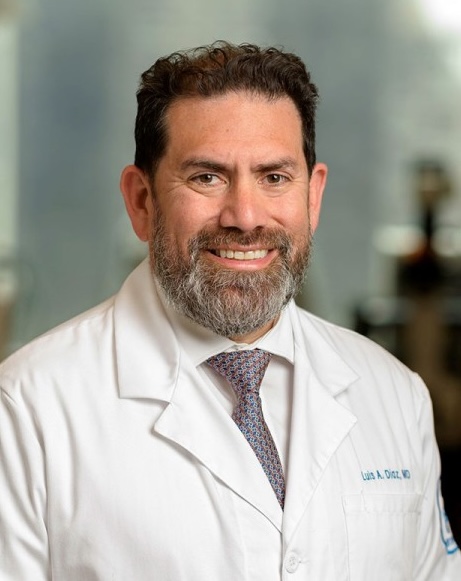
Luis Diaz, M.D., gastrointestinal oncologist and Head of the Division of Solid Tumor Oncology at Memorial Sloan Kettering Cancer Center
This phase 2 trial is an extension of a groundbreaking study, also funded in part by Swim Across America, in which all rectal cancer patients treated with the immunotherapy dostarlimab experienced a complete clinical response, meaning their tumors disappeared. This was the first time ever that a clinical trial had a 100% positive response rate.
The updated trial included 103 patients with stage 1-3 cancer; 49 with rectal cancer; and 54 with non-rectal cancers, including gastroesophageal, hepatobiliary, colon, genitourinary, and gynecologic. Drs. Cercek and Diaz noted that the 80% response rate in this expanded clinical trial is very exciting for these types of cancer.
“Grants provided by Swim Across America were critical to our initial study and advancing this trial to phase 2,” said Luis Diaz, M.D., gastrointestinal oncologist and Head of the Division of Solid Tumor Oncology at Memorial Sloan Kettering Cancer Center.
Founded in 1987, Swim Across America has raised more than $100 million to fight cancer. In its 38 years of making waves, thousands of volunteers and Olympians have swum the circumference of the earth three times uniting a movement to fight cancer that has created a groundswell of support spanning all generations. Today, more than 24 communities across the U.S. hold charity swims each year, which support innovative cancer research, detection, and patient programs.
Drs. Andrea Cercek and Luis Diaz spoke at the 2024 Swim Across America – Long Island Sound open water swim
Swim Across America’s funding of clinical trials on a national level has helped contribute to four FDA-approved life-saving immunotherapy cancer treatments: Yervoy, Opdivo, Tecentriq, and Keytruda. Swim Across America awards grant to more than 60 projects each year and there are ten named Swim Across America Labs at major institutions.
In addition to Swim Across America grants, this trial received funding from the National Institutes of Health, National Cancer Institute, Haystack Oncology, and Stand Up To Cancer. MSK also acknowledges support from GSK, whose PD-1 blockade Jemperli (dostarlimab), represents a promising advancement in the treatment of patients.
For more information and to inquire about eligibility for this clinical trial, talk to your oncologist or call MSK at 646-888-4189. You may also reach to info@swimacrossamerica.org and we will help guide you.
Choi’s next generation CAR-T therapy, funded in part by SAA-Boston and SAA-Nantucket, has shown “dramatic and rapid” regression of glioblastoma
With early funding from Swim Across America – Boston and Swim Across America – Nantucket, Dr. Bryan Choi’s research on tandem CAR T-cell therapy for ependymoma was approved for a Phase I trial. The first human patient was infused at the end of April 2023. The results of the first human trials, as described in 2024 by the New England Journal of Medicine, showed “dramatic and rapid” regression of glioblastoma.
In an exclusive briefing to Swim Across America participants, Dr. Bryan Choi, a neurosurgeon and neuro-oncologist at Massachusetts General Cancer Center, delivered an update on his research path.
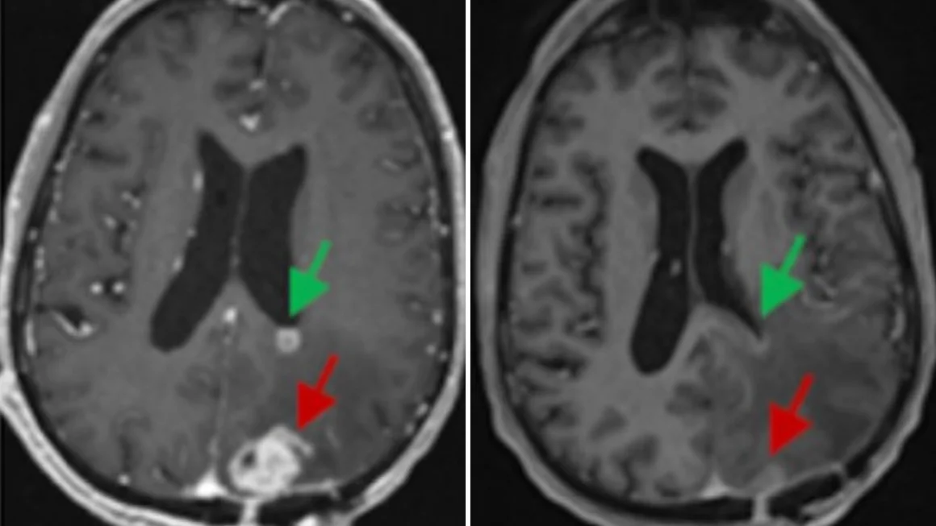
From left, brain tumors, marked by red and green arrows, disappear a day after CAR-T immunotherapy treatment. From CNN.
The Swim Across America lab visit included not only highlights from on the ongoing Phase I trial, but also a few first-hand stories about the life-changing impacts of the new CAR-T cell therapy for one of the patients, who has chosen to share his story publicly.
Tom Fraser (Patient #2) has shared his story publicly with news outlets that include CNN and New York Magazine.
Tom Fraser, 72, (center, in the blue shirt) was treated with a single infusion of CAR-T cells. Two days later, an MRI showed a decrease in the tumor’s size by 18.5 percent. By day 69, the tumor had decreased by 60.7 percent, and the response was sustained for over 6 months. From The Harvard Gazette.
CAR T-cell therapy, a type of gene therapy that engineers a patient’s own T-cells (a type of white blood cells) to identify and attack cancer cells by way of their antigen markers, has shown promise in the treatment of blood cancers. The research team created dual antigen-targeting tandem CAR T (TanCART) cells to target heterogeneous solid tumors. Dr. Choi’s research shows that this type of therapy can also be manipulated to treat solid tumors like ependymoma.
At the suggestion of Dr. Howard Weinstein, Unit Chief of Pediatric Hematology/Oncology at Mass General for Children and long-time Swim Across America partner, Dr. Choi applied for a Swim Across America research grant through the internal competitive bid program at Mass General for Children.
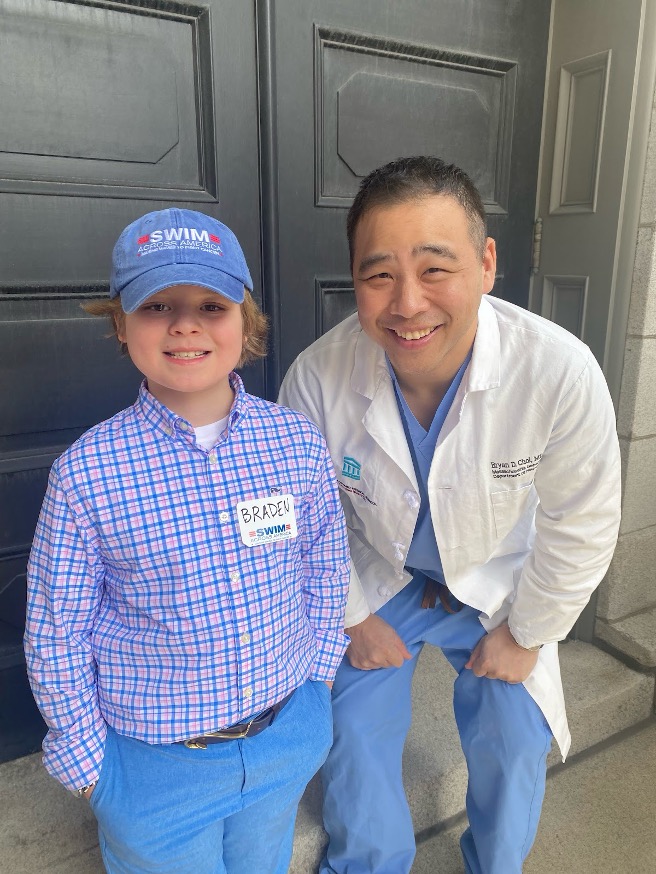
Dr. Choi recruiting the next generation of researchers, like SAA – Nantucket supporter, Braden Hussey.
Without the Swim Across America grant, Dr. Choi said, his research likely would have remained unfunded, and neither the FDA approval nor the Phase I Study approval, which is funded by industry investors, would have been possible.
Janel Jorgensen McArdle, Chief Operating Officer of Swim Across America, pointed out that Dr. Choi’s research falls in the “sweet spot” of the high risk, high reward research that Swim Across America is pursuing.
“This promising research aligned perfectly with the opportunities that Swim Across America seeks to support,” said McArdle. “We are so excited that SAA funding could help accelerate it to patient trials – and are thrilled to see the benefits to patients!”
Dr. Choi explained CAR-T cell therapy to the Swim Across America group on April 4, 2025.
After his highly informative presentation, Dr. Choi gave the Swim Across America group a private tour of his lab spaces, which were in the finishing stages of build-out when they toured two years ago.
The group also got to visit the Ether Dome at Mass General, the surgical amphitheater where, in 1846, the first public surgery with anesthesia was performed.
It was an exciting visit for Swim Across America news and for all of the Swim Across America – Boston and Nantucket supporters who were present!
Swim Across America lab visit participants, pictured with Dr. Choi in the Ether Dome at Mass General, site of the first use of anesthesia in public surgery.
Revolutionary CRISPR Gene Editing and Other Cell and Gene Therapy Editing Takes Center Stage in Finding Ways to Effectively Treat Cancer
Swim Across America, the nonprofit funding innovative clinical trials and patient-centered programs for cancer,is proud to announce the award of two $450,000 grants to two of its beneficiaries, Alliance for Cancer Gene Therapy(ACGT) and Dana-Farber Cancer Institute, to support the work of novel gene and base editing techniques used in advanced cancer research, including targeted therapies, immunotherapies and cellular therapies. The two-year grants will specifically support the work of scientific investigators Joseph Fraietta, PhD, at the University of Pennsylvania through ACGT, and Pietro Genovese, PhD, at Dana-Farber Cancer Institute, for their work in groundbreaking cell and gene therapy cancer research. This financial support paves the way for more effective therapies across many cancer types including solid tumors, offering potential new hope for patients with hard to treat cancer types or limited treatment options.
“Gene editing, including CRISPR, are some of the most promising frontiers in cancer research allowing for advances in targeted therapies, immunotherapies, CAR-T cell therapy and early/minimal residual disease detection, diagnostics and cancer vaccines,” said Rob Butcher, CEO of Swim Across America. “These grants to Dr. Fraietta through ACGT, and Dr. Genovese at Dana-Farber, will help accelerate the advancement of potential gene-edited cancer treatments that could transform how we treat patients and their quality of life. Just as our previous funding has helped develop immunotherapy treatments that are saving lives today, we believe these pointed investments will help accelerate the next generation of cancer breakthroughs.”
Joseph Fraietta, PhD
Joseph Fraietta, PhD, through Swim Across America–Fairfield County beneficiary Alliance for Cancer Gene Therapy, is developing an innovative “off-the-shelf” cell therapy for aggressive cancers. His research uses a precise gene-editing tool called a “base editor” to create more effective CAR T cells that can target cancers with KRAS mutations, found in 20-25% of all cancers including lung, colon and pancreatic cancer. His team is also developing “micropharmacies” – immune cells engineered to release powerful cancer-fighting signals directly at tumor sites while minimizing side effects.
Pietro Genovese, PhD
Pietro Genovese, PhD, at Dana-Farber, is taking a revolutionary approach to treating acute myeloid leukemia (AML). Rather than targeting cancer cells directly, his team is creating “stealth” healthy blood cells engineered to survive cancer treatments while allowing the selective elimination of cancer cells. This innovative strategy could provide less toxic treatment options for AML and other blood cancers where traditional therapies often harm healthy cells along with cancerous ones.
“With the current funding landscape and resources potentially constrained, nonprofit organizations play a vital role in ensuring innovative cancer research moves forward,” said Evan Vosburgh, MD, Research and Grants committee chair for Swim Across America. “These targeted grants support precisely the kind of high-risk, high-reward research that could revolutionize cancer treatment, but might otherwise go unfunded. By supporting early-stage research in cell and gene therapy, we’re helping bridge critical funding gaps and accelerating the development of potentially life-saving treatments.”
Swim Across America has raised more than $100 million for cancer research since its founding in 1987 and has a strong track record of funding transformative research, including clinical trials that led to FDA-approved immunotherapy medicines Keytruda, Opdivo, Yervoy and Tecentriq. The organization was also a grant funder of Memorial Sloan Kettering’s landmark clinical trial that achieved a 100% success rate treating advanced rectal cancer patients with dostarlimab.
About Swim Across America Swim Across America hosts open water and pool swims in numerous communities nationwide, from Nantucket to under San Francisco’s Golden Gate Bridge. More than 150 Olympians support the organization, including Michael Phelps, Kate Douglass, Missy Franklin and Ryan Lochte. The organization supports more than 60 cancer research projects annually and has ten named Swim Across America Labs at major institutions nationwide. To learn more visit swimacrossamerica.org or follow on social media @SwimAcrossAmerica on Facebook and @SAASwim on Instagram.
For 15 years, Swim Across America has fueled innovative early-stage research at Fred Hutch Cancer Center and UW Medicine and helped launch the careers of dozens of young scientists. We’re proud to share details about the six most recent projects made possible through funds raised in 2022 and 2023 by Swim Across America – Seattle and the dedicated swimmers who participated. From improving patients’ quality of life to overcoming tumors’ resistance to immunotherapy, these innovative projects have the potential to dramatically enhance cancer treatment.
Inspired to Make Waves to Fight Cancer this year? Swim, volunteer or donate to SAA-Seattle at swimacrossamerica.org/seattle.
Kate Markey, MBBS, PhD, FRACP | Stem cell transplantation
Assistant Professor, Fred Hutch and UW Medicine
Project: Restoring the gut microbiome after blood stem cell transplant
Dr. Kate Markey
Background: Fred Hutch researchers have shown that while blood stem cell transplantation continues to be the most effective treatment for multiple myeloma, it can also severely damage patients’ gut microbiome, leading to strong gastrointestinal side effects and poor outcomes. Dr. Markey, a medical oncologist who studies the gut microbiome and its role in recovery from transplant, developed a study to examine whether a five-week, plant based, whole-food diet can restore patients’ beneficial gut bacteria and improve immune function and outcomes.
2024 progress statement: Dr. Markey and her colleagues opened the trial in October, and by the end of the following month they had enrolled seven patients, or one-third of their goal. They are collecting stool and blood samples and plan to analyze all of them once the trial is complete. If all goes as expected this summer they intend to use the resulting data to apply for a federal research grant to support a much larger, randomized clinical trial.
Alexandre Hirayama, MD | Blood cancers
Assistant Professor, Fred Hutch and UW Medicine
Project: Understanding how large B-cell lymphoma evades CAR T-cell therapy
Dr. Alexandre Hirayama
Background: Less than half of patients who undergo CAR T-cell therapy for large B-cell lymphoma (LBCL) enjoy long-lasting remission. We’re not sure why, but the answer may lie in the tumor microenvironment. There’s still so much we don’t know about this collection of cells, stroma, and blood vessels that surround and support the tumor, including how it might suppress cancer therapies. Dr. Hirayama, who specializes in treating patients with B-cell malignancies, is studying the tumor microenvironment in minute detail to help identify and explain how patients’ tumors may mute CAR T cells’ effectiveness.
2024 progress statement: Dr. Hirayama has gathered the necessary tumor samples for these studies and refined the techniques and technologies that will allow him to study immune, stromal, and tumor cells in the tumor microenvironment. He expects to begin studying the samples in summer 2025.
Diane Tseng, MD, PhD | Lung cancer
Assistant Professor, Fred Hutch and UW Medicine
Project: Reducing inflammatory effects of immunotherapy in patients with lung cancer
Dr. Diane Tseng
Background: Many patients with lung cancer who are treated with checkpoint inhibitors experience a condition called checkpoint inhibitor pneumonitis (CIP). If left untreated, CIP can cause irreversible damage. Recent research shows that immune cells called napsin A–specific T cells may be involved in mediating CIP. Dr. Tseng, an oncologist who specializes in treating patients with lung cancer, is working with McGarry Houghton, MD — a Fred Hutch and UW Medicine professor and holder of the Satya and Rao Remala Family Endowed Chair — to study napsin A–specific T cells’ role in CIP and exploring strategies for muting it.
2024 progress statement: Dr. Tseng’s work has focused on 1) developing a method for detecting napsin A– specific T cells in donor blood; 2) developing a method for taking those cells and growing more of them in the lab; and 3) creating a test to determine whether a different T cell can eliminate them. This work will establish the foundations for understanding the function of napsin A–specific T cells and the role they might play in CIP.
Emily Liang, MD | Blood cancers
Hematology/oncology Fellow, Fred Hutch and UW Medicine
Project: Mitigating serious side effects of CAR T-cell therapies in patients with blood cancers
Dr. Emily Liang
Background: While CAR T-cell therapy has revolutionized treatment for patients with blood cancers like lymphoma and multiple myeloma, it also comes with a high risk of fever, fatigue, body aches, and even neurologic impairment. Though these conditions are reversible, they can be life-threatening and prevent older and frailer patients from receiving CAR T-cell therapy at all. Dr. Liang, who specializes in acute leukemias and CAR T-cell therapy, and her mentor, Jordan Gauthier, MD, MSC, a Fred Hutch and UW professor and former Swim Across America funding recipient, want to make these treatments accessible to a wider range of patients. So, the pair launched a first of-its-kind trial to study whether a drug typically prescribed for rheumatoid arthritis called anakinra can prevent these inflammatory responses.
2024 progress statement: After treating more than 30 patients in their clinical trial, Drs. Liang and Gauthier found that prophylactic administration of anakinra did not seem to be effective in preventing cytokine release syndrome, a side effect associated with a high level of inflammation in the blood. However, prophylactic anakinra did seem to reduce the severity and duration of neurologic side effects as well as the need for steroids. Importantly, Drs. Liang and Gauthier also found that anakinra may impair the treatment’s effectiveness against tumors. Now, the pair are planning to study how anakinra mitigates inflammation in the brain, whether there may be alternative prevention strategies, and how anakinra impacts CAR T-cell function.
Saurav Kumar, PhD | Colorectal cancer
Postdoctoral Fellow, Fred Hutch
Project: Exploring new uses for existing drugs to treat colorectal cancer
Dr. Saurav Kumar
Background: Colorectal cancer is one of several cancers driven by a process called gene fusion, in which two independent genes combine incorrectly and begin producing proteins that can lead to cancer. And though a range of drugs have been developed to target these fusions and stop the mechanism that promotes cancer growth, they’ve so far been ineffective against colorectal cancer. However, Dr. Kumar, who studies metastasis, recently discovered that patients with colon cancer who receive TRK inhibitors (TRKi) experience a drop in TRK fusion protein levels, suggesting that these inhibitors may be degrading the cancer-causing fusion proteins. He plans to study the interaction that causes this protein degradation with the goal of one day using TRKi to create more effective therapies for patients with this form of cancer.
2024 progress update: Dr. Kumar and his colleagues have developed three protein degraders, called PROTACs, based on an FDA-approved TRKi. Now they plan to begin testing them on colorectal cancer cells in the lab to better understand the mechanism that leads to TRK fusion protein degradation — which could one day inform the development of targeted therapies for patients with these cancers.
Yapeng Su, PhD | Pancreatic cancer
Postdoctoral Fellow, Fred Hutch
Project: Overcoming solid tumors’ resistance to immunotherapies
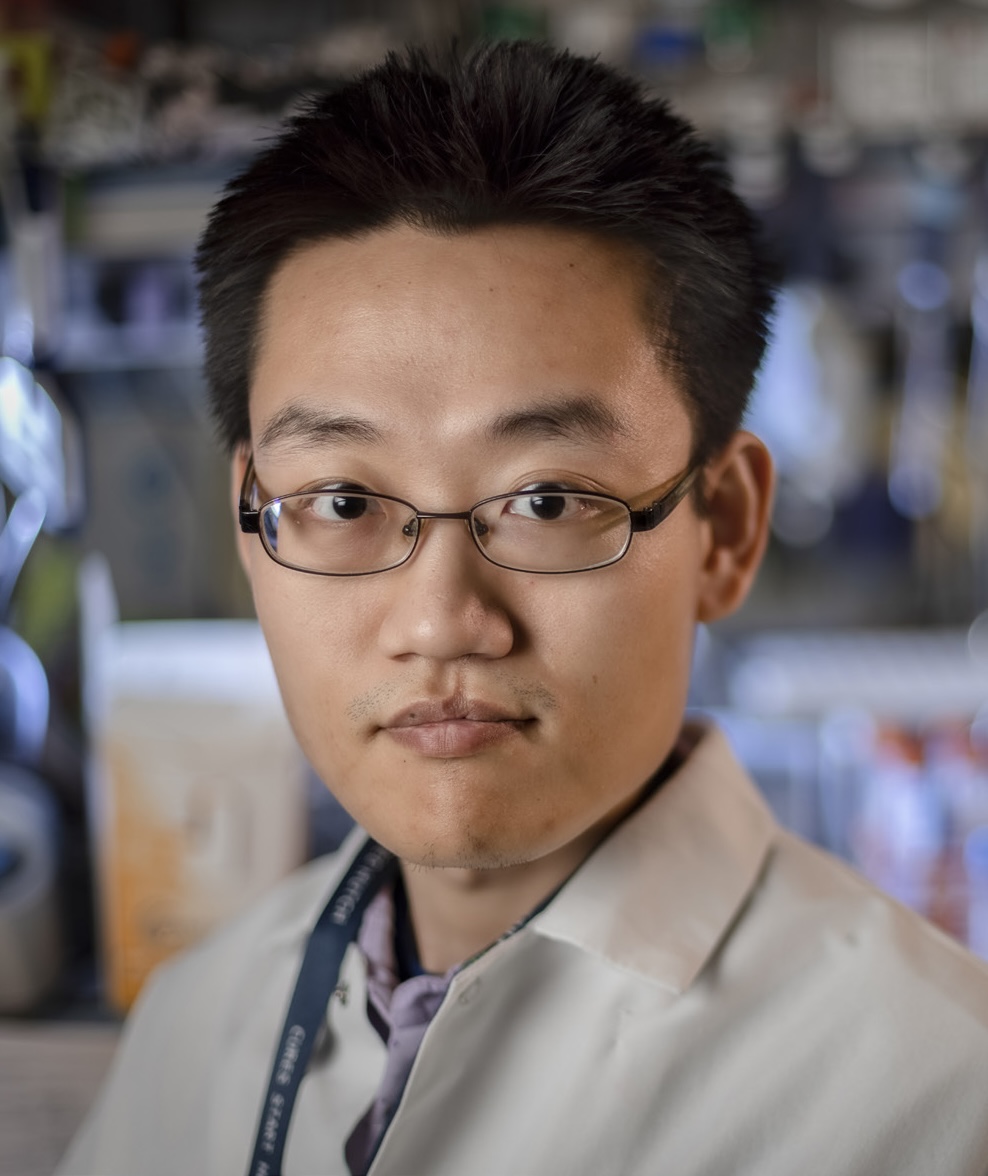
Dr. Yapeng Su
Background: Pancreatic cancer is notoriously difficult to treat. Though we’ve found a protein on tumor cells that would seemingly make for a good immunotherapy target, treatments that have been studied and validated in the lab fail in patients — likely due to unique characteristics of the tumor microenvironment. Using technology that allows us to see the interaction of cells within tumors and better understand how they influence one another, Dr. Su, who studies adoptive cellular immunotherapy, is examining the mechanisms that cause immunotherapies to fail and exploring techniques to overcome them.
2024 progress statement: After completing a detailed study of samples from tumors previously treated with adoptive T cell therapy, Dr. Su found that they contained several cell types that were both potentially immunosuppressive and arranged in distinct patterns throughout the tumor microenvironment. He also identified several subtypes of T cells (whose role is to attack cancer cells) that no longer functioned properly. In the coming months, Dr. Su plans to further analyze the T-cell subtypes and their placement within the tumor microenvironment to better understand why they stop working. What he finds could one day help us better engineer T cells to overcome those immunosuppressive forces.
Since it’s founding in 1987, SAA charity swims have funded more than $75 million to cancer research. SAA grant researchers have developed multiple FDA approved immunotherapies, gene therapy and personalized therapy treatments. Swim Across America Impact highlights where SAA grants have changed lives.
The 2018 Nobel Prize in Medicine has been awarded to Dr. Jim Allison and Dr. Tasuku Honjo for their work in immunotherapy. Swim Across America grants have played a role in the development of their research.
Dr. Jim Allison has been awarded the Nobel Prize in Medicine for his breakthrough research that our immune system can fight cancer. The Swim Across America research lab at Memorial Sloan Kettering Cancer Center collaborated with Dr. Allison to focus its research and clinical trials to understand how immunotherapy treatments could be developed for patients. The research and our grant funding at Memorial Sloan is more important than ever to understand why some patients respond to immunotherapy and others
Dr. Tasuku Honjo was awarded the 2018 Nobel Prize in Medicine. His discovery helped pioneer a new type of cancer treatment called immunotherapy. With Dr. Honjo’s discovery, SAA beneficiary Sidney Kimmel Comprehensive Cancer Center at Johns Hopkins was able to conduct a clinical trial funded by Swim Across America that helped lead to the FDA approval of Keytruda. Families are being given hope because of pioneering research and non-profits like Swim Across America that provide grant funding.










 Swim Across America