The Promising Study Found that 80% of Patients with Mismatch Repair-Deficient (MMRd) Solid Tumors Treated with Immunotherapy Avoided Surgery
The New England Journal of Medicinepublished a paper on April 27, 2025, that presents exciting new results from a clinical trial led by Memorial Sloan Kettering Cancer Center (MSK) gastrointestinal oncologists Andrea Cercek, MD, and Luis Diaz Jr., MD, that demonstrates how immunotherapy alone can help patients with MMRd cancers avoid surgery and preserve their quality of life. The results, presented simultaneously at the 2025 American Association of Cancer Research (AACR) Annual Meeting, showed that 80% of patients with several types of cancer treated with immunotherapy did not require surgery, radiation, or chemotherapy after six months of treatment with immunotherapy alone. Swim Across America awarded grants for the early-stage research and continues to award grants for the ongoing clinical trial.
Andrea Cercek, M.D., gastrointestinal oncologist and co-director of the Center for Young Onset Colorectal and Gastrointestinal Cancer at Memorial Sloan Kettering Cancer Center
Mismatch repair deficiency (MMRd) in cancer refers to a situation where tumor cells have defective mismatch repair (MMR) proteins, essential for correcting DNA errors during cell replication. This deficiency leads to the accumulation of mutations, including microsatellite instability (MSI), making tumors more prone to be recognized by the immune system. MMRd status is a significant factor in cancer treatment, particularly for immunotherapy, as it can predict response to immune checkpoint inhibitors.
The standard of care for many cancers that have this specific MMRd genetic mutation has been surgery, radiation, and chemotherapy. Still, the patients who responded positively to this clinical trial did not require surgery to remove an organ and did not experience chemotherapy or radiation, which improved their quality of life. This trial is the first time that immunotherapy has been shown to replace surgery for a variety of solid tumors.
“This study shows that immunotherapy can replace surgery, radiation and chemotherapy for mismatch repair-deficient solid tumors, which could help patients preserve their organs and avoid the harsh side effects of chemo and radiation,” said Andrea Cercek, M.D., gastrointestinal oncologist and co-director of the Center for Young Onset Colorectal and Gastrointestinal Cancer at Memorial Sloan Kettering Cancer Center. “Preserving a patient’s quality of life, while also successfully achieving positive results in eliminating their cancer, is the best possible outcome. They can return to their daily routines and maintain their independence.”
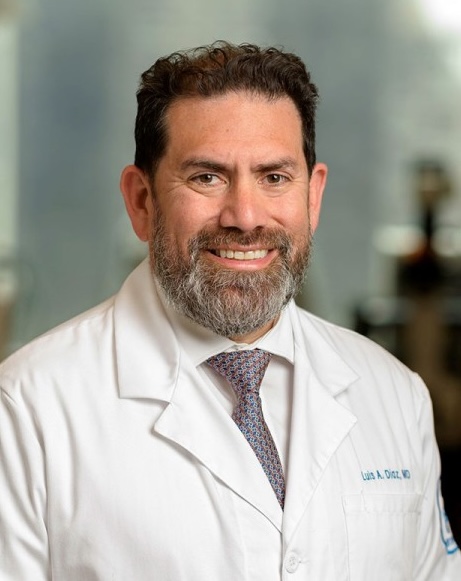
Luis Diaz, M.D., gastrointestinal oncologist and Head of the Division of Solid Tumor Oncology at Memorial Sloan Kettering Cancer Center
This phase 2 trial is an extension of a groundbreaking study, also funded in part by Swim Across America, in which all rectal cancer patients treated with the immunotherapy dostarlimab experienced a complete clinical response, meaning their tumors disappeared. This was the first time ever that a clinical trial had a 100% positive response rate.
The updated trial included 103 patients with stage 1-3 cancer; 49 with rectal cancer; and 54 with non-rectal cancers, including gastroesophageal, hepatobiliary, colon, genitourinary, and gynecologic. Drs. Cercek and Diaz noted that the 80% response rate in this expanded clinical trial is very exciting for these types of cancer.
“Grants provided by Swim Across America were critical to our initial study and advancing this trial to phase 2,” said Luis Diaz, M.D., gastrointestinal oncologist and Head of the Division of Solid Tumor Oncology at Memorial Sloan Kettering Cancer Center.
Founded in 1987, Swim Across America has raised more than $100 million to fight cancer. In its 38 years of making waves, thousands of volunteers and Olympians have swum the circumference of the earth three times uniting a movement to fight cancer that has created a groundswell of support spanning all generations. Today, more than 24 communities across the U.S. hold charity swims each year, which support innovative cancer research, detection, and patient programs.
Drs. Andrea Cercek and Luis Diaz spoke at the 2024 Swim Across America – Long Island Sound open water swim
Swim Across America’s funding of clinical trials on a national level has helped contribute to four FDA-approved life-saving immunotherapy cancer treatments: Yervoy, Opdivo, Tecentriq, and Keytruda. Swim Across America awards grant to more than 60 projects each year and there are ten named Swim Across America Labs at major institutions.
In addition to Swim Across America grants, this trial received funding from the National Institutes of Health, National Cancer Institute, Haystack Oncology, and Stand Up To Cancer. MSK also acknowledges support from GSK, whose PD-1 blockade Jemperli (dostarlimab), represents a promising advancement in the treatment of patients.
For more information and to inquire about eligibility for this clinical trial, talk to your oncologist or call MSK at 646-888-4189. You may also reach to info@swimacrossamerica.org and we will help guide you.
Choi’s next generation CAR-T therapy, funded in part by SAA-Boston and SAA-Nantucket, has shown “dramatic and rapid” regression of glioblastoma
With early funding from Swim Across America – Boston and Swim Across America – Nantucket, Dr. Bryan Choi’s research on tandem CAR T-cell therapy for ependymoma was approved for a Phase I trial. The first human patient was infused at the end of April 2023. The results of the first human trials, as described in 2024 by the New England Journal of Medicine, showed “dramatic and rapid” regression of glioblastoma.
In an exclusive briefing to Swim Across America participants, Dr. Bryan Choi, a neurosurgeon and neuro-oncologist at Massachusetts General Cancer Center, delivered an update on his research path.
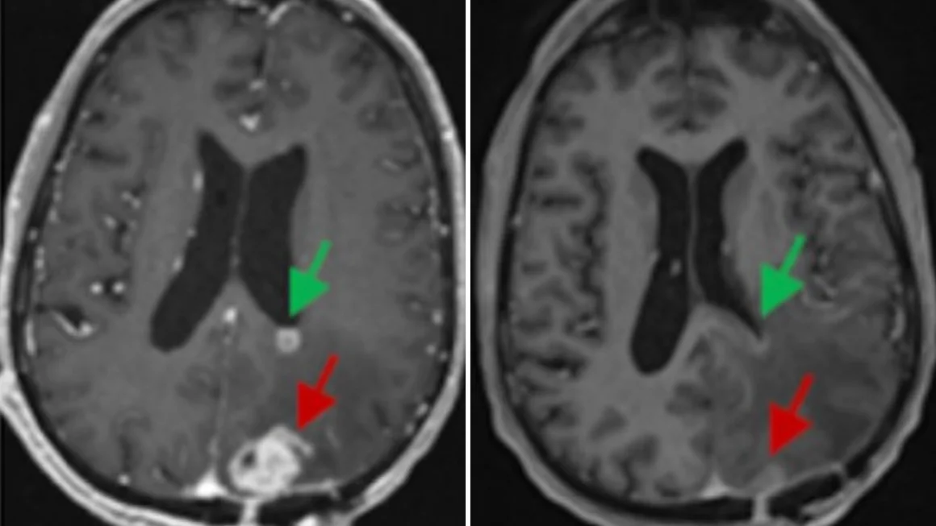
From left, brain tumors, marked by red and green arrows, disappear a day after CAR-T immunotherapy treatment. From CNN.
The Swim Across America lab visit included not only highlights from on the ongoing Phase I trial, but also a few first-hand stories about the life-changing impacts of the new CAR-T cell therapy for one of the patients, who has chosen to share his story publicly.
Tom Fraser (Patient #2) has shared his story publicly with news outlets that include CNN and New York Magazine.
Tom Fraser, 72, (center, in the blue shirt) was treated with a single infusion of CAR-T cells. Two days later, an MRI showed a decrease in the tumor’s size by 18.5 percent. By day 69, the tumor had decreased by 60.7 percent, and the response was sustained for over 6 months. From The Harvard Gazette.
CAR T-cell therapy, a type of gene therapy that engineers a patient’s own T-cells (a type of white blood cells) to identify and attack cancer cells by way of their antigen markers, has shown promise in the treatment of blood cancers. The research team created dual antigen-targeting tandem CAR T (TanCART) cells to target heterogeneous solid tumors. Dr. Choi’s research shows that this type of therapy can also be manipulated to treat solid tumors like ependymoma.
At the suggestion of Dr. Howard Weinstein, Unit Chief of Pediatric Hematology/Oncology at Mass General for Children and long-time Swim Across America partner, Dr. Choi applied for a Swim Across America research grant through the internal competitive bid program at Mass General for Children.
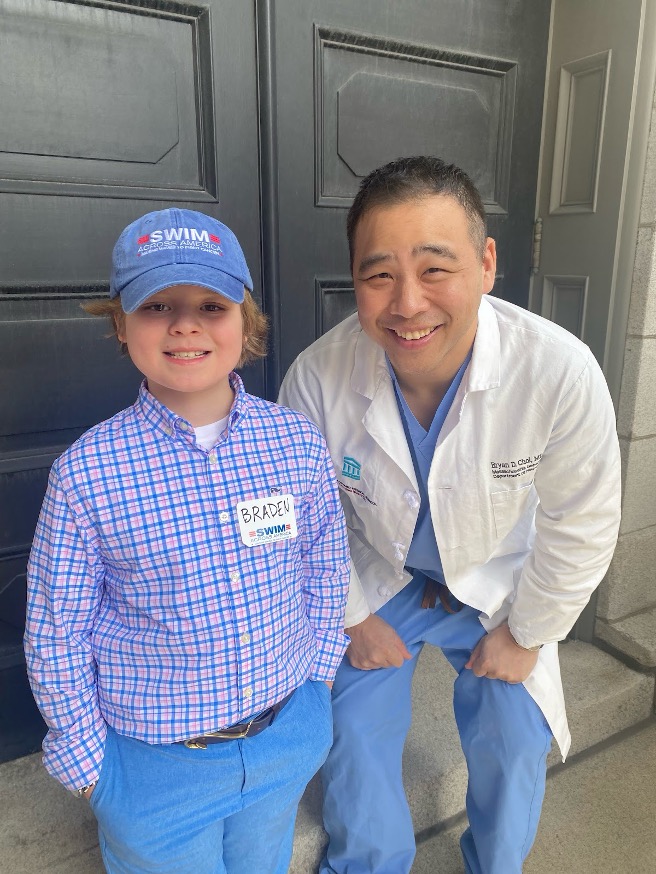
Dr. Choi recruiting the next generation of researchers, like SAA – Nantucket supporter, Braden Hussey.
Without the Swim Across America grant, Dr. Choi said, his research likely would have remained unfunded, and neither the FDA approval nor the Phase I Study approval, which is funded by industry investors, would have been possible.
Janel Jorgensen McArdle, Chief Operating Officer of Swim Across America, pointed out that Dr. Choi’s research falls in the “sweet spot” of the high risk, high reward research that Swim Across America is pursuing.
“This promising research aligned perfectly with the opportunities that Swim Across America seeks to support,” said McArdle. “We are so excited that SAA funding could help accelerate it to patient trials – and are thrilled to see the benefits to patients!”
Dr. Choi explained CAR-T cell therapy to the Swim Across America group on April 4, 2025.
After his highly informative presentation, Dr. Choi gave the Swim Across America group a private tour of his lab spaces, which were in the finishing stages of build-out when they toured two years ago.
The group also got to visit the Ether Dome at Mass General, the surgical amphitheater where, in 1846, the first public surgery with anesthesia was performed.
It was an exciting visit for Swim Across America news and for all of the Swim Across America – Boston and Nantucket supporters who were present!
Swim Across America lab visit participants, pictured with Dr. Choi in the Ether Dome at Mass General, site of the first use of anesthesia in public surgery.
Revolutionary CRISPR Gene Editing and Other Cell and Gene Therapy Editing Takes Center Stage in Finding Ways to Effectively Treat Cancer
Swim Across America, the nonprofit funding innovative clinical trials and patient-centered programs for cancer,is proud to announce the award of two $450,000 grants to two of its beneficiaries, Alliance for Cancer Gene Therapy(ACGT) and Dana-Farber Cancer Institute, to support the work of novel gene and base editing techniques used in advanced cancer research, including targeted therapies, immunotherapies and cellular therapies. The two-year grants will specifically support the work of scientific investigators Joseph Fraietta, PhD, at the University of Pennsylvania through ACGT, and Pietro Genovese, PhD, at Dana-Farber Cancer Institute, for their work in groundbreaking cell and gene therapy cancer research. This financial support paves the way for more effective therapies across many cancer types including solid tumors, offering potential new hope for patients with hard to treat cancer types or limited treatment options.
“Gene editing, including CRISPR, are some of the most promising frontiers in cancer research allowing for advances in targeted therapies, immunotherapies, CAR-T cell therapy and early/minimal residual disease detection, diagnostics and cancer vaccines,” said Rob Butcher, CEO of Swim Across America. “These grants to Dr. Fraietta through ACGT, and Dr. Genovese at Dana-Farber, will help accelerate the advancement of potential gene-edited cancer treatments that could transform how we treat patients and their quality of life. Just as our previous funding has helped develop immunotherapy treatments that are saving lives today, we believe these pointed investments will help accelerate the next generation of cancer breakthroughs.”
Joseph Fraietta, PhD
Joseph Fraietta, PhD, through Swim Across America–Fairfield County beneficiary Alliance for Cancer Gene Therapy, is developing an innovative “off-the-shelf” cell therapy for aggressive cancers. His research uses a precise gene-editing tool called a “base editor” to create more effective CAR T cells that can target cancers with KRAS mutations, found in 20-25% of all cancers including lung, colon and pancreatic cancer. His team is also developing “micropharmacies” – immune cells engineered to release powerful cancer-fighting signals directly at tumor sites while minimizing side effects.
Pietro Genovese, PhD
Pietro Genovese, PhD, at Dana-Farber, is taking a revolutionary approach to treating acute myeloid leukemia (AML). Rather than targeting cancer cells directly, his team is creating “stealth” healthy blood cells engineered to survive cancer treatments while allowing the selective elimination of cancer cells. This innovative strategy could provide less toxic treatment options for AML and other blood cancers where traditional therapies often harm healthy cells along with cancerous ones.
“With the current funding landscape and resources potentially constrained, nonprofit organizations play a vital role in ensuring innovative cancer research moves forward,” said Evan Vosburgh, MD, Research and Grants committee chair for Swim Across America. “These targeted grants support precisely the kind of high-risk, high-reward research that could revolutionize cancer treatment, but might otherwise go unfunded. By supporting early-stage research in cell and gene therapy, we’re helping bridge critical funding gaps and accelerating the development of potentially life-saving treatments.”
Swim Across America has raised more than $100 million for cancer research since its founding in 1987 and has a strong track record of funding transformative research, including clinical trials that led to FDA-approved immunotherapy medicines Keytruda, Opdivo, Yervoy and Tecentriq. The organization was also a grant funder of Memorial Sloan Kettering’s landmark clinical trial that achieved a 100% success rate treating advanced rectal cancer patients with dostarlimab.
About Swim Across America Swim Across America hosts open water and pool swims in numerous communities nationwide, from Nantucket to under San Francisco’s Golden Gate Bridge. More than 150 Olympians support the organization, including Michael Phelps, Kate Douglass, Missy Franklin and Ryan Lochte. The organization supports more than 60 cancer research projects annually and has ten named Swim Across America Labs at major institutions nationwide. To learn more visit swimacrossamerica.org or follow on social media @SwimAcrossAmerica on Facebook and @SAASwim on Instagram.
Kara Wolter was 26 when she was diagnosed with metastatic osteosarcoma. The bone cancer found in her left knee had spread to her lungs. Her treatment plan included six different chemotherapies and multiple surgeries, including six lung wedge recession surgeries and amputation of her left leg above the knee. She was given a high recurrence rate and a 15 to 20% chance to live another five years.
Six years later, Kara is now 33 and “thriving as a cancer survivor!” She has had no evidence of disease for three years.
How did Kara learn about Swim Across America?
“During a check up with my oncologist at Rogel University Cancer Center, I saw a flyer for the upcoming Swim Across America – Motor City Mile event. Proceeds from the event go towards cancer research right there at Rogel,” said Kara.
“I used to swim as a child, and now I coach for the same team I swam with, so it was an easy decision to sign up for SAA – Motor City Mile.”
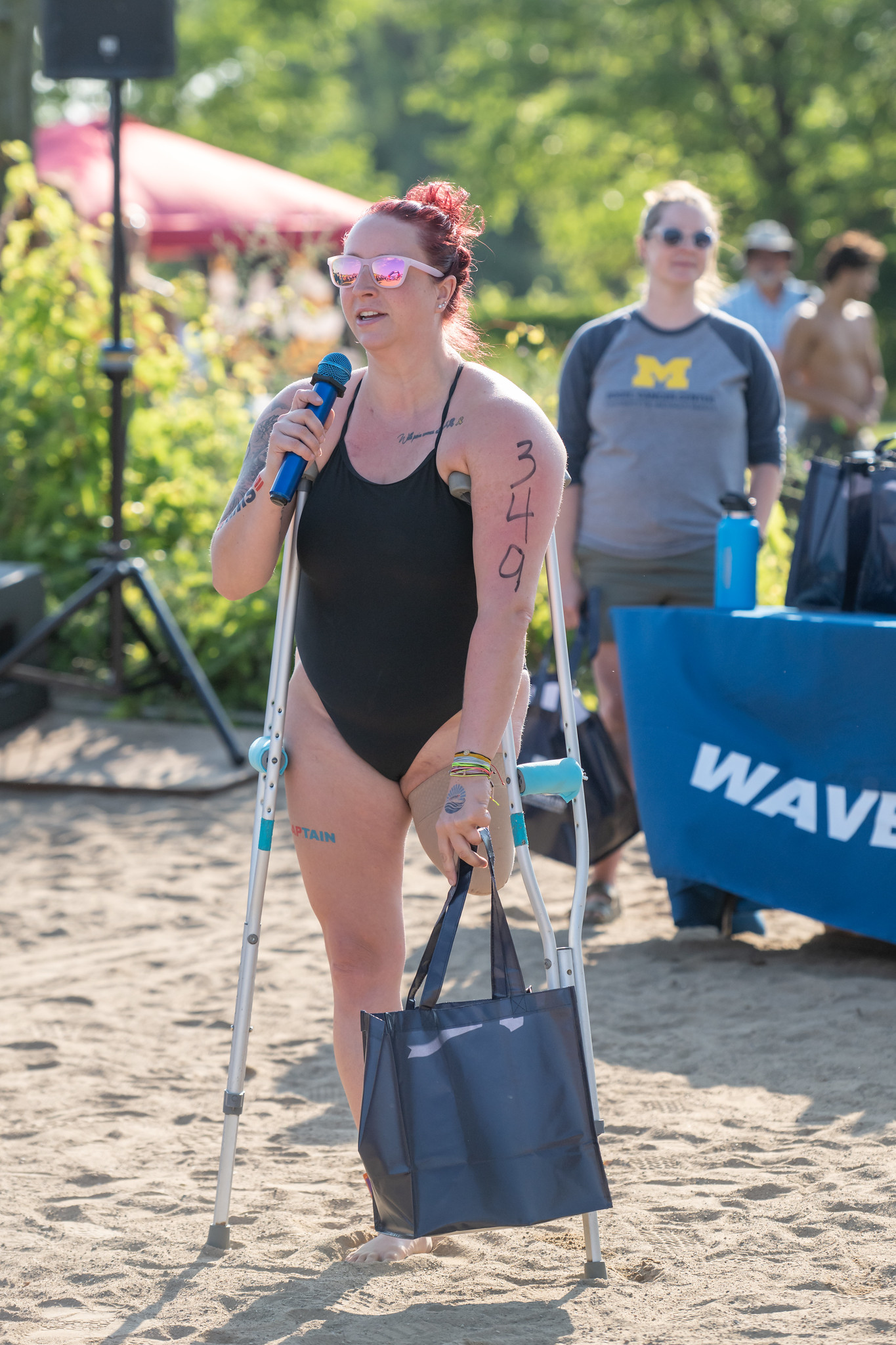
Kara Wolter spoke at the 2023 Swim Across America – Motor City Mile community swim.
Her connection to the Swim Across America mission and local beneficiary made it an easy decision, like many other Swim Across America participants.
This will be Kara’s fifth year swimming at SAA – Motor City Mile, and she hopes to hit yet another personal milestone.
“I am so close to raising more than $10,000! Five years, $10,000 raised… I know we are making an incredible impact in our community,” shared Kara.
Kara Wolter grew up swimming and is now a coach for the same team she swam with.
Since 2019, Swim Across America – Motor City Mile has raised over $500,000. In 2023, Dr. Kyoung Eun Lee, one of the grant recipients, received an $1.4M grant from NCI to study the role of low oxygen supply in pancreatic cancer
On July 12, Kara, her team, the Sassy Swimmers, and hundreds of swimmers, volunteers, and supporters hope to make an even greater impact in their community.
“Swim Across America is so important to me. I survived a terrible cancer that I probably should not have survived and I want to make a difference in the future,” said Kara.
Preliminary findings from the clinical trial are hopeful and show the promise of cell therapy for treating incurable conditions.
“The CAR-T platform has revolutionized how we think about treating patients with cancer, but solid tumors like glioblastoma have remained challenging to treat because not all cancer cells are exactly alike and cells within the tumor vary. Our approach combines two forms of therapy, allowing us to treat glioblastoma in a broader, potentially more effective way.” said Bryan Choi, MD, PhD, neurosurgeon and associate director of the Center for Brain Tumor Immunology and Immunotherapy, Cellular Immunotherapy Program, Mass General Cancer Center and Department of Neurosurgery.
MRI results from a glioblastoma clinical trial that received initial grant funding from Swim Across America – Boston. The scans show tumor size before infusion (day -7) and after infusion (day 5).
Days after a single treatment, the three patients experienced dramatic reductions in their tumors, with one patient achieving near-complete tumor regression.
MRI scans conducted before and after treatment showed initial regression in tumor size. In time, the researchers observed tumor progression in these patients, but given the strategy’s promising preliminary results, the team will pursue strategies to extend the durability of response.
Dr. Choi expressed gratitude for the Swim Across America – Boston grant that made this research possible. Dr. Choi’s lab also receives funding from Swim Across America – Nantucket.
“Swim Across America directly supports my laboratory, which is dedicated to developing novel experimental immune therapies for patients with brain cancer. SAA funded a critical step in the early stage of discovery, allowing us to take on high risk projects that otherwise might not be possible.” said Dr. Choi.
“Without this type of support, my lab would not be able to develop or advance new therapies toward clinical studies like the one published here.”
Swim Across America – Boston and Swim Across America – Nantucket leadership teams visited Dr. Choi at Mass General Cancer Center in March 2023, just one month before the clinical trial was launched. During the visit, SAA leaders were treated to an informative presentation and lab tour from Dr. Choi.
During the tour, Janel Jorgensen McArdle, Chief Operating Officer of Swim Across America, pointed out that Dr. Choi’s research falls in the “sweet spot” of the high risk, high reward research that Swim Across America is pursuing.
“This promising research aligns perfectly with the opportunities that Swim Across America seeks to support. We are excited that SAA funding could help accelerate (this research) to patient trials.”
In March 2023, leaders from Swim Across America – Boston and Swim Across America – Nantucket visited Dr. Choi’s research lab at Mass General Cancer Center. Pictured: Michele Fox, Patty Gienke, Bob Hackett, Liam Hackett, Steven Laduzinski, Jamie Mannion, Janel Jorgensen McArdle, Alex Meyer, Rick Osterberg, Shep Perkins, Jill Roethke, Mike Ryan, Jessica Stokes, Kitty Tetreault.
Swim Across America’s grant agreement with beneficiaries, such as Mass General Cancer Center, requires that 100% of an SAA grant must be spent on approved research and clinical trial programs. Since 1987, SAA has granted over $100M to innovative and otherwise unfunded ideas so that the time of oncologists is protected to make progress and develop new treatments.
An immunotherapy clinical trial that Swim Across America provided grant funding has reached another milestone.
The Dr. Luis Diaz Lab at Memorial Sloan Kettering began receiving grants from Swim Across America in 2017. SAA grant funding allowed Dr. Diaz and his colleague, Dr. Andrea Cercek, to meet patients and conduct immunotherapy research. With SAA grant support, the lab opened a clinical trial and recruited 14 patients with advanced rectal cancer. The patients qualified through genetic testing and were treated with a single dose of immunotherapy. The patients didn’t require surgery, chemo, or radiation–which was remarkable as traditional treatments often have a negative emotional, physical, and financial effect on the quality of life for patients and their families.
Dr. Luis Diaz and Dr. Andrea Cercek
All 14 patients responded with no evidence of disease. This is believed to be the first time a clinical trial has shown a 100% response rate. Read the full story here.
Recently, the FDA Advisory Committee supported expanding the clinical trial to more patients based on the data from the trial.
The Diaz/Cercek lab has focused on rectal cancer where standard treatment options are surgery, chemotherapy, and radiation. While these treatments might save a patient, they have significant quality-of-life effects and often present the need for ongoing care.
This trial is genetically dependent and focused on advanced rectal cancer. Dr. Diaz and Dr. Cercek envision the immunotherapy being offered to patients with other cancer types who meet the genetic profile. Proceeds from the Long Island Sound and Nassau/Suffolk – Sound to Cove charity swims continue to help fund the ongoing research and clinical trial at Memorial Sloan Kettering.
Swim Across America has a proven track record of identifying and funding early-stage ideas of promise. Swim Across America grants have played a major role in clinically developing FDA-approved immunotherapy treatments ipilimumab (YERVOY), nivolumab (OPDIVO), pembrolizumab (KEYTRUDA), and atezolizumab (TECENTRIQ).
With the support of Swim Across America grant funding, researchers at Rush University Medical Center are gaining momentum in their quest to discover the early detection tools and treatment options of the future in the fight against cancer. RUSH’s experts intimately understand the physical, emotional and financial burdens of cancer on patients’ lives, and they refuse to let the disease rest as the second leading cause of death in the U.S. Since 2012, Swim Across America–Chicago has awarded More than $2M that has funded these early stage research projects.
Dr. Carl Maki
Grant Recipient: Carl Maki, PhD Professor in the Department of Anatomy & Cell Biology at Rush Medical College
Project: Targeting proteins to improve drug responses for patients with treatment-resistant breast and lung cancers
Project Details: By studying cancer at the molecular level, Maki and his team have made significant strides in identifying promising new options for treatment-resistant breast and lung cancers.
In 2015 Maki received an SAA grant to study a family of enzymes known as prolyl peptidases (which regulate blood pressure and appetite) as a possible mechanism to help prevent or alleviate resistance to the drug tamoxifen, one of the most widely used therapies for the 80% of women with breast cancer whose tumors are considered estrogen receptor-positive. Maki and his team found that an enzyme inhibitor for prolyl peptidases, used in conjunction with tamoxifen, effectively killed breast cancer cells in rodents. Using these promising findings, Maki applied for and received a prestigious R01 research award for continued study from the National Institutes of Health and a grant from the Department of Defense to extend this research into triple-negative breast cancer.
In 2020 Maki was awarded another SAA grant to study proteins called histone demethylases in non-small cell lung cancer. Among the deadliest of all cancers, this accounts for about 4 in 5 lung cancer cases. Maki and his colleagues are studying how these proteins may allow lung cancer cells to resist the drugs currently used to treat the disease. By blocking these proteins, the team has been able to kill lung cancer cells in laboratory studies and lung tumors in mice. They identified a novel mechanism for how these inhibitors improve treatment outcomes and recently published their results.
“What starts out as an idea might result in something great,” Maki said. “SAA gives less established researchers a chance and helps all researchers fund pilot projects that ultimately can lead to bigger things.”
Dr. Animesh Barua
Grant Recipient: Animesh Barua, PhD Associate Professor in the Department of Anatomy & Cell Biology at Rush Medical College Director of the Proteomics Core and MicroRNA and Gene Expression Core
Project: Seeking an improved early detection test for ovarian cancer
Project Details: Throughout his career, Barua has relentlessly pursued the development of an effective early detection test for ovarian cancer. With an SAA grant received in 2020, he and his team are drawing upon extensive experience with immunoassays and ultrasound imaging of ovarian tumors to take the next steps forward in this important area of research. In this study, Barua’s lab is developing a fresh approach to early detection testing involving the fimbriae (fingerlike protein branches that guide an egg during ovulation) of the fallopian tubes. Emerging information shows that high-grade serous carcinoma — the most malignant and most common type of ovarian cancer — originates from the fimbriae. The aims of Barua’s study include identifying specific protein markers associated with cancer development in the fimbriae and determining the efficacy of these markers in predicting cancer growth.
Dr. Amanda Marzo
Grant Recipient: Amanda Marzo, PhD Assistant Professor in the Department of Internal Medicine, Division of Hematology, Oncology and Cell Therapy at Rush Medical College
Project: Bolstering the body’s natural immune response for greater success in the battle against breast cancer
Project Details: Tumor-infiltrating CD8 T-cells are essential for tumor immunity. However, many of these cells become exhausted and are unable to protect against tumor growth. Key molecules known as checkpoint inhibitors, such as programmed death-ligand 1 (PD-L1) expressed on tumor cells and programmed cell death protein 1 (PD-1) expressed on CD8 T-cells, have been shown to be a hallmark of CD8 T-cell exhaustion. For most tumors, blocking PD-1/PD-L1 signaling does not result in tumor rejection. A main cause for the ineffectiveness of checkpoint blockade immunotherapy lies in the dysfunctional state of CD8 T-cells once they enter the tumor. CD8 T-cells are specialized in killing tumor cells but face multiple suppressive signals that dampen their ability to effectively respond. Using an SAA grant received in 2019,Marzo and her colleagues seek to improve scientists’ understanding of how other immune-modulating treatments can improve CD8 T-cell responsiveness to checkpoint inhibitors. Specifically, the researchers aim to determine if metformin, an anti-diabetic drug, could enhance tumor-infiltrating CD8 T-cell responsiveness to PD-1 blockade therapy by altering breast cancer metabolism. The team also seeks to establish if bolstering the number of infiltrating CD8 T-cells into the tumor using interleukin-15 complexes (known to cause proliferation of cells and increase their killing ability) in combination with PD-1 blockade therapy could induce regression of established breast tumors and lead to long-term tumor immunity. Marzo and her team plan to publish the results of their study and are using preliminary data generated from this research to apply for a federal R21 grant.
Dr. Alan Blank
Grant Recipients: Alan T. Blank, MD, MS Assistant Professor in the Department of Orthopedic Surgery, Section of Orthopedic Oncology at Rush Medical College
Jitesh Pratap, PhD Associate Professor in the Department of Anatomy & Cell Biology at Rush Medical College
Dr. Jitesh Pratap
Project: Pursuing therapeutic approaches to prevent breast cancers from
metastasizing to the bones
Project Details: In this study funded by a 2019 SAA grant, Blank and Pratap seek to fulfill a need for the development of a therapy that can prevent primary breast cancers from metastasizing to the bones and surviving there. The researchers hypothesize, based on results of previous studies, that a subgroup of patients with breast cancer that has metastasized to the bone has high levels of autophagy (a process of recycling of cellular components), Runx2 proteins and acetylated α-tubulin — worsening their chances of survival. To investigate this, the researchers are working to determine the clinicopathologic association with the autophagy pathway in tumor samples from patients with cancer that has metastasized to the bone. They are also creating patient-derived xenograft models of bone metastasis. Blank and Pratap hope the results of this study will propel the development of better combinatorial therapeutic approaches to treat bone metastasis.
Dr. Faraz Bishehsari
Grant Recipient: Faraz Bishehsari, MD, PhD Associate Professor of Medicine & the Graduate College in the Department of Internal Medicine, Division of Digestive Diseases and Nutrition, Section of Gastroenterology at Rush Medical College Associate Director for Molecular & Translational Research for the Rush Center for Integrated Microbiome & Chronobiology Research
Project: Pursuing precision medicine to improve outcomes for pancreatic cancer patients
Project Details: Patients with pancreatic ductal adenocarcinoma — the most common form of pancreatic cancer — face poor survival rates, with only 6%-8% of patients surviving five years after diagnosis. This cancer does not respond well to targeted therapies. Bishehsari and his colleagues received an SAA grant in 2019 to establish a platform towards precision medicine in order to tailor therapies based on patients’ individual tumor characteristics. The researchers have developed primary cancer cells from a small tissue sample obtained during diagnostic pancreatic biopsies from pancreatic ductal adenocarcinomas. Molecular profiling of these patient-derived tumor organoids explained the variation in response to a variety of conventional and investigational therapies. They are optimizing this platform to help eventually establish individualized treatments for pancreatic cancer patients.
Dr. Jeff Borgia
Grant Recipient: Jeffrey A. Borgia, PhD Associate Professor in the Department of Anatomy & Cell Biology at Rush Medical College Director of the Rush University Cancer Center Biorepository and Rush Biomarker Development Core
Project: Identifying biomarkers for the improved evaluation and treatment of stage I non-small cell lung cancer
Project Details: Lung cancer is the leading cause of cancer-related mortality in the United States, but evidence is surfacing that widespread lung cancer screening programs may improve patient outcomes when the disease is detected early. Borgia and his team received an SAA grant in 2020 to develop a new diagnostic method to improve physicians’ ability to predict the recurrence of stage I non-small cell lung cancer, or NSCLC. This would help physicians identify patients who would benefit from adjuvant treatment options or closer surveillance. The aims of this study include identifying biomarkers for disease recurrence in stage I NSCLC patients and evaluating these biomarkers for their value in predicting recurrence.
Swim Across America has supported cancer research at Rush University Medical Center since 2012 through more than $2 million in grant funding. Together, Swim Across America and RUSH are relentlessly fighting cancer, working to save lives.
June 9, 2022—The New England Journal of Medicine published a paper on June 5 that 12 patients completed a phase 2 clinical trial for advanced rectal cancer and showed a 100% clinical complete response to dostarlimab, an immunotherapy treatment produced by GlaxoSmithKline. The clinical trial was conducted at Memorial Sloan Kettering with early-stage grant funding from Swim Across America.
Reviews of the clinical trial and quotes in the New York Times from cancer experts are hopeful:
“I believe this (a 100% response) is the first time this has happened in the history of cancer,” commented Dr. Luis Diaz, an author of the New England Journal of Medicine paper.
Dr. Luis Diaz, Memorial Sloan Kettering
“There were a lot of happy tears,” said Dr. Andrea Cercek, an oncologist at Memorial Sloan Kettering Cancer Center and a co-author of the paper.
Depending on patient size and other factors, the cost to run a clinical trial can run into millions of dollars. Early-stage sponsors such as Swim Across America are necessary to fund the costs. Swim Across America’s grant for the MSK clinical trial helped fund the science and speed of sharing of information. Other funding partners of the MSK clinical trial are the Simon and Eve Colin Foundation, GlaxoSmithKline, Stand Up to Cancer, and the National Cancer Institute. Swim Across America is delighted with the results and continues to provide grant support.
Swim Across America.
Swim Across America’s grant agreement with beneficiaries such as Memorial Sloan Kettering requires that 100% of an SAA grant must be spent on approved research and clinical trial programs. In 35-years, SAA has granted nearly $100M to innovative and otherwise unfunded ideas so that the time of oncologists such as Dr. Cercek and Dr. Diaz is protected to make progress and develop new treatments.
Swim Across America has a proven track record of identifying and funding early-stage ideas of promise. Swim Across America grants have played a major role in clinically developing FDA-approved immunotherapy treatments ipilimumab (YERVOY), nivolumab (OPDIVO), pembrolizumab (KEYTRUDA), and atezolizumab (TECENTRIQ).
You can volunteer or swim by visiting swimacrossamerica.org/communities
There have been many requests for sample messages to use in your fundraising efforts during the uncertainty of the current pandemic. Here are some messages created by Swim Across America staff and leading participants that you can share via email, text message, social media, the SAA fundraising app and other formats.
Message #1
Every 15 min, 50 Americans are diagnosed with cancer. Even during a pandemic, people continue to hear the terrible words ‘you have cancer’. I have joined the Swim Across America family so that I can continue to give cancer patients hope by raising funds to support cutting edge cancer research. If you are able, please support me and my swim by making a donation to my personal fundraising page. Every bit helps and will make an impact in the fight to find a cure.
Message #2
Most of us know someone who is dealing with cancer, and how devastating it can be both for the person who is ill and for the family. Cancer touches everyone, and unfortunately during these crazy times, cancer isn’t going into quarantine. That is why I’m STILL making waves to fight cancer with Swim Across America. Since we can’t be together right now, would you instead ‘buy me a drink’ or ‘take me out to dinner’ by making a donation to my Swim Across America swim. The money you give will go toward cutting edge cancer research and make an impact in the fight to find a cure.
Message #3
The past few weeks have definitely been a challenge for us all, which is why I wanted to send you a quick note to see how you were doing and to share with you on something I am looking forward to. This summer, when we are all hopefully able to come together again, I will be swimming 1 mile in open water with Swim Across America to raise funds to support cancer research. When you have a moment, check out my personal fundraising page to learn more about the event and what the funds will support. I’d love to catch up and hear what you are up to as well. Hopefully you have some fun plans to look forward to later this year too.
Message #4
I hope you are doing ok in this crazy time. I wanted to reach out to thank you again for supporting my participation in Swim Across America. It really made me smile and feel just a little bit closer during all this isolation. Did you know that you might be able to double your donation by getting a matching gift from your employer? Check with your HR department to see what forms need to be completed or search here to see if your company is eligible for matching gifts. Every bit helps, so thank you for checking with your employer for a match!
Message #5
I’ve been thinking about you and your family during this difficult time and wanted to reach out to see how you were doing. I’ve signed up to participate and fundraise to support cancer research with Swim Across America this year and they’ve been sharing these inspiring stories about dealing with uncertainty right now that I thought you might enjoy. I hope this brings a little hope to your world right now. I can’t wait until we can get together again soon.
If you have any great messages you think other SAA participants can benefit from using, you can share with us at info@swimacrossamerica.org
In 1987, an inaugural charity swim was hosted across Long Island Sound that raised $5,000 for cancer research. Since then, Swim Across America charity swims have granted nearly $100M that has funded innovative cancer research and clinical trials. Swim Across America grants have played a major role in the development of immunotherapy, detection, gene therapy and personalized medicine. The impact is that families who hear “you have cancer” are more than ever hearing “there is hope.”
In 2020, Swim Across America will be awarding a record $6 million in cancer research grants that will fund more than 50 projects and programs at the following beneficiaries: Alliance for Cancer Gene Therapy (Connecticut), Baylor Scott & White Sammons Cancer Center (Dallas), Cancer Support Team (Westchester, NY), RUSH University Medical Center (Chicago), Children’s Healthcare of Atlanta, Cold Spring Harbor Laboratory (New York), Columbia University Medical Center (New York), Dana- Farber Cancer Institute (Boston), Feinstein Institute for Medical Research (New York), Medical University of South Carolina Hollings Cancer Center (Charleston), Johns Hopkins Sidney Kimmel Comprehensive Cancer Center (Baltimore), Johns Hopkins All Children’s Hospital (Tampa), Atrium Health Levine Cancer Institute (Charlotte), MassGeneral Hospital for Children (Boston), MD Anderson Cancer Center (Houston), Memorial Sloan Kettering Cancer Center (New York), Moffitt Cancer Center (Tampa), Nantucket Cottage Hospital, Palliative and Support Care of Nantucket, Siteman Cancer Center (St. Louis), Seattle Cancer Care Alliance, UC Benioff Children’s Hospitals (San Francisco and Oakland), Children’s Hospital Colorado (Denver), University of Michigan Rogel Cancer Center (Detroit), VCU Massey Cancer Center (Richmond) and Women and Infants Hospital (Rhode Island).
In addition to these grants that are being funded by Swim Across America charity swims within their community, Swim Across America is awarding $120,000 in grants to the Conquer Cancer Foundation (American Society of Clinical Oncology—ASCO) and the American Association for Cancer Research (AACR) that will fund young investigators who have promising ideas to fight cancer.















 Swim Across America