More than $2M Awarded to Chicago Rush University Medical Center by Swim Across America

With the support of Swim Across America grant funding, researchers at Rush University Medical Center are gaining momentum in their quest to discover the early detection tools and treatment options of the future in the fight against cancer. RUSH’s experts intimately understand the physical, emotional and financial burdens of cancer on patients’ lives, and they refuse to let the disease rest as the second leading cause of death in the U.S. Since 2012, Swim Across America–Chicago has awarded More than $2M that has funded these early stage research projects.

Dr. Carl Maki

Grant Recipient: Carl Maki, PhD
Professor in the Department of Anatomy & Cell Biology at Rush Medical College

Project: Targeting proteins to improve drug responses for patients with treatment-resistant breast and lung cancers

Project Details: By studying cancer at the molecular level, Maki and his team have made significant strides in identifying promising new options for treatment-resistant breast and lung cancers.

In 2015 Maki received an SAA grant to study a family of enzymes known as prolyl peptidases (which regulate blood pressure and appetite) as a possible mechanism to help prevent or alleviate resistance to the drug tamoxifen, one of the most widely used therapies for the 80% of women with breast cancer whose tumors are considered estrogen receptor-positive. Maki and his team found that an enzyme inhibitor for prolyl peptidases, used in conjunction with tamoxifen, effectively killed breast cancer cells in rodents. Using these promising findings, Maki applied for and received a prestigious R01 research award for continued study from the National Institutes of Health and a grant from the Department of Defense to extend this research into triple-negative breast cancer.

In 2020 Maki was awarded another SAA grant to study proteins called histone demethylases in non-small cell lung cancer. Among the deadliest of all cancers, this accounts for about 4 in 5 lung cancer cases. Maki and his colleagues are studying how these proteins may allow lung cancer cells to resist the drugs currently used to treat the disease. By blocking these proteins, the team has been able to kill lung cancer cells in laboratory studies and lung tumors in mice. They identified a novel mechanism for how these inhibitors improve treatment outcomes and recently published their results.

“What starts out as an idea might result in something great,” Maki said. “SAA gives less established researchers a chance and helps all researchers fund pilot projects that ultimately can lead to bigger things.”

Dr. Animesh Barua

Grant Recipient: Animesh Barua, PhD
Associate Professor in the Department of Anatomy & Cell Biology at Rush Medical College
Director of the Proteomics Core and MicroRNA and Gene Expression Core

Project: Seeking an improved early detection test for ovarian cancer

Project Details: Throughout his career, Barua has relentlessly pursued the development of an effective early detection test for ovarian cancer. With an SAA grant received in 2020, he and his team are drawing upon extensive experience with immunoassays and ultrasound imaging of ovarian tumors to take the next steps forward in this important area of research. In this study, Barua’s lab is developing a fresh approach to early detection testing involving the fimbriae (fingerlike protein branches that guide an egg during ovulation) of the fallopian tubes. Emerging information shows that high-grade serous carcinoma — the most malignant and most common type of ovarian cancer — originates from the fimbriae. The aims of Barua’s study include identifying specific protein markers associated with cancer development in the fimbriae and determining the efficacy of these markers in predicting cancer growth.

Dr. Amanda Marzo

Grant Recipient: Amanda Marzo, PhD
Assistant Professor in the Department of Internal Medicine, Division of Hematology, Oncology and Cell Therapy at Rush Medical College

Project: Bolstering the body’s natural immune response for greater success in the battle against breast cancer

Project Details: Tumor-infiltrating CD8 T-cells are essential for tumor immunity. However, many of these cells become exhausted and are unable to protect against tumor growth. Key molecules known as checkpoint inhibitors, such as programmed death-ligand 1 (PD-L1) expressed on tumor cells and programmed cell death protein 1 (PD-1) expressed on CD8 T-cells, have been shown to be a hallmark of CD8 T-cell exhaustion. For most tumors, blocking PD-1/PD-L1 signaling does not result in tumor rejection. A main cause for the ineffectiveness of checkpoint blockade immunotherapy lies in the dysfunctional state of CD8 T-cells once they enter the tumor. CD8 T-cells are specialized in killing tumor cells but face multiple suppressive signals that dampen their ability to effectively respond. Using an SAA grant received in 2019,Marzo and her colleagues seek to improve scientists’ understanding of how other immune-modulating treatments can improve CD8 T-cell responsiveness to checkpoint inhibitors. Specifically, the researchers aim to determine if metformin, an anti-diabetic drug, could enhance tumor-infiltrating CD8 T-cell responsiveness to PD-1 blockade therapy by altering breast cancer metabolism. The team also seeks to establish if bolstering the number of infiltrating CD8 T-cells into the tumor using interleukin-15 complexes (known to cause proliferation of cells and increase their killing ability) in combination with PD-1 blockade therapy could induce regression of established breast tumors and lead to long-term tumor immunity. Marzo and her team plan to publish the results of their study and are using preliminary data generated from this research to apply for a federal R21 grant.

Dr. Alan Blank

Grant Recipients: Alan T. Blank, MD, MS
Assistant Professor in the Department of Orthopedic Surgery, Section of Orthopedic Oncology at Rush Medical College

Jitesh Pratap, PhD
Associate Professor in the Department of Anatomy & Cell Biology at Rush Medical College

Dr. Jitesh Pratap

Project: Pursuing therapeutic approaches to prevent breast cancers from

metastasizing to the bones

Project Details: In this study funded by a 2019 SAA grant, Blank and Pratap seek to fulfill a need for the development of a therapy that can prevent primary breast cancers from metastasizing to the bones and surviving there. The researchers hypothesize, based on results of previous studies, that a subgroup of patients with breast cancer that has metastasized to the bone has high levels of autophagy (a process of recycling of cellular components), Runx2 proteins and acetylated α-tubulin — worsening their chances of survival. To investigate this, the researchers are working to determine the clinicopathologic association with the autophagy pathway in tumor samples from patients with cancer that has metastasized to the bone. They are also creating patient-derived xenograft models of bone metastasis. Blank and Pratap hope the results of this study will propel the development of better combinatorial therapeutic approaches to treat bone metastasis.

Dr. Faraz Bishehsari

Grant Recipient: Faraz Bishehsari, MD, PhD
Associate Professor of Medicine & the Graduate College in the Department of Internal Medicine, Division of Digestive Diseases and Nutrition, Section of Gastroenterology at Rush Medical College
Associate Director for Molecular & Translational Research for the Rush Center for Integrated Microbiome & Chronobiology Research

Project: Pursuing precision medicine to improve outcomes for pancreatic cancer patients

Project Details: Patients with pancreatic ductal adenocarcinoma — the most common form of pancreatic cancer — face poor survival rates, with only 6%-8% of patients surviving five years after diagnosis. This cancer does not respond well to targeted therapies. Bishehsari and his colleagues received an SAA grant in 2019 to establish a platform towards precision medicine in order to tailor therapies based on patients’ individual tumor characteristics. The researchers have developed primary cancer cells from a small tissue sample obtained during diagnostic pancreatic biopsies from pancreatic ductal adenocarcinomas. Molecular profiling of these patient-derived tumor organoids explained the variation in response to a variety of conventional and investigational therapies. They are optimizing this platform to help eventually establish individualized treatments for pancreatic cancer patients.

Dr. Jeff Borgia

Grant Recipient: Jeffrey A. Borgia, PhD
Associate Professor in the Department of Anatomy & Cell Biology at Rush Medical College
Director of the Rush University Cancer Center Biorepository and Rush Biomarker Development Core

Project: Identifying biomarkers for the improved evaluation and treatment of stage I non-small cell lung cancer

Project Details: Lung cancer is the leading cause of cancer-related mortality in the United States, but evidence is surfacing that widespread lung cancer screening programs may improve patient outcomes when the disease is detected early. Borgia and his team received an SAA grant in 2020 to develop a new diagnostic method to improve physicians’ ability to predict the recurrence of stage I non-small cell lung cancer, or NSCLC. This would help physicians identify patients who would benefit from adjuvant treatment options or closer surveillance. The aims of this study include identifying biomarkers for disease recurrence in stage I NSCLC patients and evaluating these biomarkers for their value in predicting recurrence.

Swim Across America has supported cancer research at Rush University Medical Center since 2012 through more than $2 million in grant funding. Together, Swim Across America and RUSH are relentlessly fighting cancer, working to save lives.

35 Stories of Impact: Team Carolyn of SAA-Nassau/Suffolk

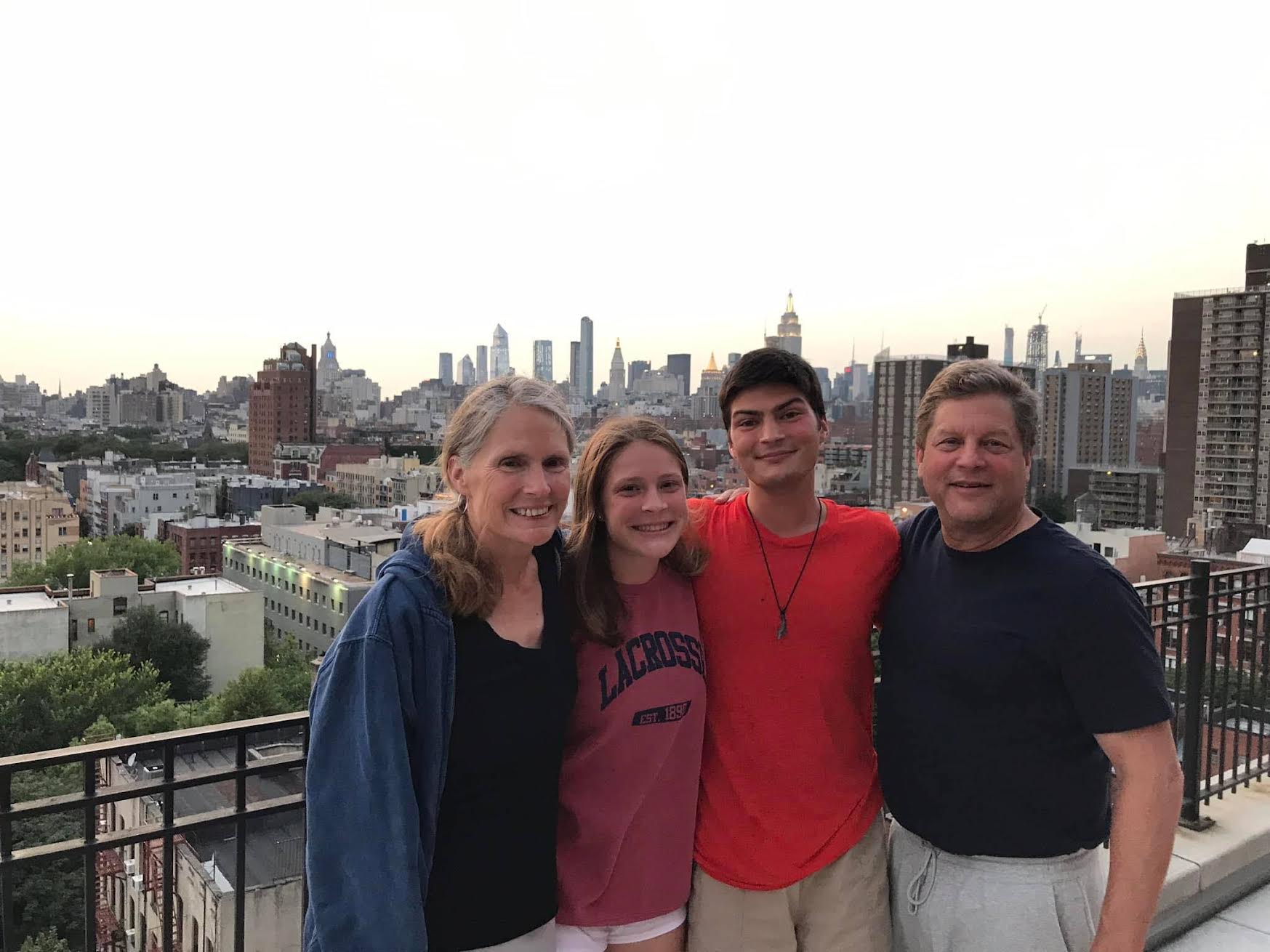
Carolyn Jaenisch, Caitlin Chestler, Gregory Chestler & Steve Chestler
Swim Across America – Nassau/Suffolk

1 year with Swim Across America
Steve 65; Raised over $100,000 with Team Carolyn

“We are looking forward to joining a community dedicated to fighting cancer, the disease that took Carolyn Jaenisch from us, while simultaneously doing something she loved : swimming.”

Carolyn Jaenisch’s diagnosis of Terminal Adenocarcinoma in July 2021 came as a shock to the entire family. She was an avid swimmer who swam with Long Island masters and Excel Swim Club for the past 21 years on Long Island. When she was diagnosed with Stage 4 Lung Cancer and had her first back operation she was told she would be swimming again in 2 months. Carolyn was all about family and swimming.  

So when her family went looking for a charity event, they saw the SAA-Sound to Cove swim at Pryibil Beach on July 31, 2022, and got in touch with Swim Across America CEO Rob Butcher and local event chair Kevin Shine to learn more and make a plan to participate. Carolyn was so excited to get involved with Swim Across America.

Carolyn sadly passed away in November of 2021, just 4 months after her diagnosis, and before she could witness her family swimming in her honor. Carolyn’s passing left behind her husband, Steven Chestler, 24-year old son Gregory and 19-year old daughter Caitlin; and they are the founders of Team Carolyn for Swim Across America.

This July will be Team Carolyn’s first year participating in a Swim Across America event. “We are looking forward to joining a community dedicated to fighting cancer, the disease that took Carolyn Jaenisch from us, while simultaneously doing something she loved : swimming” says Steve Chestler.  Steve, Caitlin, Gregory and other members of Team Carolyn have rallied together to raise an amazing $100,000 (and counting) to support cancer research and clinical trials. 

“We know she would be honored that she has been supported and loved so much.”

Swim Across America is celebrating 35 years of impact in 2022. SAA has raised $100 million since its inception in 1987 to support cancer research and clinical trials across the U.S. Please contact Jeni Howard at jhoward@jhowardpr.com for media inquiries.

New Swim Across America Participant Center is Live

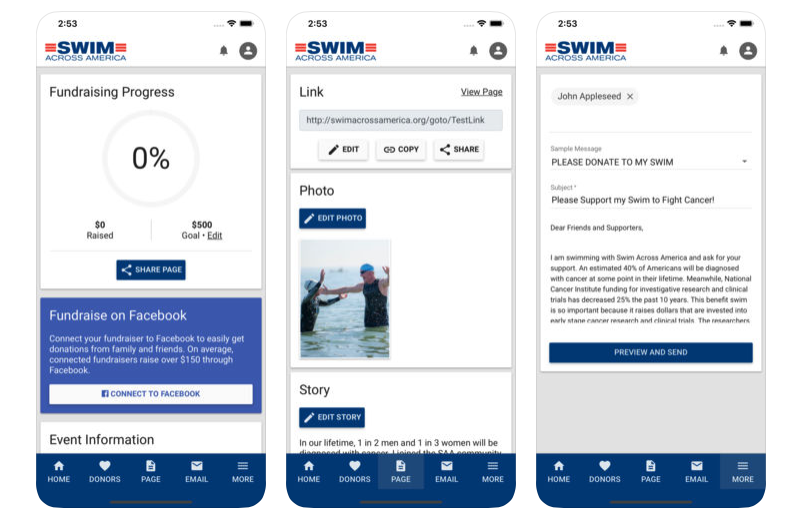
Swim Across America now features a new Participant Center created to make fundraising easier for all participants, whether you are a swimmer, volunteer or SAA My Way participant. Get registered at swimacrossamerica.org and check out these new features when you are logged in:

  • The Participant Center has a new design as well as mobile-responsive functionality
  • The new email interface simplifies email sending while maintaining your organizational styles with suggested message templates. Participants will never lose their work again thanks to the new “autosave” of draft messages in the email editor!
  • PC3’s new “Profile View” allows supporters to do more “self service” updates –they can edit their own profile (constituent record), privacy preferences, and change their password–all within the Participant Center. Participants also have the power to join a team after registration.
  • The photo upload tool now includes a preview option that automatically zooms to the required 300×400 dimensions and allows the participant to zoom or rotate the photo.
  • SAA My Way participants will be able to use the Activity Tracker and upload inspiring photos of their progress

If you have questions about the new Participant Center – you can consult our Support Page with Frequently Asked Questions about the Center.

Updated Swim Across America Fundraising Messages for 2020

There have been many requests for sample messages to use in your fundraising efforts during the uncertainty of the current pandemic. Here are some messages created by Swim Across America staff and leading participants that you can share via email, text message, social media, the SAA fundraising app and other formats. 

Message #1

Every 15 min, 50 Americans are diagnosed with cancer. Even during a pandemic, people continue to hear the terrible words ‘you have cancer’. I have joined the Swim Across America family so that I can continue to give cancer patients hope by raising funds to support cutting edge cancer research. If you are able, please support me and my swim by making a donation to my personal fundraising page. Every bit helps and will make an impact in the fight to find a cure. 

Message #2

Most of us know someone who is dealing with cancer, and how devastating it can be both for the person who is ill and for the family.  Cancer touches everyone, and unfortunately during these crazy times, cancer isn’t going into quarantine. That is why I’m STILL making waves to fight cancer with Swim Across America. Since we can’t be together right now, would you instead ‘buy me a drink’ or ‘take me out to dinner’ by making a donation to my Swim Across America swim. The money you give will go toward cutting edge cancer research and make an impact in the fight to find a cure. 

Message #3

The past few weeks have definitely been a challenge for us all, which is why I wanted to send you a quick note to see how you were doing and to share with you on something I am looking forward to. This summer, when we are all hopefully able to come together again, I will be swimming 1 mile in open water with Swim Across America to raise funds to support cancer research. When you have a moment, check out my personal fundraising page to learn more about the event and what the funds will support. I’d love to catch up and hear what you are up to as well. Hopefully you have some fun plans to look forward to later this year too. 

Message #4

I hope you are doing ok in this crazy time. I wanted to reach out to thank you again for supporting my participation in Swim Across America. It really made me smile and feel just a little bit closer during all this isolation. Did you know that you might be able to double your donation by getting a matching gift from your employer? Check with your HR department to see what forms need to be completed or search here to see if your company is eligible for matching gifts. Every bit helps, so thank you for checking with your employer for a match! 

Message #5

I’ve been thinking about you and your family during this difficult time and wanted to reach out to see how you were doing. I’ve signed up to participate and fundraise to support cancer research with Swim Across America this year and they’ve been sharing these inspiring stories about dealing with uncertainty right now that I thought you might enjoy.  I hope this brings a little hope to your world right now. I can’t wait until we can get together again soon.

If you have any great messages you think other SAA participants can benefit from using, you can share with us at info@swimacrossamerica.org

2015 Swim Across America event, Day 2 - Nantasket Beach.


New Swim Across America Fundraising Mobile App Launched

The Swim Across America mobile app is now available for download on your iOS or Android device! With this new app, you can:

  • Monitor your fundraising progress, and thank your donors for their support
  • Update your page with a personalized story and photo
  • Share your page using Facebook, Twitter, LinkedIn, or SMS
  • Send emails easily by importing your contacts list with just one click
  • And more!

Downloading the app on your phone or tablet takes less than a minute. Visit the App Store or Google Play Store to get started!

Screen Shot 2019-02-04 at 2.15.08 PM


Fundraising Made Easy: Facebook Integration Now Live for SAA

Swim Across America is making fundraising easier through social media!

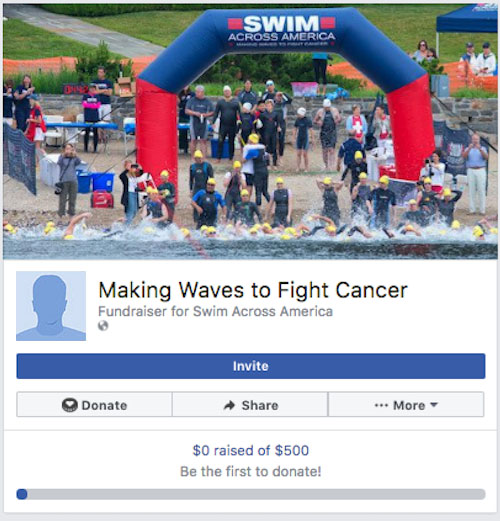
You can now link your Swim Across America fundraising page directly with Facebook. Once you register for your SAA charity swim, you can directly link your personal Swim Across America fundraising page to Facebook. You’ll be able to easily spread the word, collect donations and track your progress on Facebook. All donations through Facebook will be received by SAA and reflected in your fundraising thermometer!

How To Connect Your Fundraiser to Facebook:

1. Log in to your participant center.

SAA PC

2. Click on MY EVENTS in the top menu and choose the event(s) you’d like to connect.

3. In the middle of the page, click ‘Connect to Facebook Fundraisers.’


3. You will be redirected to Facebook to enter your login information.

4. Success! After you connect your Facebook profile, you can view your fundraiser. Click on “Go to Facebook Fundraiser.”


Swim Across America Facebook

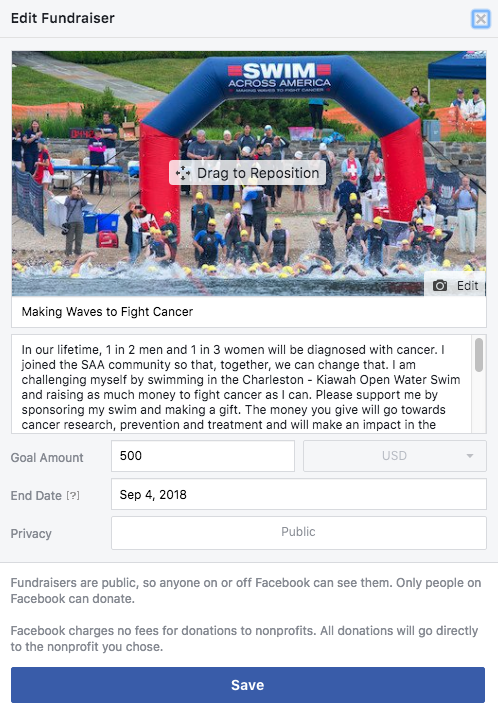
5. If you’d like, edit your fundraising information and details specific to your participation.

Swim Across America Facebook Fundraiser 2

6.  Promote your fundraiser by sharing a post on your timeline or inviting friends and family to your fundraising page.

Swim Across America Facebook Fundraiser 3

This new Facebook integration allows you to spread the word of your fundraising efforts and reach more people quicker and easier then ever before. For questions about using fundraisers on Facebook scroll down to the bottom part of our FAQ page.

Log in and get started now!

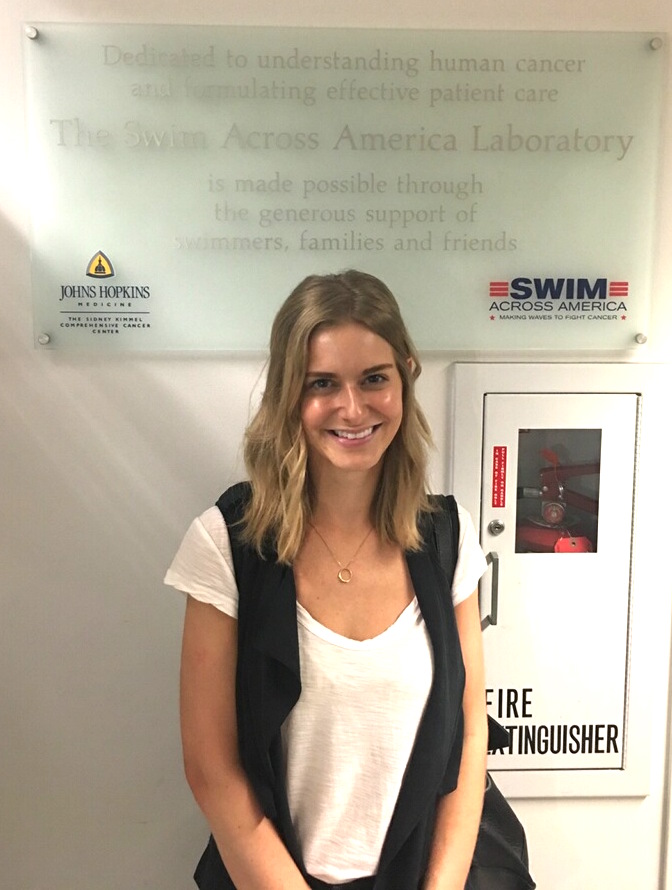
Saving Lives at the Johns Hopkins Swim Across America Lab

Stefanie Joho joined SAA – Baltimore this year to share her uplifting story. Four years ago at 22-years old she was diagnosed with stage 2 colon cancer. Stefanie went through repeated chemo with no positive response, and the cancer spread to stage 4. Her doctors gave her weeks to live. Desperate and not willing to give up, her sister googles and finds Dr. Luis Diaz at our beneficiary Johns Hopkins Medicine.

imagejpeg_0-3

Dr. Diaz told Joho to come immediately to JHU where she participates in an immunotherapy clinical trial of Keytruda funded–yes funded–by your donations to Swim Across America. The trial saved her life (she has “no evidence of disease NED”), she has a bright future and Keytruda is now FDA approved. Read Stefanie’s story in the New York Times and if you are inspired by the work being done through Swim Across America labs, please consider donating to SAA: http://bit.ly/SAAdonation.

Genetic tests for mismatch repair deficiency are commercially available. But insurers might not pay for the drugs — Keytruda and Opdivo cost $150,000 a year — based on such a small study. The study was paid for by Swim Across America and other charities, and the National Institutes of Health.  – New York Times

screen-shot-2016-09-21-at-6-16-13-pm

WOW! What a Year!

Image

Happy Halloween! While we at SAA were coming up with costume ideas this week, we also ran the numbers on our open water events for 2013. What we found were some frighteningly exciting statistics! Here’s a recap of our open water events for the season- they’re no trick, and certainly a treat!

Two NEW Swim Across America Labs!

Both our Dallas and Seattle swims hit the $1 million mark for fundraising this year, which is amazing! The Innovative Clinical Trials Center at Baylor Charles A. Sammons Cancer Center was renamed the Swim Across America Innovative Clinical Trials Center after hitting $1 million in giving. In only its third year, SAA Dallas continues to break records and make waves.

Over on the west coast, SAA Seattle also hit the $1 million fundraising mark and was recognized by beneficiary Seattle Cancer Care Alliance by naming their lab for us. This is the fifth Swim Across America lab in the country, demonstrating our growth as an organization and the tirelessness of our participants and donors.

Our Babes are Getting Bigger! 

A couple of our very new swims completely blew us out of the water this year. Atlanta is the youngest of the open water siblings, and this May, it hit $250,000 in fundraising! Set on beautiful Lake Spivey, all donations from this inaugural swim went directly to the Aflac Cancer and Blood Disorders Center at Children’s Healthcare of Atlanta.

The second youngest in the SAA family, SAA Nantucket, was not to be outdone by its baby sib, though. In only it’s second year, Nantucket flew past its fundraising goal like Phelps by the competition and raised $180,000. The 55% jump in fundraising can be attributed to the dedication of all the swimmers that make this late summer event a blast!

The New Kids in Town

SAA Chicago debuted a new event at their swim this year in addition to their ½, 1, 1½ or 3 mile distance choices. The new Relay Swim across Lake Michigan was a hit, and helped the already firmly established swim raise almost $400,000 for the Rush University Cancer Center this past July.

The Michael Phelps Swim School also partnered with Swim Across America this year to offer the new Breakowt clinics to swimmers in Baltimore and Seattle. The innovative and comprehensive training session brings confidence and skill to new open water swimmers, and was run the day before each SAA swim.

Makin’ Waves, Breakin’ Records

Three of our open water swims made us proud as they reached new heights this summer. In tiny Rhode Island, the annual swim at Narragansett hosted a whopping 500 swimmers! A record number for this swim, all proceeds from participants went to Women and Infants Hospital.

Some say the Golden Gate Bridge that gleams over the Bay is the main attraction of the SAA San Francisco swim, and apparently a lot of potential participants thought so! The swim sold out all of its spots a week and a half in advance, and raised over half a million dollars.

SAA Greenwich followed suit, with over half a million dollars raised for their beneficiary, but they saw one of their tribute teams make history. Team College, a group swimming in honor of college friend Colin Campbell, raised $135,000 alone, which is one of the most amounts ever raised in SAA history.

A year of firsts for Swim Across America, we’re proud to say that all of our open water events made waves this summer!

Top Questions For… Top San Francisco Fundraiser Steve Barbour

steve barbour steve barbour 2

This weekend, the SAA family will take to the waters in the San Francisco Bay for our final swim. The annual swim is set to raise over $450,000 to benefit the UCSF Benioff Children’s Hospital and Children’s Hospital Oakland Research Institute!

Steve Barbour joined the SAA – SF family in 2011, and took no time to get his feet wet (pun intended). He has been one of the top fundraisers for the swim in each of his three years participating, and those who know him can attest to the warmth he exudes, even if the Bay is chilly! We caught up with him to chat about his tribute team, the secret to successful fundraising and the taking a dip under the Golden Gate.

  1. Tell us a little about who or why you’ve gotten involved with SAA.

I started swimming 3 years ago to get back in shape and help manage stress. I happen to swim at the same facility as Susan Helmrich, who is a co-chair of the SF swim, and she invited me to join her team. Seemed like a good idea at the time.

  1. Are you a natural swimmer? Why choose a distance swim instead of a run or bike?

I’m not a natural swimmer although my younger brother Dave was competitive and a Laguna Beach lifeguard for many years. At first I thought I could train my way up to be competitive with him although he is 10 years my junior… big mistake! But now we can distance swim together, although he has to hold back and swim at maybe 65%. He did the event last year and it was great. Then we swam Alcatraz the next morning!

  1. Tell us about your team and the people swimming with you.

I swim on Team Susan Survives. It’s a fairly large group, as Susan knows everyone. You can’t help but be inspired by how she has managed her challenges (3 time survivor).

  1. You’re a top fundraiser for the San Francisco swim! What’s your secret?

I’ve been very fortunate in my career. I’ve worked at a large company for many years (Nestlé), and my wife and I have moved with the Company a number of times so we have a fairly large number of friends, both in and outside the company, that are happy to help out. The real secret is starting early, say early June, and following up occasionally, as often times the first or second email is just lost as people are so busy. It does take time… but it is obviously worth it! I also think I have an easier time because this is the only event that I ask for support from my family, friends and contacts.

  1. Would you rather: swim 3 miles on a sunny day or 1 mile with a shark tailing you?

I’ll take the 3 miles every time!!!

  1. How have you been touched by cancer?

We lost my Uncle Les way too early from brain cancer… he was only 55. And a friend and co-worker for over 25 years lost his son, David Stroud, to cancer. That was very tragic.

  1. What do you remember from your first SAA swim that keeps you coming back?

That was the year David Stroud passed away… just before the event…the kid was unbelievably tough, and I still get emotional when I think about it.

  1. What makes the SAA – San Francisco swim so unique?

With all due respect to Chicago, New York, and the other locations, you can’t beat swimming from under the Golden Gate into Crissy Field! The views and the location cannot be beat. It is iconic!!!

  1. What makes Swim Across America special?

I have really enjoyed all the people I have come into contact with in the SAA organization as well as the local event leaders. It is also important that SAA does a good job managing their cost structure so that the bulk of the funds raised go to the intended purpose.  And obviously, I enjoy swimming in the Bay.

  1. What is your favorite time of day to swim? Why?

I like to swim early… I used to hit the water at 6:30 AM, but now that I am retired, I start an hour later, and spend more time in the whirlpool! It’s a great way to start the day!

Back to School: Lessons for Swim Across America

You can almost hear the cheers echoing from parents across the country- it’s back to school time! It’s the season for molding minds, but the beginning of the school year marks the end of SAA’s event season, and students aren’t the only ones headed back to the classroom.

After a summer of swims, we like to look back and evaluate ourselves. We’re always looking to improve! Here are the top three lessons we’ve learned from 2013’s events, and what they’re teaching us as we move forward.

1- We Can Take Our Events to the Next Level

We want to give people more to do at our swims without distracting from the main event. Our participants deserve the chance to celebrate their hard work and enjoy a well-run event! We’ve got plans for goodie bags from our sponsors, activities outside the water, and happenings to include the whole family all in the works for next season.

2- Selling Yourself Pays Off

When a participant registers for a swim, we give them a personal page on SAA’s website.  That page is used to track your fundraising and to advertise yourself to potential donors, and it can be made unique to you and your tribute team. This year, we noticed a huge correlation between the money participants raised and whether they edited their personal page or not. A little blurb on yourself serves to distinguish you and also to attract and excite potential donors, so why not do it?

3- Swag Makes Us Shine

In our effort to make a bigger impact, we’ve realized that we need to pay attention to growing our brand. With greater recognition of SAA comes higher participation rates, and ultimately bigger fundraising for our beneficiaries. We revamped our logo this year, streamlined the brand, and kicked it up a couple notches on our swag. Our t-shirts are softer, banners and arches are flashier, and we’ve got SUITS now!! Feelin’ great and lookin’ good is helping us grow, encouraging love for SAA and recruiting more team members in our fight for a cure.

We may not be stuck in those uncomfortable desk-chair combos from 10th grade, but we’re always working to learn from our experiences at SAA.

Got a suggestion to help us learn more? Leave us a comment!